Flathead Lake looks, from a boat or a shoreline pull-off, like it should be a straightforward place to drop a line. It’s the largest natural freshwater lake in the western United States, cold, deep, and ringed by public access. What’s actually going on beneath the surface, though, is a more complicated story than most first-time visitors expect — a food web reshaped by a handful of decades-old management decisions, a once-famous fishery that collapsed and never came back, and a jurisdictional split that puts part of the lake under tribal rather than state authority. None of that makes the lake a bad place to fish. It does make it a place worth understanding before you buy a license and load the boat.
This guide covers what’s actually swimming in Flathead Lake today, the general shape of Montana’s licensing rules, the joint state-tribal permit required on the lake’s southern waters, and where public access exists around the shoreline. It intentionally avoids stating specific bag limits, size limits, or season dates, because those numbers are updated by regulators on a schedule this guide can’t track in real time — every section below points you to where to check the current rule rather than guessing at one.
What’s actually in the lake
Flathead Lake’s fish population today is largely the product of a fisheries-management era, running roughly from the early 1900s onward, when state and federal agencies introduced non-native species into the lake and its drainage to build up sport fishing. Lake trout and lake whitefish, both introduced rather than native to the lake, are now the two species that dominate its food web and make up the bulk of what anglers actually catch. Neither is treated as a fish worth protecting for its own sake — if anything, current management leans the other way, particularly for lake trout, discussed below.
Native fish are still present, but in far smaller numbers than the introduced species that now dominate. Westslope cutthroat trout, native to this drainage, persist in the lake and its tributary rivers, and bull trout — a native char, not a true trout — are also present. Both species have declined substantially over the past several decades, and bull trout in particular are listed as a threatened species under the Endangered Species Act, with correspondingly strict protections. Anyone who hooks a bull trout or a native cutthroat on Flathead Lake should treat that fish differently from a lake trout, both as a matter of regulation and, arguably, of stewardship — more on the specific rules below.
Then there’s the fish that isn’t here anymore, at least not as a viable population: kokanee salmon. For decades, kokanee were one of the most popular sport fish on Flathead Lake, supporting a well-known fishery and, at Bigfork, a fall spawning run that once drew large crowds to watch. That fishery is gone. In the 1960s, Montana fisheries managers introduced Mysis shrimp into lakes upstream of Flathead as a supplemental food source for kokanee. The shrimp reached Flathead Lake itself by the early 1980s, and the ecological effect was the opposite of what was intended. Rather than simply competing with kokanee for the same zooplankton, the shrimp population explosion turned out to fuel a dramatic increase in lake trout, which prey directly on kokanee and other smaller fish. Lake trout numbers surged through the 1980s, and by 1989 — roughly eight years after Mysis first appeared in the lake — kokanee had effectively disappeared from Flathead Lake. The population has not recovered in the decades since, and there is no current kokanee fishery here. If you’ve read older material describing Flathead Lake’s kokanee run, treat it as history rather than a current option.
Beyond these headline species, biologists have documented more than a dozen additional fish species in Flathead Lake over the years, reflecting both older native diversity and the layered effects of decades of introductions. This guide won’t attempt to catalog all of them, since the two fish that matter for almost any angler planning a trip here are lake trout and lake whitefish, with native cutthroat and bull trout as the fish to handle carefully rather than target.
Montana fishing license and general rules
Fishing any water in Montana, Flathead Lake included, requires a license, and the state’s licensing structure has a few components rather than a single all-in-one purchase. Anglers age 12 and older generally need a Montana Conservation License, an Aquatic Invasive Species Prevention Pass, and a base fishing license — the fishing license itself comes in resident and nonresident versions, with the nonresident license priced substantially higher, and with both season-long and short-term options available. Children under 12 typically fish without a license under current rules. Exact costs, age cutoffs, and how licenses are purchased are the kind of detail Montana Fish, Wildlife & Parks updates from year to year — check FWP’s official licensing page directly before your trip rather than relying on a number quoted anywhere else, including here.
Beyond the license itself, Montana fishing regulations set water-specific and species-specific rules that can vary meaningfully from one lake or river to the next, and Flathead Lake has some of its own. Bull trout regulations are a clear example: current guidance calls for immediate release of any bull trout caught on Flathead Lake itself, reflecting the species’ threatened status, though a small number of other specific waters in the region have different, narrower rules. Lake trout, by contrast, are managed with an eye toward reducing their numbers on this particular lake, which sometimes means more liberal limits than anglers might expect from a typical trout fishery — the details of exactly what’s allowed change with the regulation cycle, so this guide deliberately doesn’t state a number.
Montana also requires boats — including any watercraft used for fishing, from a small aluminum boat to a canoe — to stop at open aquatic invasive species inspection stations, with additional requirements for craft coming from outside the state. This applies to Flathead Lake the same as anywhere else in Montana, and it’s worth planning around if you’re trailering a boat in from another state.
None of this is a substitute for reading the current regulations yourself. Montana FWP publishes water-specific rules for Flathead Lake as part of its statewide fishing regulations, updated on a regular cycle, and that document is the source to check immediately before a trip, especially for anything involving bag limits, size limits, or season dates.
The reservation-water complication
Here’s the detail that trips up a meaningful number of visiting anglers: the southern portion of Flathead Lake lies within the Flathead Indian Reservation, homeland of the Confederated Salish and Kootenai Tribes (CSKT), and fishing those waters requires more than a standard Montana state license. Non-tribal-member anglers fishing reservation waters — which includes the southern part of Flathead Lake itself, not just the rivers downstream of it — need a joint state and tribal license, sold alongside a Conservation License and an AIS Prevention Pass, rather than relying on a state-only fishing license.
This isn’t a minor technicality or a formality that only affects the Lower Flathead River below Kerr Dam. It applies directly to the lake itself, wherever the reservation boundary runs through it, and it reflects the fact that CSKT exercises real regulatory authority over reservation waters rather than deferring entirely to the state. Fishing reservation water on a state-only license, even unintentionally, can result in a citation.
In practical terms, the joint license is generally available through the same online licensing system Montana FWP uses for standard licenses, but non-member anglers are typically required to complete an initial in-person registration at a retail outlet or a designated reservation permit vendor before they can renew online in later years, and a valid photo ID is required to obtain and to carry the permit. Exactly how that process works, which vendors currently handle it, and whether any part of it can be done fully online can change from year to year, so the most reliable move is to check directly with Montana Fish, Wildlife & Parks and with CSKT Fish, Wildlife, Recreation & Conservation before you plan a trip to the lake’s southern waters — treat their current published guidance, not this summary, as the final word.
Worth knowing separately: CSKT also runs an active lake trout suppression program on Flathead Lake, including public fishing events held in spring and fall that pay anglers for lake trout they catch and turn in. The program exists because lake trout, the same species discussed above, continue to put pressure on native bull trout and westslope cutthroat, and reducing their numbers is a stated conservation goal for the tribes. This is a different activity from ordinary recreational fishing and has its own entry process, so treat it as a separate thing to look into if it interests you rather than something that happens automatically as part of a normal fishing trip.
General access around the lake
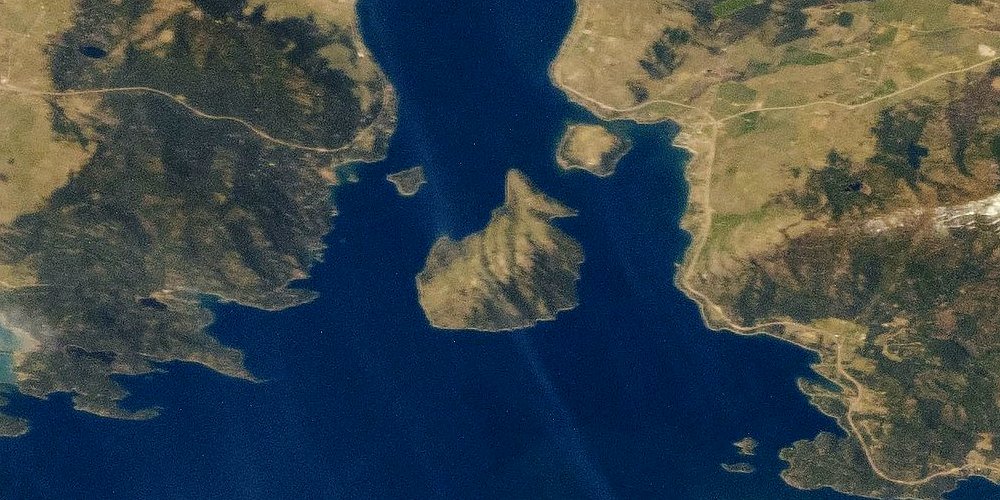
Flathead Lake’s roughly 185 miles of shoreline mix state park land, informal public pull-offs, and private property, and access for anglers is distributed unevenly around that perimeter rather than concentrated in one obvious spot. On the lake’s north end, near Somers and Bigfork, shoreline access tends to be more sheltered, closer to the northern Flathead Valley’s towns. Moving south along the west shore, additional public access points appear at intervals down toward Big Arm, and the lake’s southern end, near Polson, is where the reservation-water rules described above start to apply. The east shore has its own scattering of public units, including areas near Yellow Bay and Finley Point.
This guide deliberately doesn’t name specific businesses, marinas, or guide services. What’s worth knowing in general terms is that a mix of boat ramps, hand-launch sites suited to smaller craft, and shore-fishing spots exists around the lake, that not every access point suits every kind of fishing or every size of boat, and that some sites are developed public land while others are informal access rather than a maintained facility. Current, detailed access information — what’s open, what has a ramp versus a hand-launch, and what parking looks like at a given site — is best confirmed directly through Montana Fish, Wildlife & Parks’ Flathead Lake State Park unit listings and, for the reservation portion of the lake, CSKT’s own recreation guidance.
Whichever stretch of shoreline you fish from, the two things worth carrying in your head are the same two that run through this whole guide: know whether you’re fishing state or reservation water, and check the current, specific regulation rather than a remembered or previously published number, because both the rules and the fishery itself have changed meaningfully over the decades and continue to be actively managed today.
Frequently asked questions
Can I still fish for kokanee salmon on Flathead Lake?
No, and it's worth knowing why before you plan a trip around it. Kokanee were once a hugely popular sport fish on Flathead Lake, but the population collapsed after Mysis shrimp, introduced upstream in the 1960s, reached the lake in the early 1980s. The shrimp didn't starve the kokanee directly so much as fuel an explosion in lake trout, which then preyed heavily on kokanee and other native fish. By the late 1980s kokanee were functionally gone from Flathead Lake, and the fishery has not recovered. Don't plan a trip around kokanee here — it's a piece of the lake's fishing history, not a current option.
What fish can I actually catch in Flathead Lake today?
Lake trout are the dominant sport fish by far, along with lake whitefish, and both are managed as introduced species rather than natives worth protecting. Native westslope cutthroat trout and bull trout are also present but in much smaller numbers, and bull trout in particular are federally protected — check current regulations before targeting either. Beyond those, Flathead Lake supports a broader mix of fish that biologists have documented over the years, but lake trout and whitefish are what most anglers are actually fishing for.
Am I allowed to keep a bull trout I catch on Flathead Lake?
Check current Montana FWP regulations before you go out, because bull trout rules on this lake are strict and specific. Bull trout are listed as a threatened species and, on Flathead Lake itself, current guidance is to release any bull trout immediately rather than keep it — a small number of other specific waters in the region have different, narrower exceptions. Don't assume a general statewide bag limit applies; confirm the water-specific rule for Flathead Lake directly with FWP before your trip.
Do I need a Montana fishing license to fish Flathead Lake?
Yes, anglers 12 and older need a valid Montana Conservation License, an Aquatic Invasive Species Prevention Pass, and a base fishing license to fish any Montana water, including Flathead Lake. Costs and exact license structures are updated periodically, so check Montana Fish, Wildlife & Parks' current licensing page for this season's fees and any age or residency exceptions rather than relying on a remembered price.
Is a standard Montana fishing license enough for the whole lake?
No — this is the detail that catches people off guard. The southern portion of Flathead Lake lies within the Flathead Indian Reservation, and fishing those waters requires a joint state and tribal license rather than a standard Montana license alone. If you don't know exactly where the reservation boundary falls relative to where you're planning to fish, assume you need the joint license and confirm before you go rather than risk fishing reservation water on a state-only license.
How do I get the joint state-tribal fishing license for the reservation portion of the lake?
The joint state and tribal recreation license covering reservation waters is sold alongside standard state licensing, but non-tribal-member anglers are generally required to register for it in person at a retail outlet or reservation permit vendor the first time, after which renewals can typically be done online. Requirements, vendors, and any online options can change, so check directly with Montana Fish, Wildlife & Parks and with the Confederated Salish and Kootenai Tribes' Fish, Wildlife, Recreation & Conservation department for current instructions before your trip, rather than assuming last season's process still applies.
What are the bag limits and size limits for lake trout on Flathead Lake?
This guide won't state a specific number, because bag and size limits are exactly the kind of regulatory detail that changes from season to season, sometimes specifically for lake trout as part of ongoing efforts to reduce their population on the lake. Some categories of lake trout fishing here are managed with unusually liberal limits precisely because the species is being actively suppressed. Check the current Montana FWP fishing regulations for Flathead Lake before you go, and don't rely on a number you saw in an old guide, including this one.
Are there organized events aimed at removing lake trout from Flathead Lake?
Yes. The Confederated Salish and Kootenai Tribes run a lake trout suppression program on Flathead Lake that includes public fishing events, run in spring and fall, aimed at reducing lake trout numbers to help native bull trout and westslope cutthroat recover. These events are open to anglers and pay out for entries, and they're a genuinely different experience from ordinary sport fishing — check current program details directly if you're interested in participating rather than just fishing the open lake.
Where can I access the shoreline to fish Flathead Lake?
Flathead Lake is ringed by a mix of state park units, informal public pull-offs, and private property, with public access points distributed around the lake from the north end near Somers and Bigfork down to Big Arm, Yellow Bay, Finley Point, and the Polson area in the south. Exactly which sites have a boat ramp versus a hand-launch or shore-fishing spot varies, and access can change as sites are developed or restricted, so check current Montana Fish, Wildlife & Parks and CSKT access information before planning a specific stop.