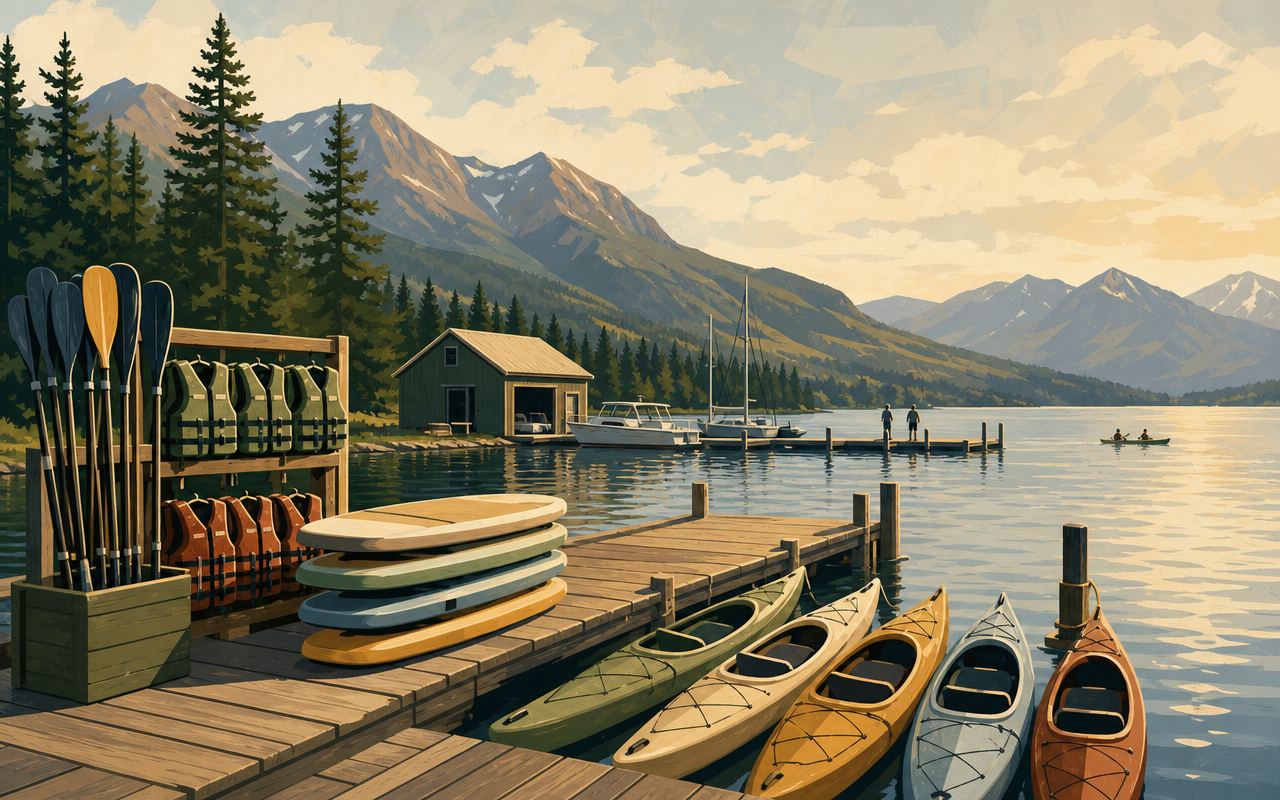
Renting vs. bringing your own gear
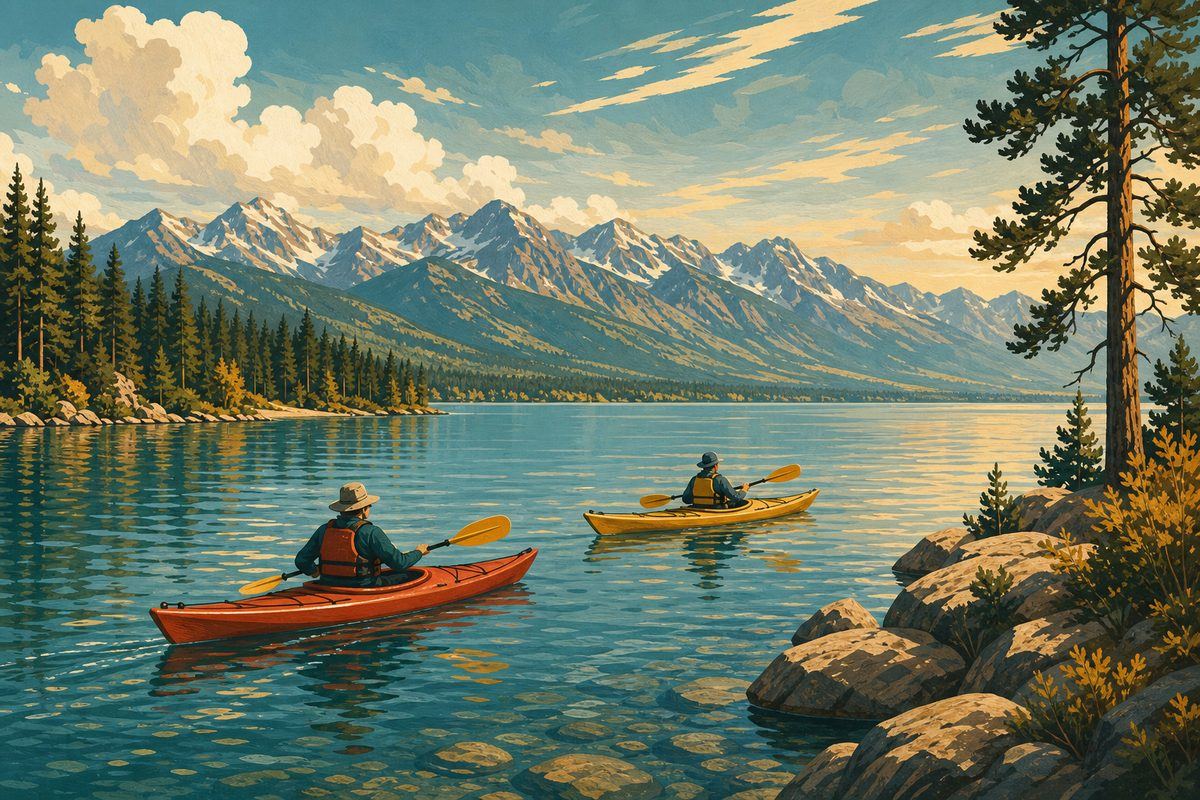
Flathead Lake covers roughly 200 square miles, and the Flathead River adds miles of moving water above and below it, which means a lot of visitors show up without a boat and need to decide how to get on the water. Both renting and bringing your own gear are reasonable choices, and the right answer usually comes down to how often you paddle and how much hassle you’re willing to take on.
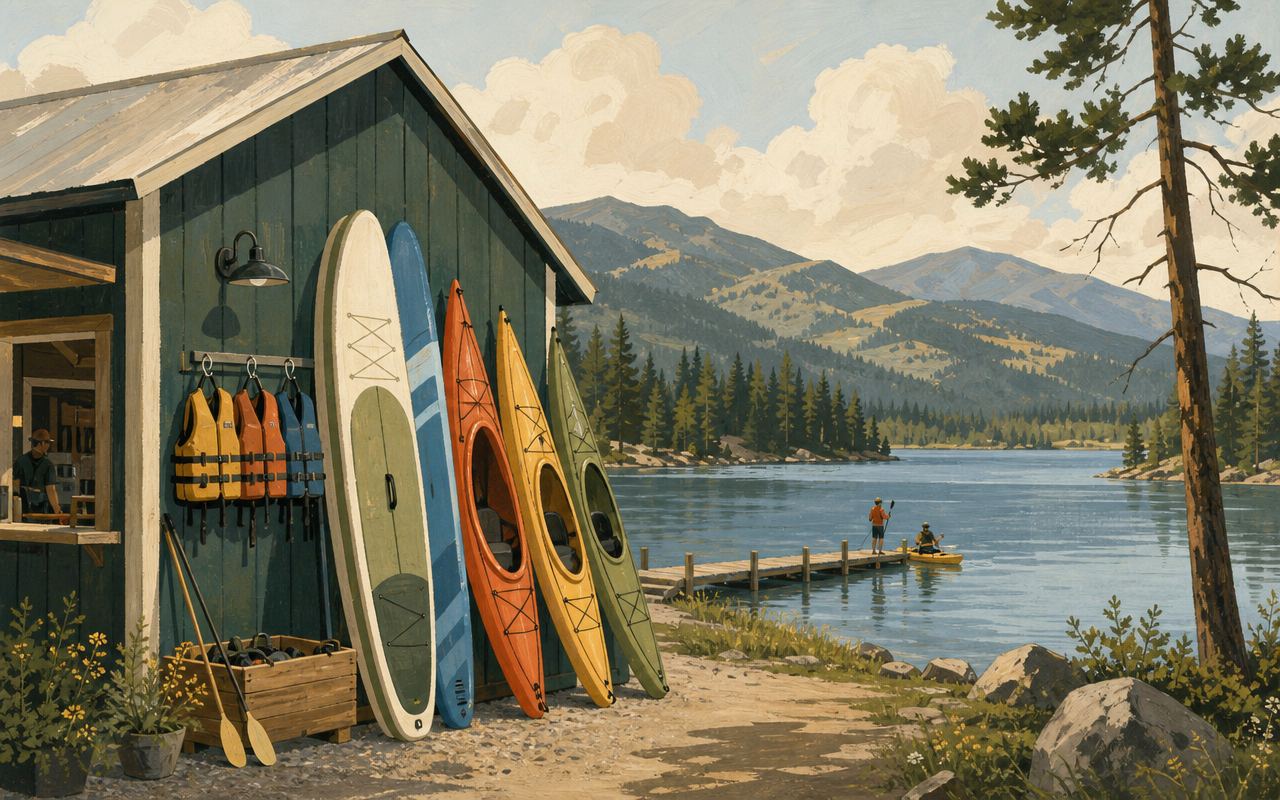
Renting makes sense for most first-time or occasional visitors. You avoid buying a kayak, paddleboard, or raft you might use once a year, you skip the cost and hassle of a roof rack or trailer, and you don’t have to figure out storage and transport for a boat that’s several feet longer than your car. Rental gear is also generally well maintained, since an outfitter’s business depends on functioning equipment, and staff can usually point you toward water that matches your skill level.
Bringing your own gear pays off if you paddle often, want a specific boat you’re already comfortable in, or plan to explore parts of the lake and river that aren’t near a rental operation’s home base. Owning gear also means you’re not tied to a rental window — no returning a boat by a set time, no route restrictions tied to where the outfitter operates.
There’s a middle option worth mentioning: some visitors rent for their first trip to Flathead Lake to test the conditions and their own comfort level, then decide afterward whether it’s worth investing in gear. That’s a low-risk way to figure out whether lake paddling is something you’ll come back to, without committing to a purchase before you know if you’ll use it again.
Transport is the piece people underestimate most. A hard-shell kayak is typically ten to twelve feet long, which means it either needs a roof rack rated for the load, a trailer, or a truck bed with the tailgate down and a flag on the end. Inflatable kayaks and paddleboards sidestep this problem — they pack down small enough to fit in a car trunk or even checked luggage — but they trade off some performance and durability compared to hard-shell boats, and they take time to inflate and deflate at each end of a trip. If you already own an inflatable setup, bringing your own gear becomes much more practical than it would be with a hard-shell boat and no way to carry it.
Storage is the other overlooked cost of ownership. A kayak or canoe needs a dry, out-of-the-way spot at home — a garage wall, rafters, or an outdoor rack — and most people underestimate how much space that actually takes until they’re trying to find it. None of this makes ownership a bad choice; it just means the true cost of bringing your own gear includes more than the sticker price of the boat itself.
Whichever way you go, the practical requirements — proper safety gear, a weather plan, and compliance with Montana’s watercraft inspection rules — are the same regardless of who owns the boat. Those are covered in detail below.
What to check before you rent
Not all rental setups are equal, and a few questions before you hand over payment can save you a frustrating day on the water. This isn’t a list of red flags to fear — it’s simply what an honest, well-run rental operation should be able to answer clearly.
Life jackets and basic safety gear. Montana requires a wearable personal flotation device (PFD) on board for every person in a non-motorized craft, including kayaks, canoes, and paddleboards. Most rental operations include a properly fitted PFD with the rental as a matter of course, but confirm this directly rather than assuming — and check that the one you’re handed actually fits, since an oversized or damaged PFD won’t do its job in the water. A whistle or other sound-signaling device is also standard safety equipment worth asking about, particularly if you’re headed out on open water away from shore.
What happens if weather changes. Flathead Lake is large and exposed enough that wind can build a meaningful chop within an hour, especially on summer afternoons. Ask what the outfitter’s policy is if conditions turn after you’ve already paid or already launched — some offer a partial refund or a rescheduled trip, others don’t, and you want to know which applies to you before you’re out on the water. This matters more here than it would on a small, sheltered pond.
Cancellation and no-show policies. Weather isn’t the only reason a trip might not happen. Confirm what happens if you need to cancel ahead of time, and whether there’s a cutoff after which you lose your payment. These policies vary a good deal between operators, so don’t assume.
Condition of the actual gear. Before you launch, take a minute to look over the hull for cracks or soft spots, check that the paddle isn’t damaged, and make sure any inflatable gear is properly inflated. This is a reasonable ask of any rental operation, and a legitimate one should have no issue with a quick pre-launch check.
Whether the water matches your experience. A calm, protected bay near shore and open lake water half a mile out are very different paddling environments, and the Flathead River’s moving current is different again. Be upfront about your experience level so you end up with gear and a route suited to it.
This site doesn’t list or recommend specific rental businesses — see the note at the top of this page about why — but these are the questions worth bringing to whichever operation you choose.
The aquatic invasive species inspection requirement
Montana requires watercraft inspections as part of a statewide effort to keep invasive mussels and other aquatic invasive species out of its lakes and rivers, and the rule is broader than many visitors expect. It applies to essentially all watercraft — motorized boats, but also non-motorized kayaks, canoes, paddleboards, and rafts, based on current guidance from Montana Fish, Wildlife & Parks (FWP).
The core rule: if you are carrying or towing any watercraft, you are required to stop at every open watercraft inspection station you encounter, regardless of whether that watercraft has a motor. This has applied to human-powered boats — not just motorboats — for years, and it remains current guidance. Skipping an open station is a citable offense with a real fine attached, so don’t treat inspection stations as optional because your boat is small or inflatable.
Inspections are aimed at preventing the spread of invasive mussels and other species between water bodies, particularly for boats that have been in water outside Montana or that are moving between different Montana lakes and rivers. Non-resident boaters bringing watercraft into Montana should also expect to need Montana’s aquatic invasive species prevention pass, which funds the inspection and decontamination program; requirements and pass details can change, so if you’re arriving from out of state with your own boat, check current requirements directly with Montana FWP before your trip rather than relying on secondhand information.
If you’re renting locally and using that boat only on the water where you picked it up, the inspection burden generally falls on the outfitter maintaining that fleet rather than on you as a one-day renter — but if you plan to transport any boat, rented or owned, between different bodies of water, assume the inspection requirement applies to you and plan your route accordingly. Because these rules are enforced by the state and can be updated, this page describes the general framework rather than every current detail; treat Montana FWP’s own aquatic invasive species pages as the authoritative source before you travel.
Where rental activity is common around the lake
Flathead Lake is ringed by several towns that function as the main public access points, and rental activity for kayaks, paddleboards, and similar gear tends to cluster around these access towns rather than being spread evenly around the shoreline. This is general geography, not a business directory — this page doesn’t name or endorse specific operators.
Polson, at the lake’s southern end, sits right where the lake narrows into the Flathead River and has some of the most developed public shoreline access on the lake, including a state park. It’s a natural hub for anyone arriving from the south.
Somers, on the lake’s northwest shore near where the Flathead River enters from the north, offers additional public access and is a common staging point for the calmer, more protected water on that side of the lake.
Bigfork, near the lake’s northeast corner, sits close to where the Swan River meets the lake and is another established access point, with nearby public land and boat access.
Beyond these three towns, the lake has scattered public access sites, day-use areas, and a scattering of islands — including Wild Horse Island, a state park reachable only by water — that shape where paddlers tend to launch. If you’re planning a trip and want to rent gear, these general areas are a reasonable place to start looking, and a quick search for current rental operations near whichever town fits your route will turn up what’s currently operating. Conditions, seasonal hours, and which businesses are open in a given year change often enough that we’d rather point you to the geography than to a name that might not be accurate by the time you read this.
A few honest closing notes
Rental availability, hours, and pricing on Flathead Lake shift from season to season and year to year, and this page intentionally avoids naming specific businesses or quoting prices that would go stale. What doesn’t change as quickly is the underlying guidance: wear a properly fitted life jacket, ask about weather and cancellation policies before you pay, expect to stop at any open watercraft inspection station regardless of what you’re paddling, and match your gear and route to your actual experience level. Those fundamentals hold true whether you’re renting for an afternoon or bringing gear you’ve owned for years, and they’re a better foundation for a good day on the water than any single vendor recommendation would be.
Flathead Lake Kayak Rentals: Compare the Best Guide, Quick Facts
A short summary for anyone trying to compare Flathead Lake kayak rentals before choosing a launch point: this guide won’t name operators, but it will tell you what to check. The honest comparison for kayak rentals Flathead Lake wide comes down to three things — whether a life jacket and whistle are included, what the weather-cancellation policy actually says, and whether the outfit can point you to an easy carry-down to the water. The same logic applies to raft rentals Flathead Lake operations, though rafts are rarer to rent here than kayaks or paddleboards. If you’re chasing the best flathead lake kayak rentals option for a single afternoon, prioritize proximity to a calm-morning launch over price — the wind, not the rental fee, is what actually ends most short trips early. Use this guide to compare Flathead Lake kayak rentals by what matters, not by whichever sign you see first from the road. The same applies whether you’re looking at kayak rentals Flathead Lake wide or the smaller pool of raft rentals Flathead Lake has to offer — check the gear, the policy, and the launch, in that order.
Frequently asked questions
Do kayak and paddleboard rentals around Flathead Lake include a life jacket?
Most outfitters that rent human-powered watercraft in Montana include a properly sized personal flotation device with the rental, since state law requires one aboard for every paddler. Treat this as a general expectation rather than a guarantee, and confirm it directly when you book. If a shop doesn't supply one, bring your own — don't paddle without it.
What happens if the wind picks up while I'm out on a rented boat?
Ask about this before you pay. Flathead Lake is large enough to build real wind chop with little warning, especially in the afternoon, and policies vary by outfitter. Some offer a rain check or partial refund if conditions turn unsafe after you've launched; others do not. Get the policy in writing or at least confirmed verbally, and never treat a mid-trip weather shift as something to push through.
Do I need my own trailer or roof rack to rent a kayak or paddleboard?
No. Rental operations near the lake generally expect you to use their gear at or near their own launch point, so a personal vehicle rack usually isn't required. If you want to transport a rented boat somewhere else, ask first — some shops allow it with the right straps and some don't.
Is there a minimum age or experience level for renting a kayak or paddleboard?
This varies by outfitter and by the type of water. A calm, protected bay is a different proposition than open lake or a moving river, and any responsible rental operation will ask about your experience and match you to appropriate gear and location. If you're a first-timer, say so — it's the honest way to end up in the right boat.
Can I rent a raft for the Flathead River, not just a kayak for the lake?
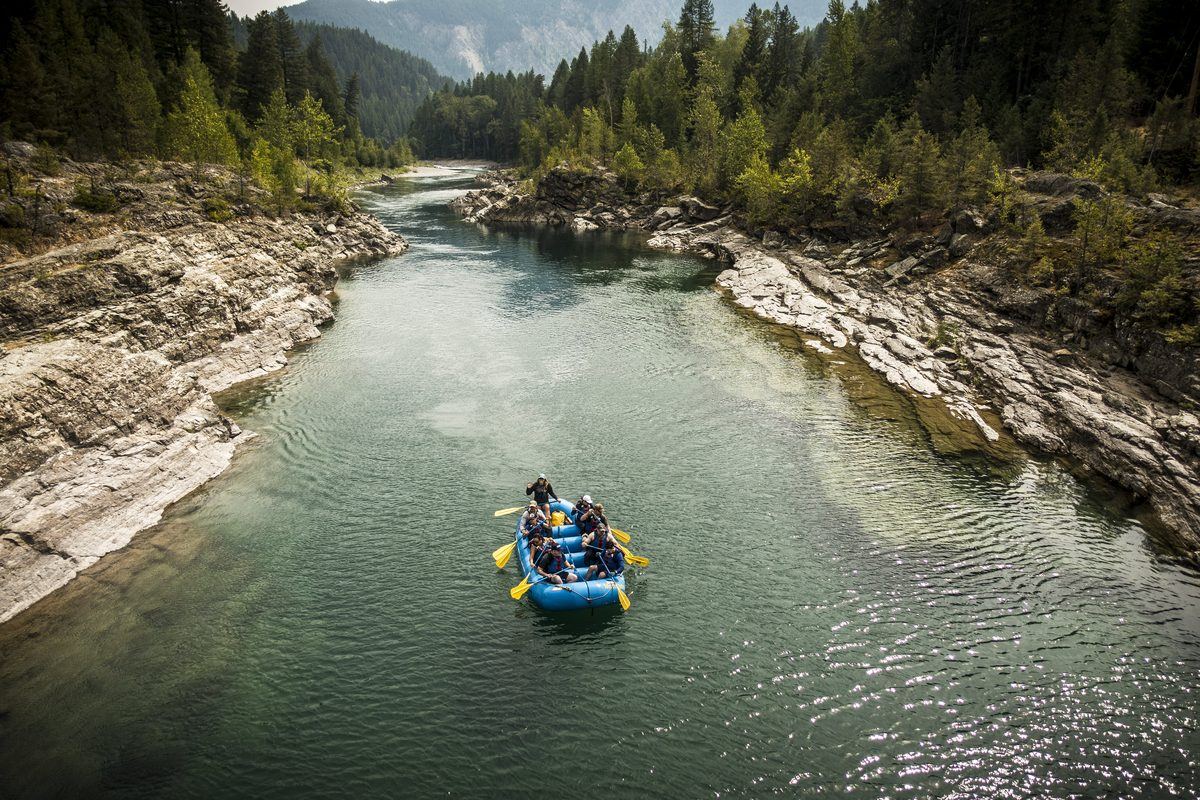
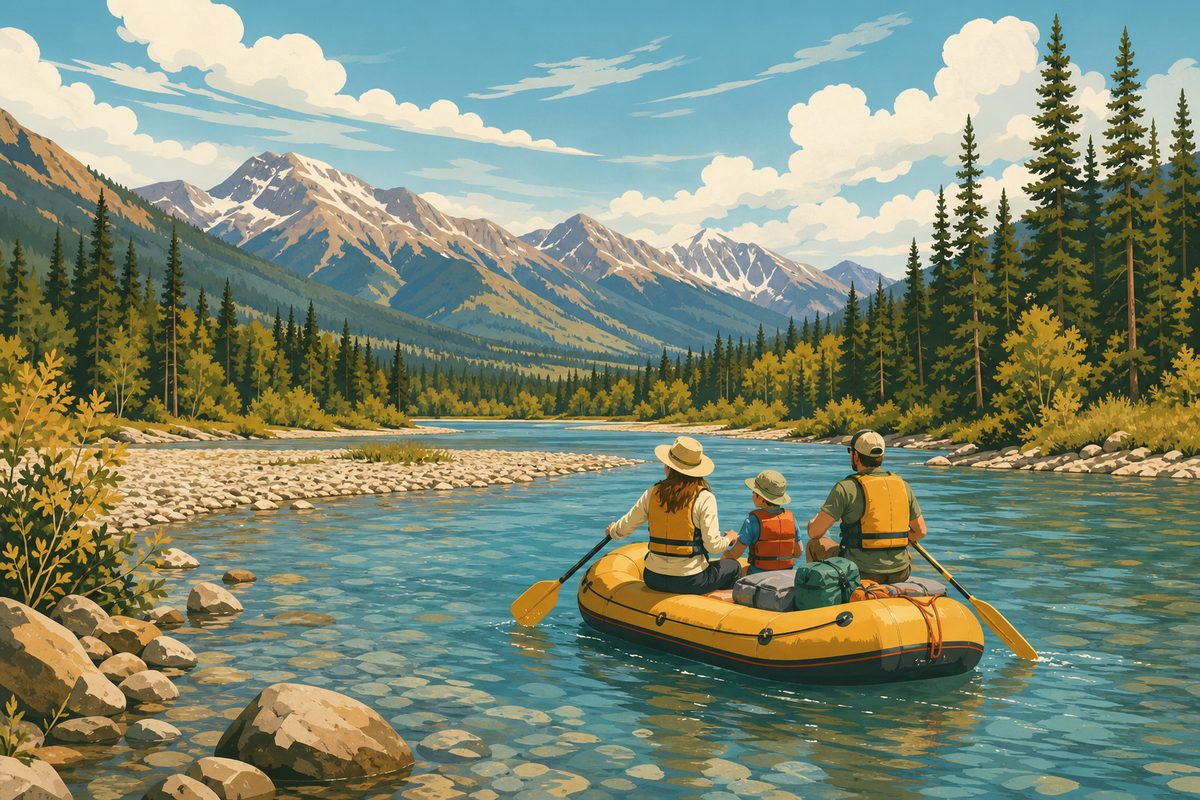
River rafting and lake paddling are different activities with different gear, and not every rental operation covers both. Whitewater sections of the Flathead River generally call for a raft or inflatable kayak suited to moving water, ideally with a guide if you haven't run the river before, while lake paddling calls for flatwater kayaks, canoes, or paddleboards. Ask specifically which water a rental is rated for.
Do I need to register a rented kayak or paddleboard?
Montana requires most motorized and larger non-motorized watercraft to be registered, but the registration and inspection requirements that apply to rentals are generally handled by the outfitter, not the renter, since it's their boat. What does fall on you as the paddler is the aquatic invasive species inspection requirement described below — that applies to the watercraft itself, regardless of who owns it.
Does a rented kayak or paddleboard still need an aquatic invasive species inspection?
Yes. Montana's watercraft inspection requirement applies to the vessel and how it moves between waters, not to whether it's owned or rented. In practice, a boat that stays at one rental outfitter's dock and is used only on that same body of water is a different situation than one you transport yourself between lakes — see the inspection section on this page for the general rule, and ask the outfitter directly if you're unsure how it applies to their fleet.
Is it cheaper to rent or to bring my own gear?
It depends on how often you paddle. A single day or weekend trip is almost always cheaper to rent, especially once you account for a roof rack, straps, and a place to store a boat at home. If you expect to paddle Flathead Lake multiple times a year, owning gear starts to pay for itself — but that's a personal calculation, and this page won't push you toward either answer.
What should I check on a rental kayak or paddleboard before I launch?
Look over the hull for cracks or soft spots, check that the paddle is intact, confirm the life jacket fits and is in good condition, and ask where the nearest safe pull-out points are if weather changes. A few minutes of inspection before you leave the dock is standard practice and any legitimate rental operation should welcome the questions.
Are life jackets required even on a calm day on Flathead Lake?
Yes. Montana law requires a wearable personal flotation device on board for every person in a non-motorized boat, including kayaks, canoes, and paddleboards, regardless of how calm the water looks. Flathead Lake's conditions can change quickly, and a stowed life jacket does no good if you go in the water before you can put it on.