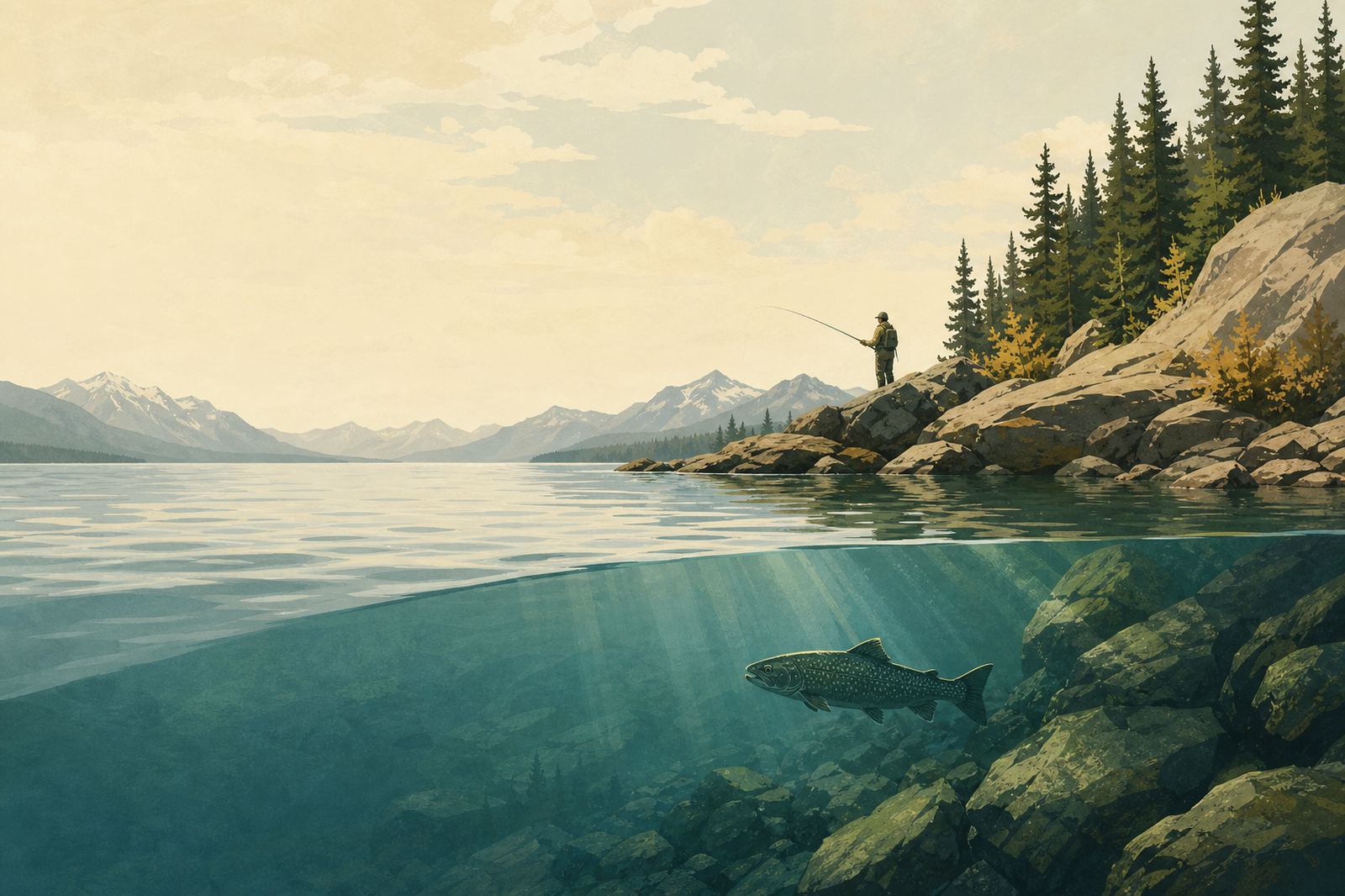
A view beneath the surface of Flathead Lake’s clear, cold water
Below the surface

Fishing Around Flathead Lake

Species, rules and real access points for fishing Flathead Lake and the rivers that feed it.

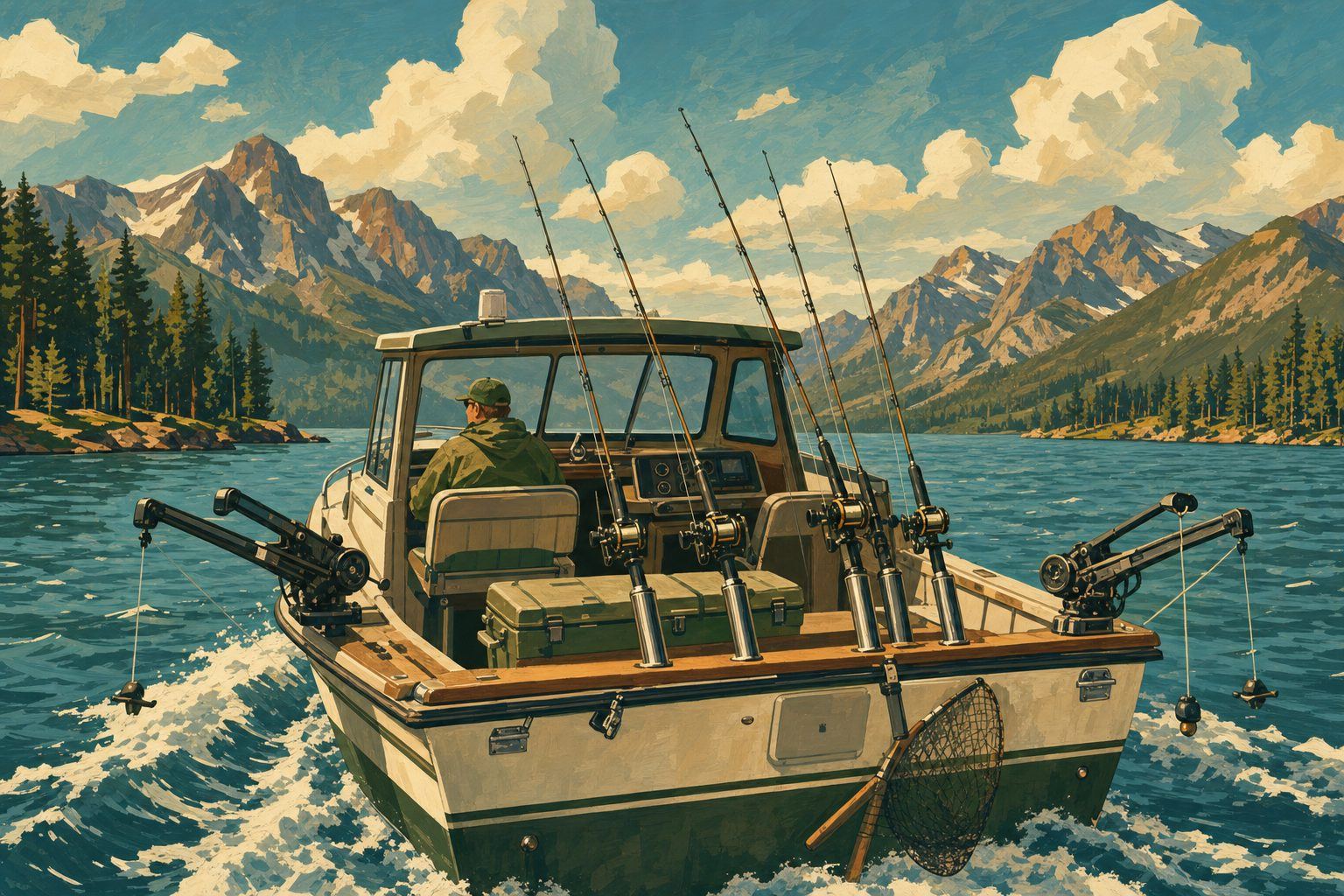
Editorial illustration.

Flathead Lake looks, from a boat or a shoreline pull-off, like it should be a straightforward place to drop a line. It's the largest natural freshwater lake in the western United States, cold, deep, and ringed by public access.

What's actually going on beneath the surface, though, is more complicated than most first-time visitors expect: a food web reshaped by decades-old management decisions, a once-famous fishery that collapsed and never came back, and a jurisdictional split that puts part of the lake under tribal rather than state authority.

None of that makes the lake a bad place to fish — it does make it a place worth understanding before you buy a license and load the boat. The rivers feeding the lake, including the stretch near Kalispell, offer a simpler picture by comparison, without the same management complications.

Regulations here are set by Montana Fish, Wildlife & Parks on state water and jointly with the Confederated Salish and Kootenai Tribes on reservation water, and both bodies update their rules from season to season — the guides below explain the general picture, but always check current regulations before you fish rather than relying on last year's numbers.
4 guides in this section, independent editorial with no operator partnerships or booking flow.

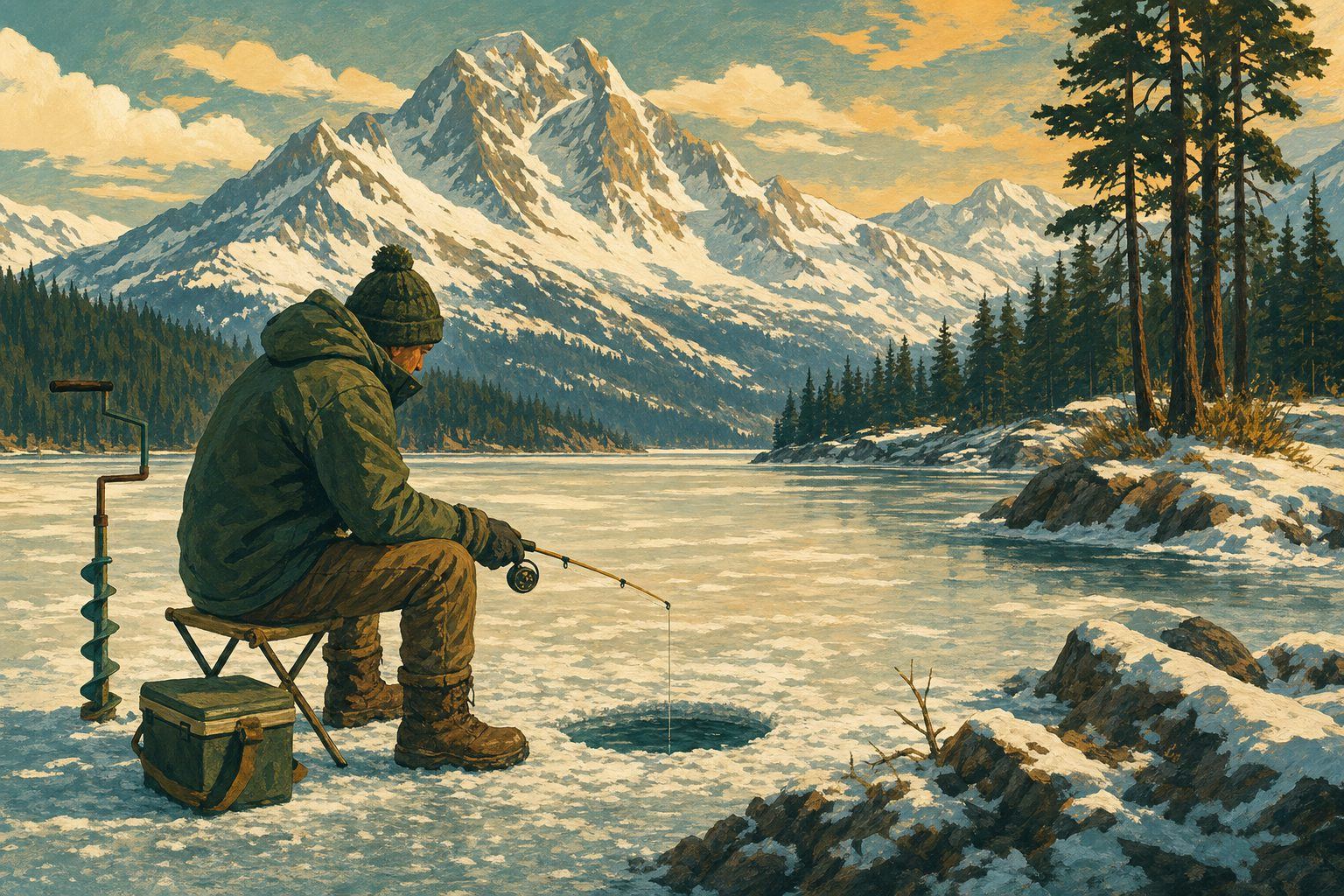
A person ice fishing beside a hole drilled in the lake ice, mountains beyond
Fishing

Ice Fishing Flathead Lake: What's Actually Safe, and Where

Flathead Lake rarely freezes safely across its full surface. Which bays actually ice over, what to target, and the real winter safety rules.

Read the guide →
A fishing boat trolling on open lake water with mountains in the background, rods set in holders
Fishing

Mack Days: Flathead Lake's Cash-Prize Fishing Tournament

Twice a year, anglers win real cash prizes catching lake trout on Flathead Lake — a tribal conservation program run as a fishing tournament. How it works.

Read the guide →
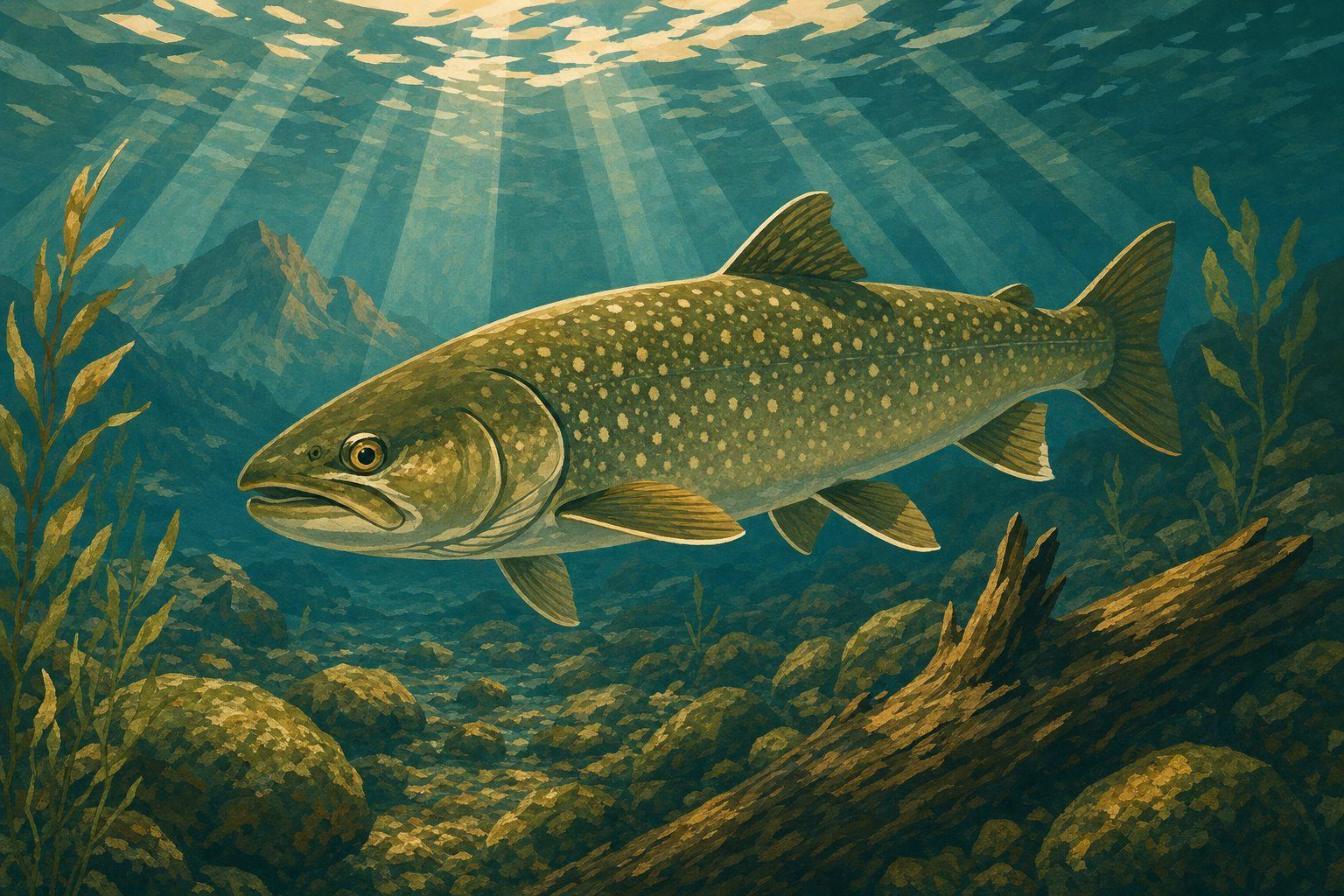
An underwater view of a bull trout, a large char with pale spots on an olive-green body
Fishing

Bull Trout on Flathead Lake: A Threatened Species You Might Catch

Bull trout are ESA-protected, and Flathead Lake anglers must release every one caught. How to identify one, why the rule exists, and what counts show.

Read the guide →
An angler fishing from a small boat on calm lake water at sunrise
Fishing

Fishing Flathead Lake: Species, Rules, and Access

What's actually swimming in Flathead Lake, the Montana FWP license rules, and the joint state-tribal permit required on the reservation water.

Read the guide →

Frequently asked questions

Can I fish anywhere on Flathead Lake with a standard Montana license?

No. The southern portion of the lake lies within the Flathead Indian Reservation and requires a joint state and tribal license rather than a standard Montana license alone. If unsure where the boundary falls, assume you need the joint license and confirm before you go.

How do I get the joint state-tribal fishing license?

It's sold alongside standard state licensing, but non-tribal-member anglers are generally required to register in person the first time. Check directly with Montana Fish, Wildlife & Parks and the CSKT Fish, Wildlife, Recreation & Conservation department for current instructions.

What are the bag and size limits for lake trout?

This guide won't state a specific number, since limits change from season to season, sometimes specifically for lake trout as part of ongoing suppression efforts. Check current Montana FWP regulations before you go.

Are there organized lake trout removal events?

Yes. The CSKT run a lake trout suppression program on Flathead Lake with public fishing events in spring and fall, aimed at helping native bull trout and westslope cutthroat recover.

Where can I access the shoreline to fish?

The lake is ringed by a mix of state park units, informal public pull-offs, and private property, with access points distributed from Somers and Bigfork in the north down to Big Arm, Yellow Bay, Finley Point, and Polson in the south. Which sites have a boat ramp versus a hand-launch or shore-fishing spot varies and can change, so check current Montana FWP and CSKT access information before planning a specific stop.

Is boat fishing better than shore fishing on Flathead Lake?

It depends on what you're after. Lake trout, the species most associated with deep, open water, are generally more accessible from a boat, while shoreline and river fishing near access points like Somers or the river mouth can produce other species without needing a launch at all, and shore access requires no equipment beyond a rod, waders if the bank calls for them, and a valid license.