Why Cherries Grow So Well Along Flathead Lake
Northwest Montana isn’t obvious cherry country. Winters run cold, spring frosts are common at this latitude, and the growing season is short compared to the orchard belts of Washington or Michigan. What makes a narrow strip of shoreline along Flathead Lake different comes down to the lake itself.
Flathead Lake is enormous — one of the largest natural freshwater lakes in the western United States — and that much water acts as a slow-moving thermal battery. It takes a long time to heat up and just as long to cool down. In practice, that lag works in the orchards’ favor at both ends of the growing season. In spring, the lake is still cold from winter, and that cold water keeps the air near the shoreline cooler than it would otherwise be. That sounds like a disadvantage, but it’s actually protective: a warm early-spring stretch inland can trick fruit trees into budding too soon, and an early bud is exactly what a late frost kills. Along the lakeshore, the water’s lingering chill holds the trees back until the real frost risk has mostly passed.
The same effect runs in reverse come fall. By late summer, the lake has absorbed months of solar heat, and that stored warmth radiates back into the surrounding air as temperatures drop. When a hard freeze would otherwise arrive inland, the shoreline strip often stays a few critical degrees warmer, buying the trees extra weeks before the first killing frost. That narrow buffer zone — close enough to the water to feel its moderating effect, but still on land suitable for orchards — is where the cherry belt sits.
It isn’t a guarantee. Growers along the lake have had years where a late spring freeze or an unusually severe early cold snap still damaged the crop despite the lake’s buffering. But on balance, the effect is real and it’s the standard explanation locals and growers give for why sweet cherries, a crop more at home in warmer regions, have been grown commercially here for generations.
When the Season Runs
Flathead cherry season is short and weather-dependent, which is part of its character. The general window runs from mid-July through mid-August, with the harvest typically peaking in the back half of July. Some years run a week or two earlier or later depending on how the spring played out — a cold, late spring pushes bloom and ripening back; a warm one can pull the whole season forward.
That variability means it’s worth checking current conditions rather than planning a Flathead cherry trip around a fixed calendar date months in advance. A visit planned for early July may arrive before much of the crop is ready; a visit planned for late August may find the season already winding down. The safest planning window, if you want real flexibility, is to build a late-July or early-August stop into a broader lake trip rather than anchoring an entire visit to cherries alone.
Before the harvest itself, the orchards go through a bloom period in spring, when the trees are covered in white blossoms — a shorter, quieter season that draws its own scenic-drive traffic along the east shore, distinct from the U-pick rush later in summer.
What a U-Pick or Roadside Stand Visit Is Typically Like
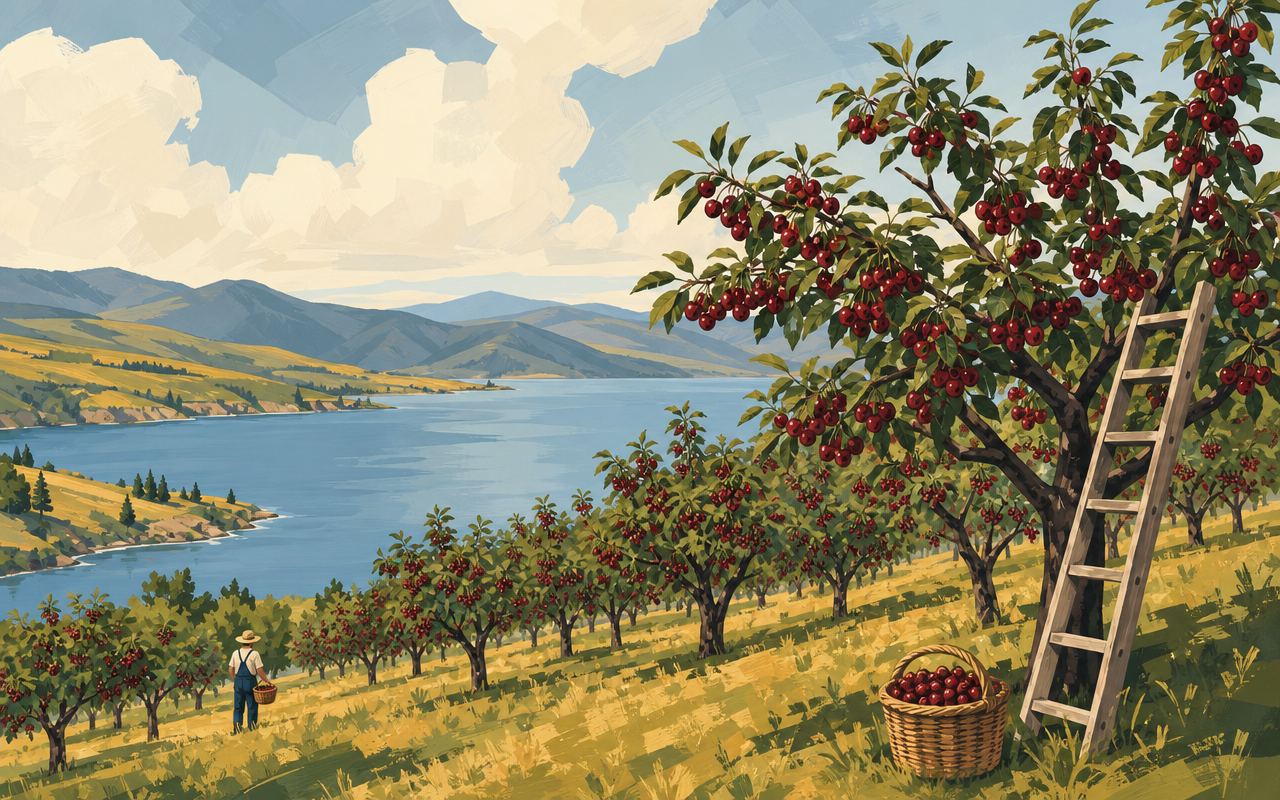
Along the highway that runs up the lake’s east shore, cherry season brings out a familiar seasonal rhythm: hand-lettered signs, small parking pull-offs, and stands selling fruit by the box straight from the roadside. Most of what’s for sale at these stands has already been picked, and buying that way is the quicker option if the goal is simply to come away with fresh cherries.
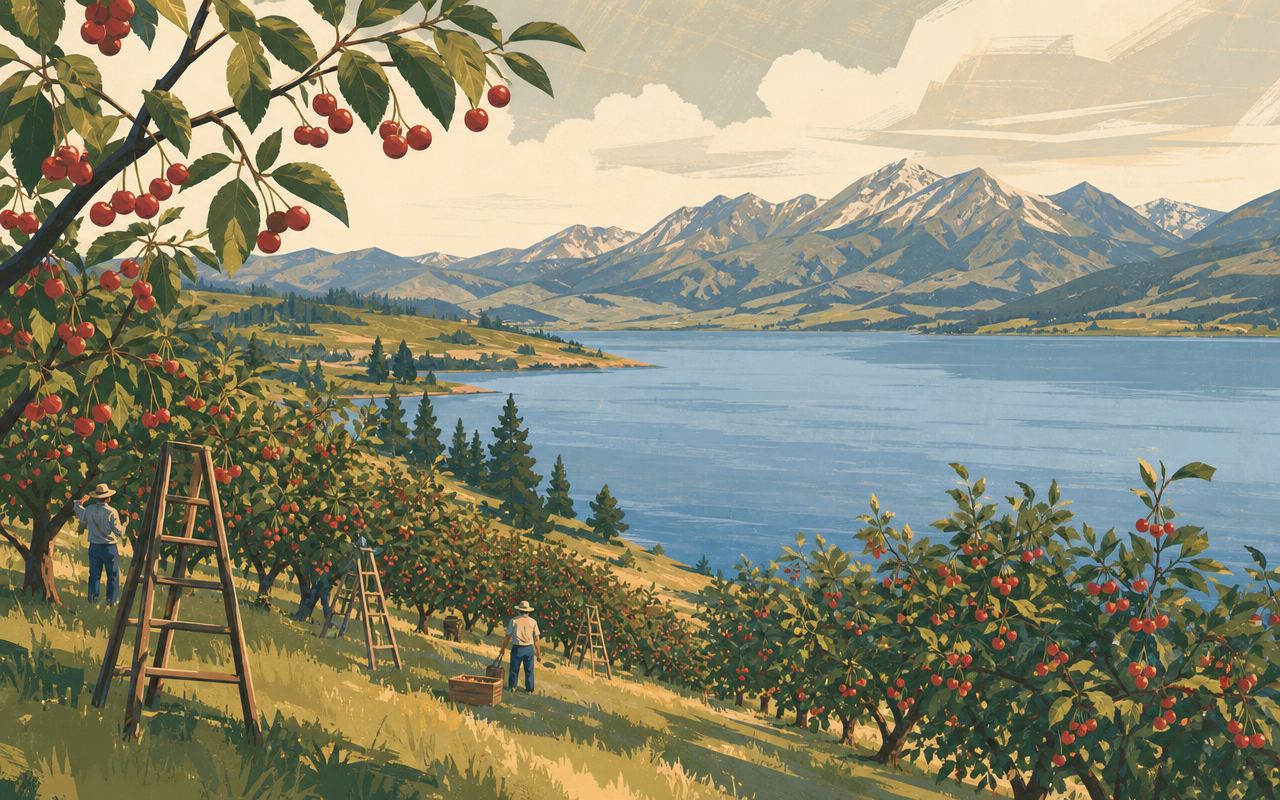
Some orchards also open sections of their trees for U-pick, where visitors walk the rows with a bucket or bag and pick their own fruit directly from the branch. The experience is casual and low-key rather than a formal attraction — expect gravel parking, basic shade, and picking conditions that depend heavily on how far into the season you’ve arrived and how the crop has come in that year. Early in the window, the best fruit tends to be higher and further into the canopy; later, lower branches are often picked over.
Because cherry orchards are working agricultural operations, not tourist facilities, hours and availability can shift day to day based on the crop, the weather, and the labor available for a given stretch. If picking your own cherries is the point of a stop rather than a bonus, it’s worth confirming that a specific orchard is open for U-pick before building a day’s plans around it, since not every operation offers picking in every season, and some limit it to certain days or hours.
Some of the operations along this stretch trace back generations rather than being recent additions to the highway. Bowman Cherry Orchards, on the east shore near Bigfork, dates to the 1920s, when brothers Adam and Eby Bowman first planted the family’s trees — the same orchard, still family-run, is one of the stands a visitor is likely to pass today. Near Yellow Bay, Getman’s Orchard and Vineyard is another long-running stop, selling cherries alongside other tree fruit grown on the same property. Neither is a stand-in for every orchard along the highway, but both are useful examples of what “a real, long-established Flathead cherry operation” looks like on the ground, as opposed to a seasonal pop-up stand.
Cherries at their peak here are eaten fresh more than anything else — the short season and delicate fruit don’t lend themselves to much beyond that, though roadside stands and orchard stores sometimes carry jams, pies, or other cherry products alongside the fresh fruit.
Which Varieties You’ll Actually Find
The Lambert cherry that built the industry’s early reputation has largely given way on modern trees to varieties that ripen later and hold up better in transport. Today, the Flathead Lake Cherry Growers cooperative — which counts roughly 70 active member orchards among 86 operations along the lake — grows mainly Lapins and Sweetheart, both dark sweet cherries bred to extend the harvest window, alongside Rainier, the pale yellow-and-red variety prized for its sweetness. A roadside stand or U-pick row in late July is far more likely to hand you a Lapin or a Sweetheart than the historic Lambert their grandparents’ orchards were built on.
That shift matters for timing a visit, not just for taste. Later-ripening varieties help growers avoid competing directly with the earlier cherry harvests coming out of Washington State, which is part of the commercial logic behind replanting older Lambert trees over the decades. It also means the exact mix of what’s available at a given stand can shift through the season — Rainier and earlier varieties tending to come in first, with Lapins and Sweetheart often carrying the harvest into its later weeks — so a stand’s fruit in early July can look and taste noticeably different from the same stand’s fruit three weeks later.
In a good season, the cooperative’s members collectively bring in around 3 million pounds of cherries, with about 80 percent of that crop moving into national and international markets rather than staying local — a reminder that the roadside stands and U-pick rows visitors encounter are a small, visible slice of an operation that’s real agriculture, not simply a tourist attraction dressed up as one.
Where This Fits Into a Lake Trip
The cherry orchards sit along the lake’s east shore, on the same stretch of highway that threads between the water and the base of the Mission Mountains — roughly the corridor running from Yellow Bay north toward Bigfork. That’s the same general stretch covered by the east-shore paddling routes discussed in our Flathead Lake kayaking guide, which makes a cherry stop a natural add-on to a day already built around the east shore rather than a separate trip.
Because the season is short and the drive along this stretch is scenic in its own right regardless of timing, a cherry-country detour works well as a half-day add-on to a longer Flathead Lake itinerary — paired with a morning paddle, a stop at Yellow Bay State Park, or simply as a slower alternative route between Polson and Bigfork instead of the faster inland roads. Traffic on the east-shore highway does pick up during peak cherry season, particularly on summer weekends, so building in extra time for the drive itself is worth doing if you’re visiting at the height of the harvest.
For visitors whose trip isn’t timed to mid-summer, the orchards themselves are still visible from the road nearly year-round — bare in winter, blossoming in spring, heavy with fruit in midsummer — which makes the drive worth taking even outside the narrow U-pick window, just with different scenery and no fruit to bring home.
Frequently asked questions
When is Flathead cherry season?
The harvest window generally runs from mid-July through mid-August, with the crop typically peaking in late July. Exact timing shifts by a week or two each year depending on spring weather, so it's worth checking conditions close to your visit rather than locking in a date months out.
Which side of Flathead Lake has the cherry orchards?
The orchards are concentrated along the lake's east shore, roughly between Yellow Bay and Bigfork, where the highway runs close to the water. The west shore has its own share of lake-view stops, but the cherry country is an east-shore feature.
Why do cherries grow so well next to Flathead Lake specifically?
The lake acts as a giant reservoir of stored heat. It warms slowly through summer and stays cold well into spring, which smooths out the temperature swings that would otherwise threaten cherry trees — delaying early blooming in a warm spring and holding off the season's first hard freeze in fall. Move even a short distance away from the shoreline and that buffering effect drops off quickly.
What cherry varieties will I actually find at a Flathead Lake stand?
Mostly Lapins and Sweetheart, two dark sweet cherries bred to ripen later than the historic Lambert variety the industry was built on, plus Rainier, the pale yellow-and-red variety. Which one you get can shift through the season, since different varieties ripen at different points within the same mid-July-to-mid-August window.
Do I need a reservation for U-pick, or can I just show up?
Practices vary by stand and by year, and some operations limit picking to certain days, hours, or a posted crop-availability update. If a U-pick visit is central to your plans, it's worth confirming a specific location's hours and whether they're taking walk-ins before you build a day around it.
Can I just buy cherries without picking my own?
Yes — roadside stands along the east shore highway sell already-picked cherries by the box or bag throughout the season, which is the faster option if you just want the fruit rather than the picking experience.
Are the orchards affected by frost some years?
Yes. A late spring freeze or an early, severe fall cold snap can damage or reduce a season's crop even with the lake's moderating effect, and Flathead growers have had both good and difficult years for this reason. It's part of why exact season dates and crop volume can vary noticeably from one year to the next.
Is there a cherry festival to plan around?
Communities along the lake have historically marked the harvest with a cherry-themed community event in late summer. Details, dates, and whether an event is happening in a given year change, so check current local listings if a festival is part of your plans rather than treating it as a fixed annual date.