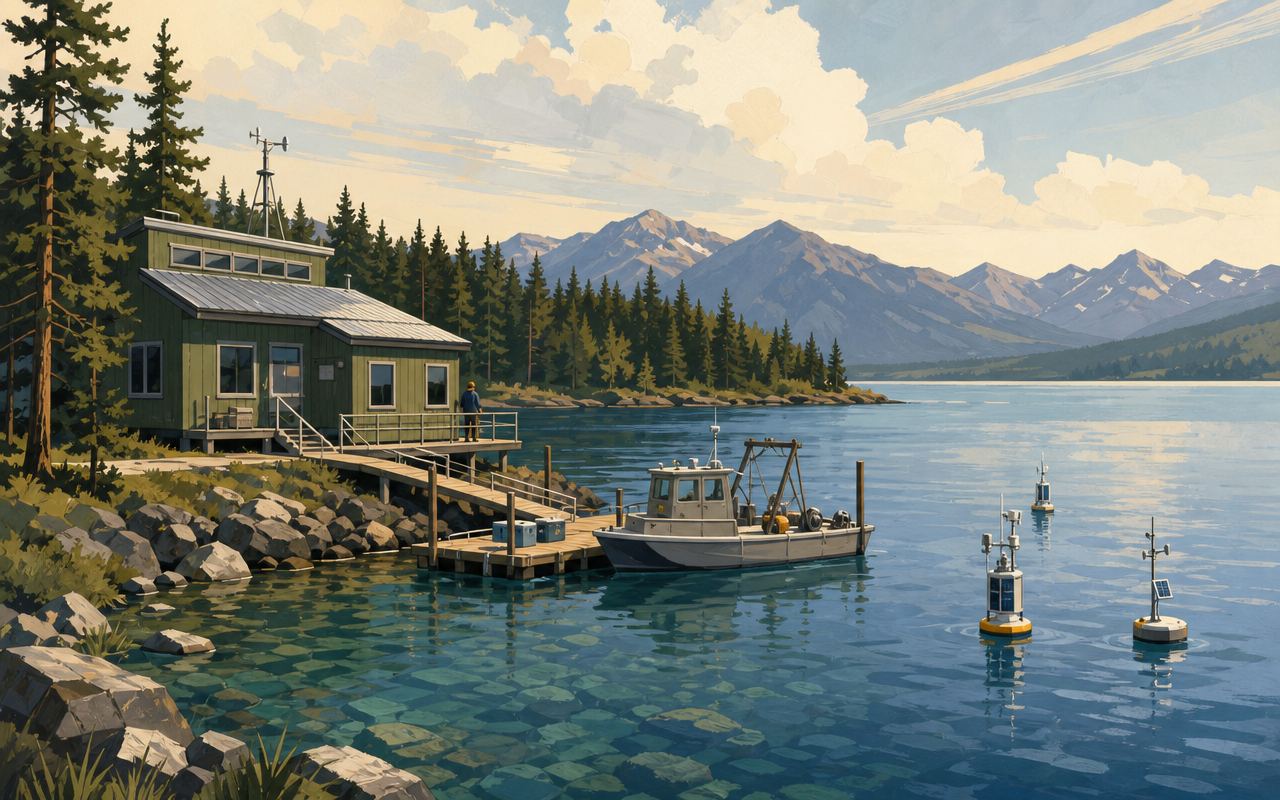
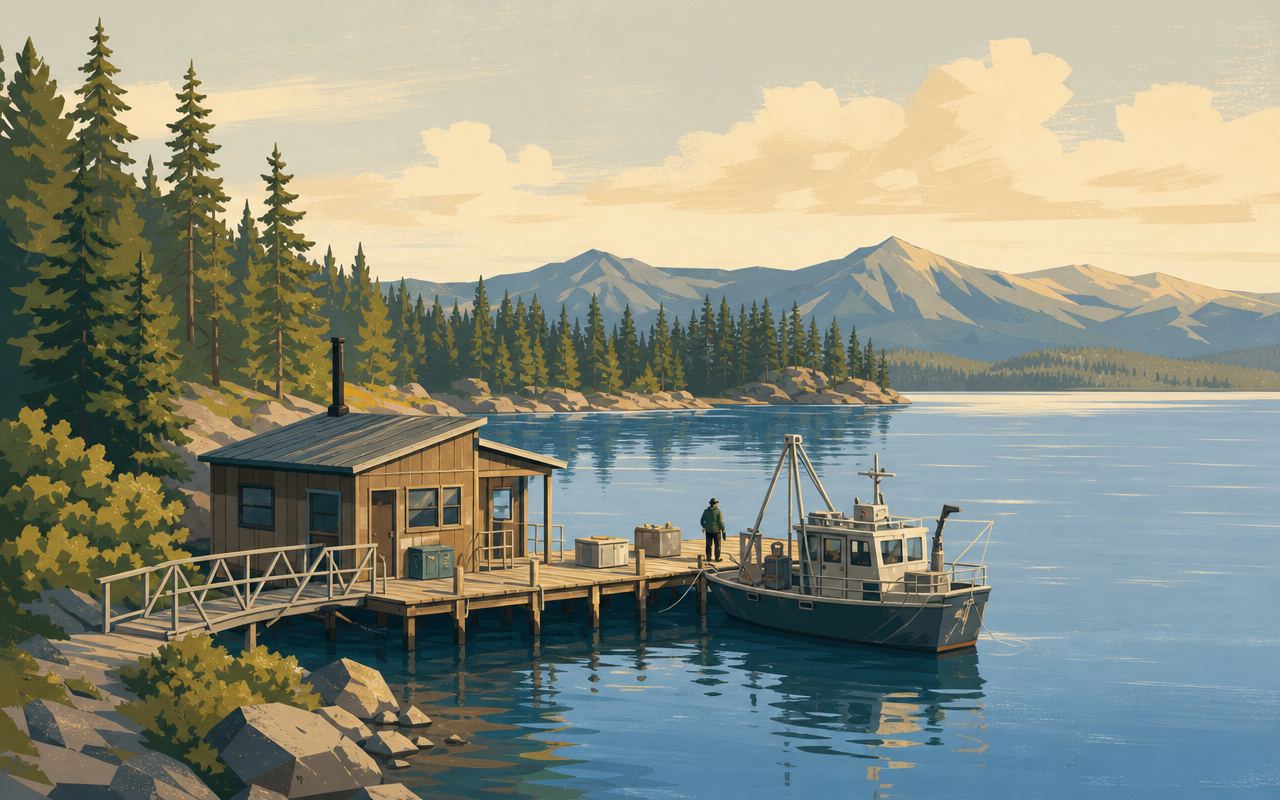
Drive the east shore of Flathead Lake on Highway 35 between Polson and Bigfork, and at Yellow Bay you’ll pass a cluster of older buildings set back from the water — easy to mistake for a lakeside camp or a small college campus. It’s neither. It’s the Flathead Lake Biological Station, a University of Montana research facility that has been studying this lake, in one form or another, for well over a hundred years. It’s not built for tourists, and it doesn’t try to be, but its long presence on this stretch of shore is part of what makes Yellow Bay worth knowing about beyond its own boat launch.
A working research station with a long history
The station was founded in 1899 near Bigfork by Morton J. Elrod, the University of Montana’s first biology professor. Elrod’s influence on the region reached well beyond Yellow Bay: the American Bison Society appointed him to survey potential reserve sites in Montana, work that led directly to the creation of the National Bison Range, and he separately served as Glacier National Park’s first naturalist, writing its first guidebook. A few years after founding, the station relocated to its current site at Yellow Bay, on land the federal government granted to the university in 1910. It has operated there, year-round, ever since — long enough that it’s described as the second-oldest biological field station in the United States, and the longest continuously operating freshwater field station, in year-round use, in North America.
That longevity matters for more than trivia value. A field station that has watched the same lake for over a century has something most research programs never get: a genuinely long baseline, with records reaching back decades before anyone was talking about climate change or invasive species as lake-management problems. The University of Montana treats it today as a formal Center of Excellence for freshwater science, with its own year-round staff, visiting researchers, and graduate students, rather than a seasonal outpost that empties out after summer.
What researchers actually study
The station’s central, defining project is long-term monitoring of Flathead Lake itself, formalized today as the Flathead Monitoring Program, one of the oldest continuous lake-monitoring programs in the world. Researchers have tracked the lake’s water chemistry, nutrient levels, and biological communities on a regular sampling schedule since 1977, building one of the longer continuous freshwater datasets anywhere in the world on top of the informal observations that stretch back to the station’s founding. That record is what lets scientists say with confidence whether the lake is changing, and how quickly, rather than guessing from a handful of one-off measurements — station researchers have used that same multi-decade dataset as part of a global study of more than 100 lakes worldwide, tracking how deep-water temperatures are shifting under climate change, with warming trends that vary sharply from lake to lake even within the same broader dataset.
Beyond the baseline monitoring, station researchers work on the specific threats and changes affecting Flathead Lake’s ecology. Introduced species are a major thread — the lake’s food web has been reshaped over past decades by species that didn’t originate here, and the station tracks how those shifts ripple through the system. Since roughly 2000, the station has also broadened beyond purely aquatic work into terrestrial and systems ecology, treating the lake as one part of a connected watershed rather than a body of water studied in isolation from the land around it. More recently, guarding against aquatic invasive species, particularly invasive mussels that have devastated lake ecosystems elsewhere in the country, has become a significant part of the station’s applied work, feeding directly into the watercraft inspection requirements paddlers and boaters encounter around the lake. Algae blooms tied to nutrient changes are another recurring research subject, since they’re one of the more visible early signs of a lake under stress.
The station isn’t purely a monitoring operation, either. It trains graduate students pursuing research and teaching careers in freshwater science, and it runs field ecology courses for college students and working natural resource professionals — people who need hands-on experience with a real lake system, not just a classroom. In that sense it functions as much as a teaching institution as a research one, even though neither role is aimed at the general public passing through Yellow Bay.
The 2016 Invasive Mussel Scare
The station’s applied, high-stakes work came into sharp public focus in November 2016, when state officials announced Montana’s first-ever detection of invasive mussel larvae, found in water samples from Tiber Reservoir, with a suspect finding at Canyon Ferry Reservoir as well. Zebra and quagga mussels have devastated lake ecosystems and clogged water infrastructure across other parts of the country, and their arrival in Montana waters was treated as a genuine emergency — both reservoirs were closed to boat traffic in response.
Flathead Lake was not one of the lakes where mussels were found, but the discovery triggered an immediate, intensive response from the station anyway. Within weeks, researchers from the Flathead Lake Biological Station, working alongside the Confederated Salish and Kootenai Tribes and the nonprofit Flathead Lakers, collected and analyzed more than 130 environmental DNA samples from roughly 30 locations across the lake — a technique that can detect microscopic traces of a species’ genetic material in water even before any adult mussels would be visible or catchable. By February 2017, the station was able to report that every one of those samples had come back negative, meaning no evidence of invasive mussels anywhere in Flathead Lake.
That episode is now treated as a template rather than a one-off. The station has continued expanding its eDNA-based monitoring and its coordination with tribal, state, and nonprofit partners in the years since, and the boat inspection stations paddlers and boaters encounter around the lake are a direct, ongoing piece of that same prevention effort — a lake this significant, and this economically and ecologically important to the region, doesn’t stay mussel-free by accident.
Its place on Yellow Bay
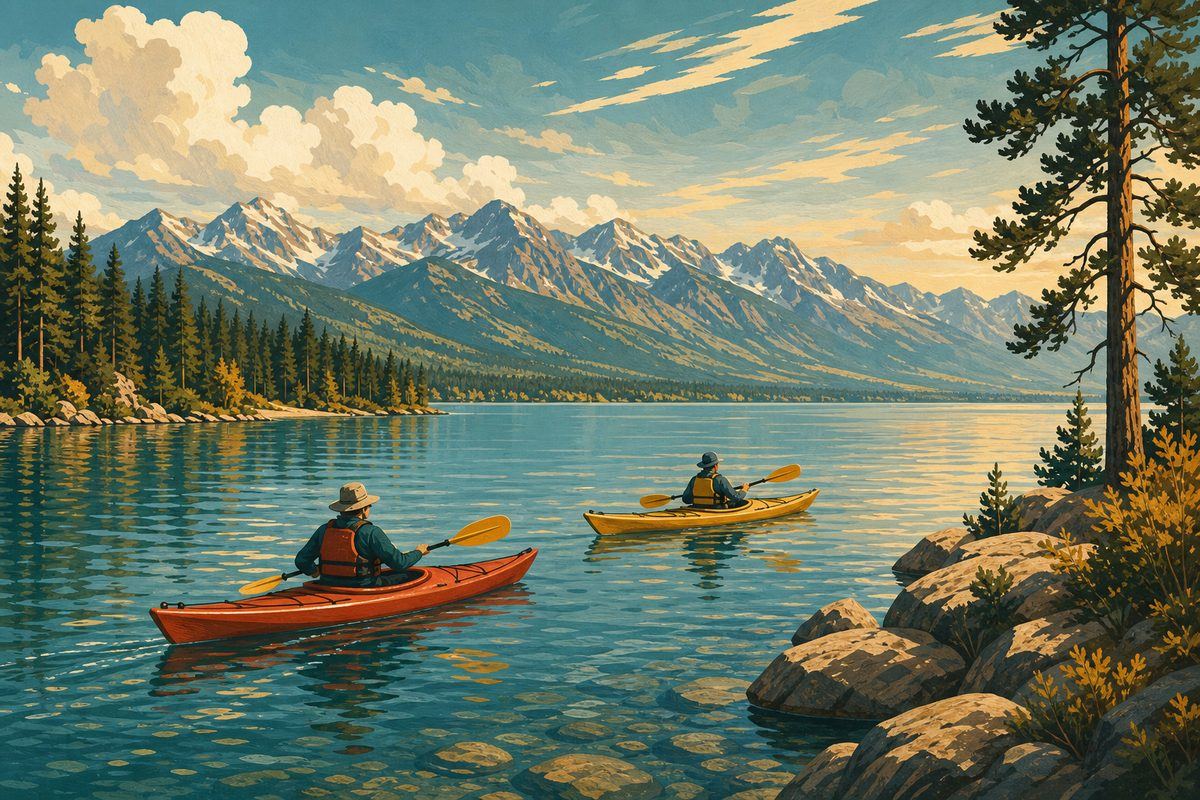
Yellow Bay sits on Flathead Lake’s east shore, along Highway 35, roughly midway between Polson to the south and Bigfork to the north — a stretch of shoreline that’s also covered on this site’s guide to kayaking Flathead Lake as one of the lake’s more useful shoreline-paddling launch points. The bay itself is a small Flathead Lake State Park unit with its own public lake access, entirely separate from the research station’s grounds next door. Paddlers, boaters, and picnickers use that state park access the same way they would any other unit around the lake; the station’s presence doesn’t change how the water itself is used.
What the station does add is context. As that kayaking guide notes, Yellow Bay’s long association with active freshwater research is part of what makes it a well-documented, well-established stretch of shore rather than an obscure pull-off — there’s a reason this particular bay, rather than some unnamed stretch of shoreline, has been a serious research site for more than a century. The station occupies its own campus on the peninsula at Yellow Bay, distinct from the state park’s beach and boat access, so a visit to one doesn’t require or involve the other. A paddler launching from Yellow Bay’s public access is not walking through a research campus to get to the water.
Visiting the station
It’s worth being direct about this: the Flathead Lake Biological Station is a working research and teaching facility, not a visitor attraction, and it isn’t set up as one. There’s no staffed visitor center, no drop-in exhibit hall, and no expectation that people passing along Highway 35 will stop in for a self-guided look at the labs or dormitories. Treating it as a roadside attraction misreads what it is.
That said, the station is not entirely closed off from public interest. It has held public events over the years aimed at sharing its research and history with the surrounding community, including an open house that has offered tours of station facilities, boat trips on the water, and talks from researchers, along with a public seminar series bringing science talks to local audiences during the fall-through-spring months. Because these are scheduled events rather than a standing, year-round program, anyone hoping to see the inside of the station should look up current dates and offerings directly through the university rather than assuming a particular event happens on a fixed annual date or planning a visit around it without confirming first.
For most people traveling Highway 35 or paddling the shoreline nearby, the realistic experience of the station is exactly what you get driving past: a cluster of buildings on a quiet bay, worth knowing the history and purpose of, even without walking through the door. That’s not a diminishment — it’s simply what a working field station a century into its research is for, and it’s part of what makes Yellow Bay more than just another place to put a kayak in the water.
Frequently asked questions
When was the Flathead Lake Biological Station founded?
In 1899, near Bigfork, under its first director, Dr. Morton J. Elrod, a University of Montana biology professor. The station moved to its current site at Yellow Bay a few years later, after the federal government granted the university the land there in 1910. That makes it one of the oldest continuously operating freshwater field stations in North America.
Is it part of the University of Montana?
Yes. It's a University of Montana research and education center, staffed by UM faculty, researchers, and graduate students, and it holds the university's own designation as a Center of Excellence for freshwater science.
What kind of research happens there?
The core work is limnology — the study of lakes and freshwater systems — with a long-running monitoring program that tracks Flathead Lake's water quality, nutrients, and biological communities over time. Station researchers also study the lake's introduced species, including invasive mussels and other organisms that have changed the lake's ecology, and the station teaches field ecology courses to college students and natural resource professionals.
Can I tour the station or visit as a tourist?
Not as a walk-in visitor. It's a working research and teaching campus, not a museum or nature center, and there's no staffed visitor center or drop-in exhibit hall. The station does hold public events at points during the year, including an open house, so the most reliable way to see the inside of the station is to time a visit around one of those rather than expecting a self-guided tour.
Where exactly is Yellow Bay?
On the east shore of Flathead Lake, along Montana Highway 35, roughly midway between Polson and Bigfork. Yellow Bay is also a small Flathead Lake State Park unit with its own lake access, separate from the station's research campus next door.
Can I see the station buildings from the road or the water?
You can see the campus from Highway 35 as you pass Yellow Bay, and its shoreline is visible from the lake. It's private research property, though, so seeing it and being able to walk in and explore it are two different things — respect the working nature of the site rather than treating it as an open campus.
Does the research station affect kayaking or boating near Yellow Bay?
Not in any way that changes access to the water. Yellow Bay's state park unit has its own public lake access alongside the station, and paddlers and boaters use that stretch of shoreline the same as any other part of the lake. The station's presence is more a point of local interest than a practical obstacle.
Has an invasive mussel ever actually been found in Flathead Lake?
No. When Montana had its first-ever invasive mussel detection in November 2016, at Tiber and Canyon Ferry reservoirs, the station and its partners tested more than 130 water samples from around Flathead Lake using environmental DNA analysis. Every sample came back negative. The lake remains mussel-free, and that 2016 response is part of why ongoing boat inspections around the lake are taken so seriously.