Flathead Lake and the surrounding valley support a genuinely wide range of wildlife, from bald eagles and osprey to bighorn sheep, mule deer, and the seasonal comings and goings of waterfowl. None of it is guaranteed on any given visit — this is wild country, not a managed exhibit — but a rough sense of what’s realistic to see, and when, makes the difference between a lucky sighting and a frustrating drive along the shoreline hoping something shows up.
This guide covers the wildlife most consistently documented around the lake and valley, organized by season, along with where people actually have a reasonable chance of seeing it and how to do that responsibly.
Spring and summer wildlife
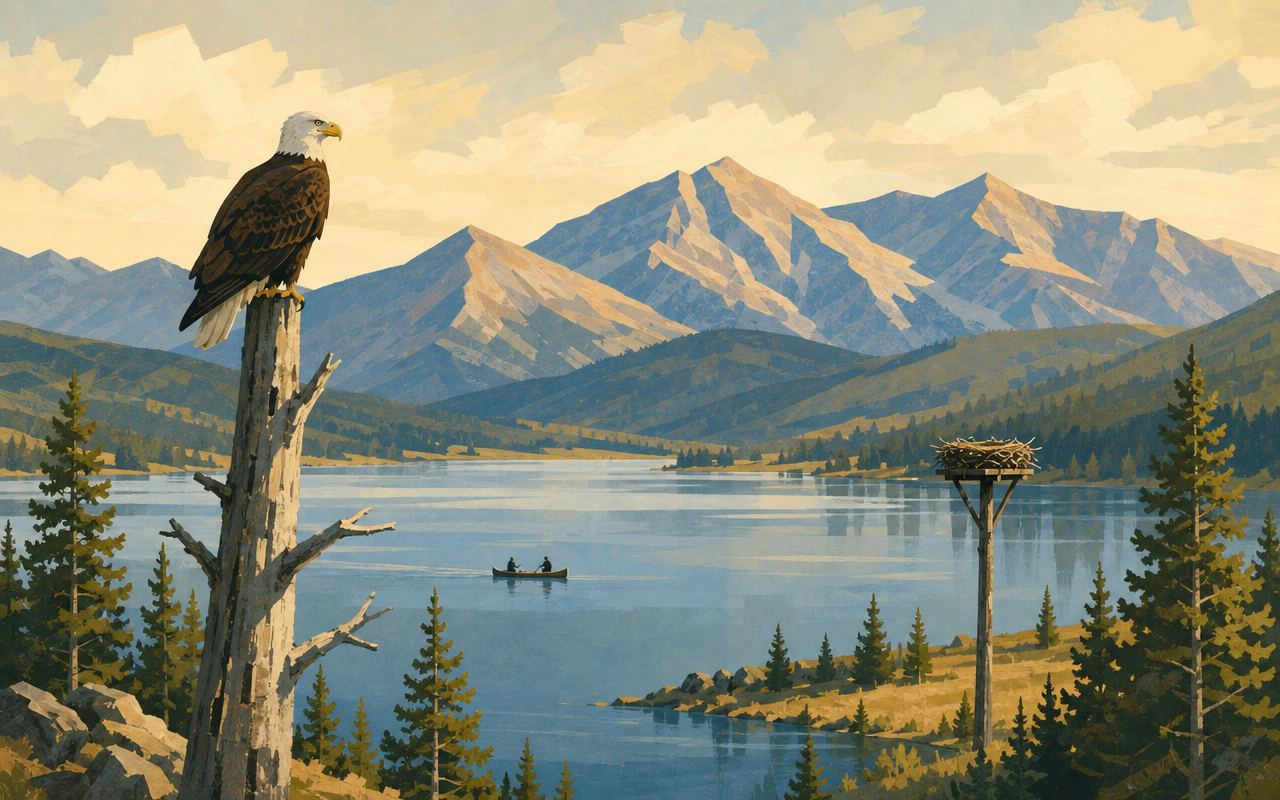
Spring is when the valley’s breeding birds settle back in. Osprey return to the Flathead River corridor and the lake’s shoreline starting in April, and the stretch of river between Kalispell and the lake holds one of the highest densities of osprey nests documented anywhere in Montana — researchers have spent years tracking dozens of nesting pairs and hundreds of fledglings along this corridor. Yellow Bay, on the lake’s east shore, is one of the better-known spots to watch osprey activity; it’s also home to the University of Montana’s Flathead Lake Biological Station, whose long-running presence on that stretch of shore has made it one of the more closely studied bays on the lake, osprey included. A pair of nesting osprey there, or anywhere along the lakeshore, will typically be active through summer as they raise chicks, with most adults and young birds heading south by early fall.
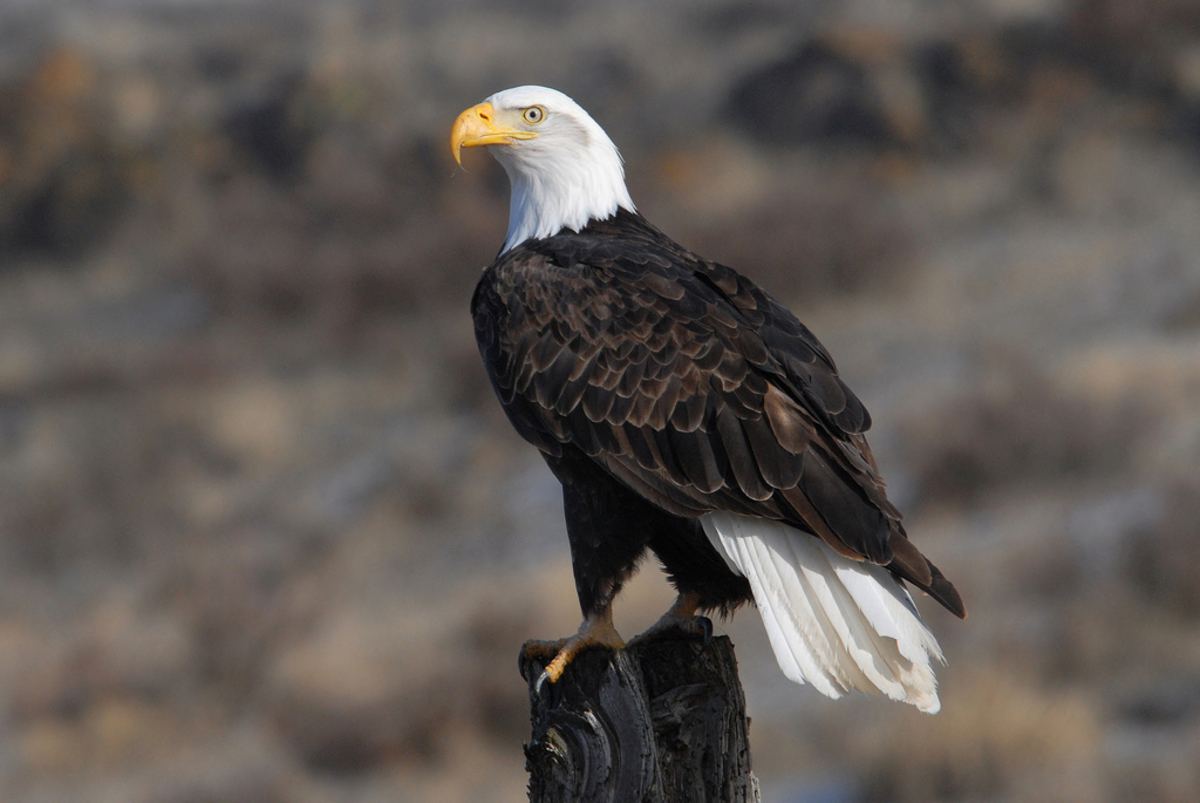
Bald eagles are present through spring and summer as well, though less concentrated than in winter. They nest along stretches of the Flathead River and lakeshore and are a regular sighting around Wild Horse Island, where undisturbed shoreline and healthy fish populations give them reliable hunting grounds. Loons occasionally turn up on the lake during these months too, though Flathead Lake functions more as a stopover for migrating loons than as nesting habitat — Montana’s small breeding population of common loons is concentrated farther north and east, in lake country around Kalispell up toward Eureka and in the Clearwater drainage, not on Flathead Lake itself.
Summer also brings the valley’s waterfowl broods: ducks and geese raising ducklings and goslings along calmer bays, river mouths, and wetland edges, generally more visible in the cooler hours around sunrise and sunset than in the middle of a hot afternoon. On Wild Horse Island specifically, bighorn sheep and mule deer are close to a guaranteed sighting for anyone spending a few hours on the trails — both populations have grown accustomed to the absence of predators and hunting pressure on the island, and sightings at fairly close range on open hillsides are common. Songbirds round out the summer picture across the valley’s forests, orchards, and shoreline brush, though they draw less attention than the larger, more visible species.
Fall and winter wildlife
Fall is migration season across the valley. Waterfowl — ducks, geese, and, at points, larger flocks of migrating swans — pass through and stage on the lake and in nearby wetlands before continuing on, and this is generally the best window for seeing waterfowl in real numbers rather than the smaller breeding groups of summer. Most of the valley’s osprey and many of its songbirds have already headed south by this point, thinning out the bird population even as waterfowl numbers build.
It’s worth being direct about one piece of local history here, because it comes up often enough to be worth correcting: lower McDonald Creek, in Glacier National Park north of the lake, was once one of the best-known places in the country to see bald eagles, with counts reportedly reaching into the hundreds during a fall kokanee salmon spawning run that had drawn eagles there since at least the late 1930s. That gathering collapsed in the late 1980s, after opossum shrimp introduced upstream years earlier fed a boom in lake trout that pushed the kokanee fishery into collapse. Without a concentrated salmon run to feed on, the eagles that had gathered there each fall dispersed to other food sources and other stretches of water. It’s not a current attraction, and no similarly dense fall gathering has replaced it on Flathead Lake itself.
What does hold true today is that bald eagles remain year-round residents of the Flathead system, and winter is actually one of the more dependable times to see them. As smaller lakes, ponds, and side channels freeze over, eagles concentrate along whatever water stays open — stretches of the Flathead River and the lake itself — where they hunt fish along ice edges and take advantage of wintering waterfowl as an additional food source. It’s a quieter, more dispersed version of eagle viewing than the old McDonald Creek gatherings, but a genuinely reliable one for anyone willing to bundle up and watch open water on a cold morning.
From Endangered to Everywhere: The Eagle’s Comeback
The bald eagles seen around Flathead Lake today are visible at all thanks to one of the more dramatic recoveries in American wildlife management. By the early 1960s, decades of habitat loss, shooting, and the pesticide DDT — which thinned eggshells so badly that chicks often didn’t survive to hatch — had reduced the bald eagle to an estimated 487 breeding pairs across the entire lower 48 states. DDT was banned domestically in 1972, and federal protection under the Endangered Species Act followed, giving the population decades to recover. By the time the U.S. Fish and Wildlife Service formally removed the bald eagle from the endangered species list on June 28, 2007 — effective that August — the lower-48 population had rebounded to an estimated 9,789 breeding pairs, roughly a twentyfold increase from its low point.
That national recovery is the reason bald eagles are a realistic, expected sighting around Flathead Lake today rather than a rare event worth planning an entire trip around. Delisting didn’t remove all legal protection, either — bald eagles remain protected under the Bald and Golden Eagle Protection Act and the Migratory Bird Treaty Act, which is why disturbing a nest or an eagle at close range remains illegal regardless of the species’ improved numbers. The practical takeaway for a visitor is straightforward: the eagles along this shoreline and river corridor are a genuine conservation success story in progress, not a fragile population to be viewed only from a great distance out of fear of causing harm — though the same respectful-distance etiquette covered below still applies, out of consideration for the birds rather than legal necessity alone.
Where to look
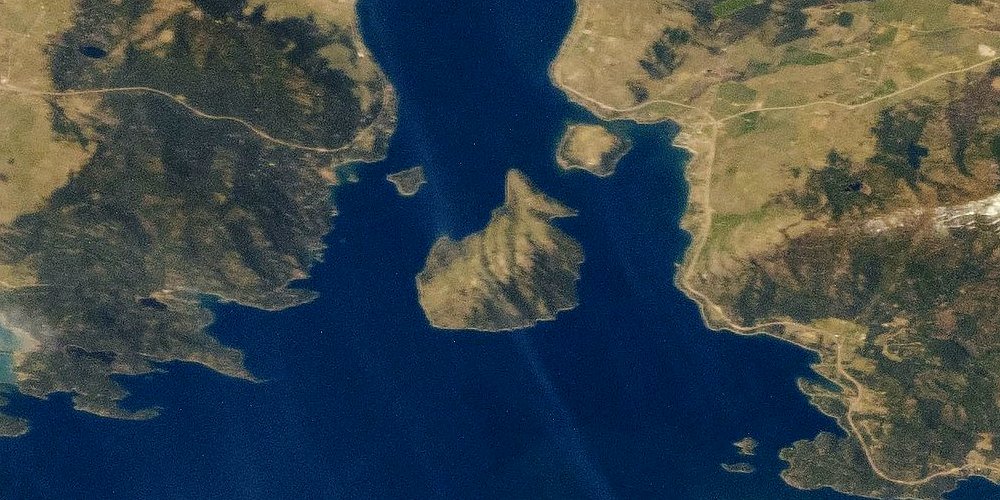
Wild Horse Island, reachable only by boat from the Big Arm area on the lake’s west shore, remains the single most concentrated wildlife-viewing destination in the immediate area. Its bighorn sheep and mule deer are reliably visible on open hillsides, and its shoreline and mature trees support nesting bald eagles, osprey, and a range of waterfowl and songbirds. A pair of binoculars does more for a visit here than almost anything else in a daypack, since much of the wildlife is spread across open terrain rather than clustered close to the landing points.
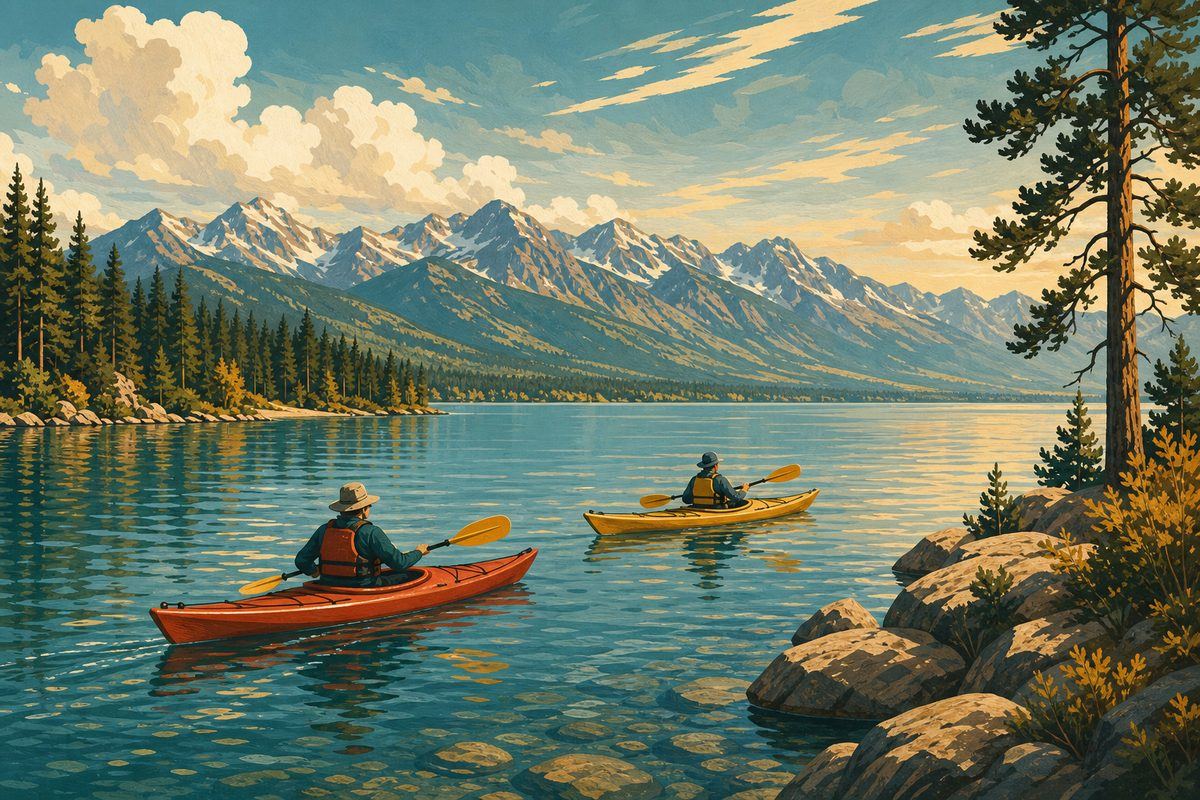
Beyond the island, the general shoreline of Flathead Lake — its various state park units, undeveloped stretches of shore, and quieter bays — is worth watching from a boat, a kayak, or simply a pulled-off vehicle with a clear view of the water. Yellow Bay, on the east shore, is a well-documented stretch for osprey activity given its long association with active freshwater research at the biological station there. The Flathead River corridor, both where it enters the lake near Bigfork and where it exits near Polson, is another consistently productive area for osprey and eagles, since rivers concentrate fish and, in winter, open water in a way that a broad lake doesn’t always match. None of this requires a guided outing — a slow drive along the lake’s public shoreline roads, paired with patience and a decent pair of binoculars, covers most of what’s realistically available to see.
Viewing etiquette
Wildlife viewing around Flathead Lake works best, for the animals and for the person watching, when it stays low-impact. Keep a respectful distance from any animal, whether it’s a bighorn ram on Wild Horse Island, an osprey on a nest, or a bald eagle perched over open water — approaching for a closer photo risks flushing the animal, which is stressful for it and often ruins the sighting anyway. A telephoto lens or a decent pair of binoculars does the work a closer approach shouldn’t.
Never feed wildlife, waterfowl included. It’s a common habit at boat launches and lakeside parks, but feeding wild birds and animals teaches them to associate people with food, concentrates them in ways that spread disease more easily, and can cause real nutritional harm in species not adapted to human food. Stay on established trails and public access points rather than cutting across private land or sensitive habitat to get closer to an animal, and keep dogs leashed or left at home in areas — like Wild Horse Island — where pets aren’t allowed at all. None of this is complicated, and all of it comes down to the same basic principle: the animals were here first, and the goal of a good wildlife sighting is to observe it undisturbed, not to engineer a closer encounter.
Frequently asked questions
Do bald eagles still gather in large numbers on the Flathead system to feed on spawning salmon?
Not the way they once did. Lower McDonald Creek in Glacier National Park, north of the lake, was famous through the 1980s for autumn gatherings of hundreds of bald eagles feeding on spawning kokanee salmon. That congregation collapsed after the kokanee fishery crashed in the late 1980s, following the introduction of opossum shrimp upstream, which fed a boom in lake trout that outcompeted the kokanee. Bald eagles are still present around Flathead Lake and the valley year-round, but not in that historic, concentrated fall gathering.
When is the best time to see bald eagles around Flathead Lake?
Eagles are year-round residents in this part of Montana, but winter is a reliable window: as smaller lakes and side channels freeze, eagles concentrate along the open water of the lake and the Flathead River, where they hunt waterfowl and fish along ice edges. They're also visible in spring and summer, especially around Wild Horse Island and other undisturbed shoreline, but not in the dense, single-species-driven gatherings the area was once known for.
Were bald eagles ever actually endangered, or is that an exaggeration?
It's not an exaggeration — it's one of the best-documented recoveries in U.S. wildlife history. By the early 1960s, DDT and habitat loss had cut the lower-48 population to an estimated 487 breeding pairs. Following a DDT ban and decades of Endangered Species Act protection, the population reached an estimated 9,789 breeding pairs by the time the species was delisted in 2007 — roughly a twentyfold recovery, which is why eagles are a realistic sighting around Flathead Lake today.
Where can I see osprey nests near Flathead Lake?
The Flathead River corridor between Kalispell and the lake holds one of the highest densities of osprey nests documented anywhere in Montana, and researchers have monitored dozens of nesting pairs along the lake and river over the years. Yellow Bay, home to the University of Montana's Flathead Lake Biological Station, is one well-documented stretch of shoreline where osprey activity is easy to watch from public lake access without needing to enter the research campus itself.
What time of year do ospreys nest here?
Roughly April through August. Ospreys return to the Flathead in spring, incubate and raise chicks over the summer, and most adults and fledglings head south by early-to-mid fall, similar to the seasonal pattern for many of the valley's other fish- and insect-eating birds.
Are common loons found on Flathead Lake?
Loons show up on Flathead Lake, but mostly as a migratory stopover rather than a breeding site. Montana's small nesting population of common loons is concentrated farther north and east, in lake country stretching from around Kalispell up toward Eureka and in the Clearwater drainage, so a loon spotted on Flathead Lake itself is more likely passing through than nesting nearby.
What waterfowl can I expect to see, and when?
Ducks, geese, and other waterfowl use Flathead Lake and the surrounding wetlands year-round, with the heaviest concentrations during spring and fall migration, when flocks stage on the water and in nearby wetland areas before continuing their journeys. Summer brings broods of ducklings and goslings along calmer shoreline and river stretches, while winter concentrates birds on whatever water stays open.
Can I see bighorn sheep or mule deer without a boat trip to Wild Horse Island?
Wild Horse Island is the most reliable place in the immediate area to see both, since the animals there have little exposure to predators or heavy disturbance. Bighorn sheep and mule deer do occur elsewhere in the wider Flathead Valley and surrounding mountains, but they're less predictably visible than the island's resident populations, which is part of why the island has the reputation it does.
Is it okay to feed the waterfowl at boat launches and shoreline parks?
No. Feeding waterfowl or any other wildlife encourages animals to associate people with food, concentrates birds in ways that spread disease, and can cause nutritional problems in species not adapted to bread or other handouts. It's a common habit at boat launches and parks, but not a responsible one — let wild birds find their own food.