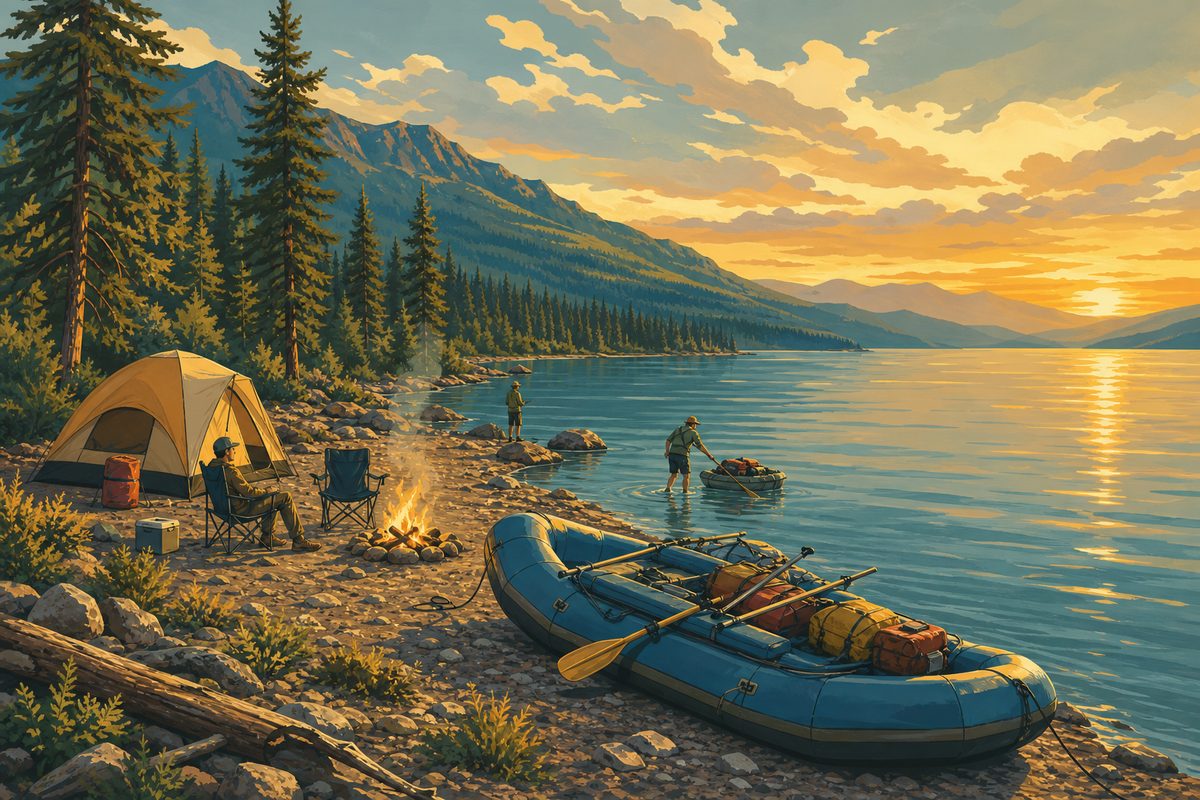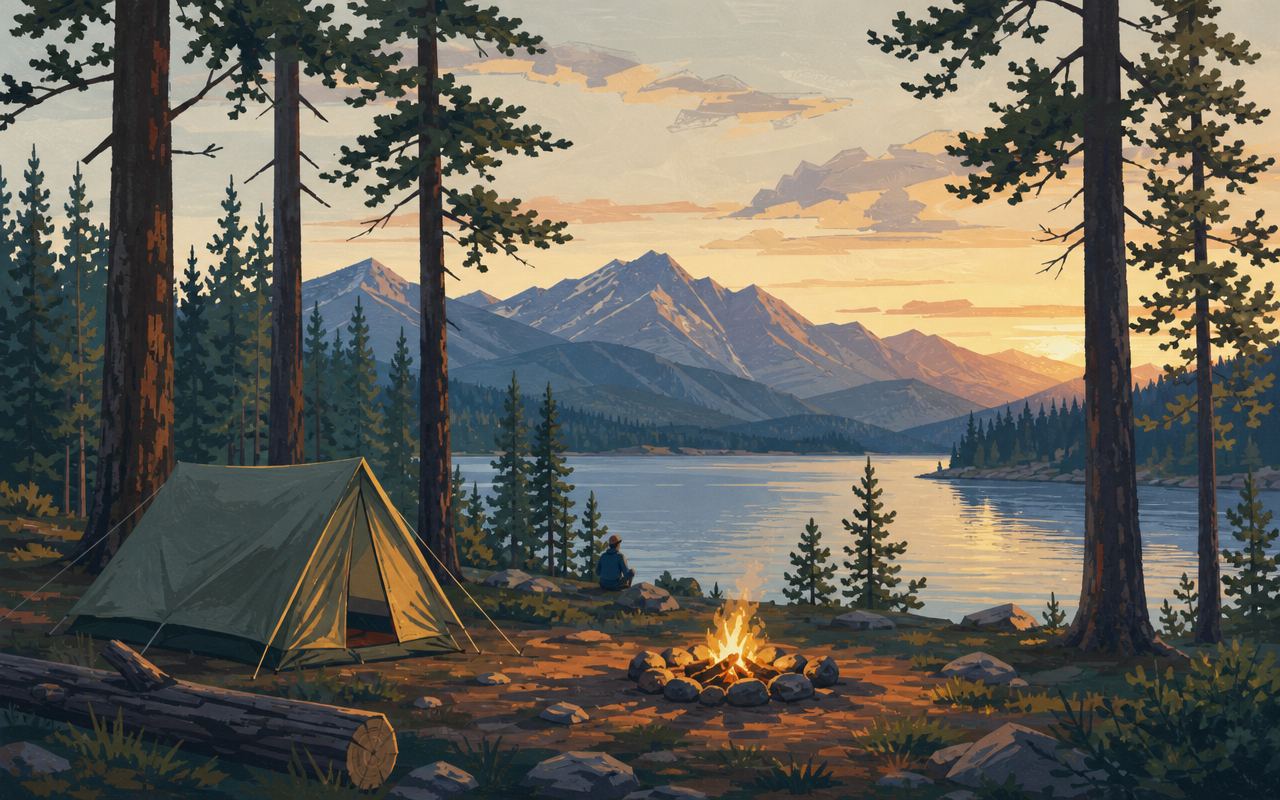
Flathead Lake State Park’s six units aren’t equally set up for an overnight stay, and the ones that do take campers all run through the same statewide reservation system rather than anything unit-specific. Knowing which units have campgrounds, how that reservation system actually works, and when to use it is the difference between a lakeshore site booked months out and a last-minute scramble that turns into a long drive to a different campground entirely.
This guide sticks to the logistics: which units offer camping, how Montana’s reservation system handles bookings, when to get a reservation in for summer, and what a typical lakeshore site involves. For a fuller comparison of what each unit offers beyond camping — boat launches, day-use areas, hiking, the Wild Horse Island crossing — see this site’s guide to all six units.
Which units have camping
Of the six Flathead Lake State Park units, four have full developed campgrounds: Big Arm and West Shore on the west shore, and Wayfarers and Finley Point on the east shore. All four take both tent and RV campers and are bookable through the state reservation system described below.
Yellow Bay, on the east shore between Wayfarers and Finley Point, has camping too, but on a smaller scale — a modest, mostly tent-oriented campground rather than a full RV facility, and one that operates only in the main summer season. Outside that window, Yellow Bay shifts to day-use only, so it’s not a year-round camping option the way the larger units at least attempt to be.
Wild Horse Island is the exception that’s worth stating plainly, since it’s easy to assume every unit of a park works the same way: there’s no camping there at all. It’s managed strictly as a day-use site, with no overnight facilities of any kind, and a trip there has to be planned as a same-day out-and-back by boat rather than an overnight stay. Anyone searching a reservation system for a Wild Horse Island campsite won’t find one, because none exists.
That leaves five units — Big Arm, West Shore, Wayfarers, Yellow Bay, and Finley Point — as the actual camping options at Flathead Lake State Park, with Yellow Bay the seasonal outlier among them.
How reservations work
Camping at all five units runs through Montana State Parks’ central reservation system, accessible at stateparks.mt.gov or by phone through a dedicated reservation call center. That system is built on the ReserveAmerica platform, the same booking infrastructure used by a number of other state park systems around the country, though the Montana-branded portal is the one to use for Flathead Lake bookings rather than a generic ReserveAmerica search.
A few mechanics of the system matter for planning purposes. Reservations can be made up to three months ahead of an arrival date, and as late as the day before — there’s no minimum lead time, only a maximum. A flat reservation fee applies on top of the nightly camping fee when booking online or by phone, and nightly camping fees themselves vary by season, unit, and site type; Montana State Parks has published rates spanning roughly $4 to $34 a night across its system, but those figures are revised periodically, so the current listing for the specific unit and site is the number to trust, not any fixed figure quoted elsewhere. Reserved stays are also capped at a maximum of seven nights per site.
Not every site is locked up by advance reservation, either. Montana’s state park system generally holds back a portion of its total camping capacity — on the order of a fifth of available sites — for first-come, first-served use rather than reservation. That leaves some room for a spontaneous trip, particularly on a weekday or outside peak season, though it’s a real gamble rather than a backup plan for a summer weekend at a popular unit like Big Arm or Wayfarers.
When to book for summer
The short version: as early as the reservation window allows. Because bookings open exactly three months before an arrival date, the practical strategy for a specific summer weekend is to have the booking ready to go the moment that three-month mark hits, rather than checking back periodically and hoping a site is still open. Popular lakeshore sites at the larger units are known to be claimed within that window rather than sitting available, and Fridays and Saturdays through July and August go first, with holiday weekends — Independence Day, Labor Day — filling earliest of all.
The main reservable camping season runs roughly from late spring through late September, which lines up with when lake water is warm enough for swimming and when most of each unit’s facilities are open. Outside that window, camping options thin out considerably: Yellow Bay’s campground effectively closes to overnight use, and off-season availability elsewhere depends on which facilities a given unit keeps running through the shoulder seasons. A trip planned for anything outside the core summer months is worth double-checking against the current seasonal listing for that specific unit rather than assuming standard summer rules apply.
None of this is unique to Flathead Lake — it reflects how Montana’s state park reservation system works statewide — but the lake’s popularity as a summer destination means the general advice to book early applies here with unusual force. A trip built around a specific unit, rather than “camping at Flathead Lake” generally, should treat the three-month booking window as a hard planning deadline, not a rough guideline.
What to expect at a lakeshore site
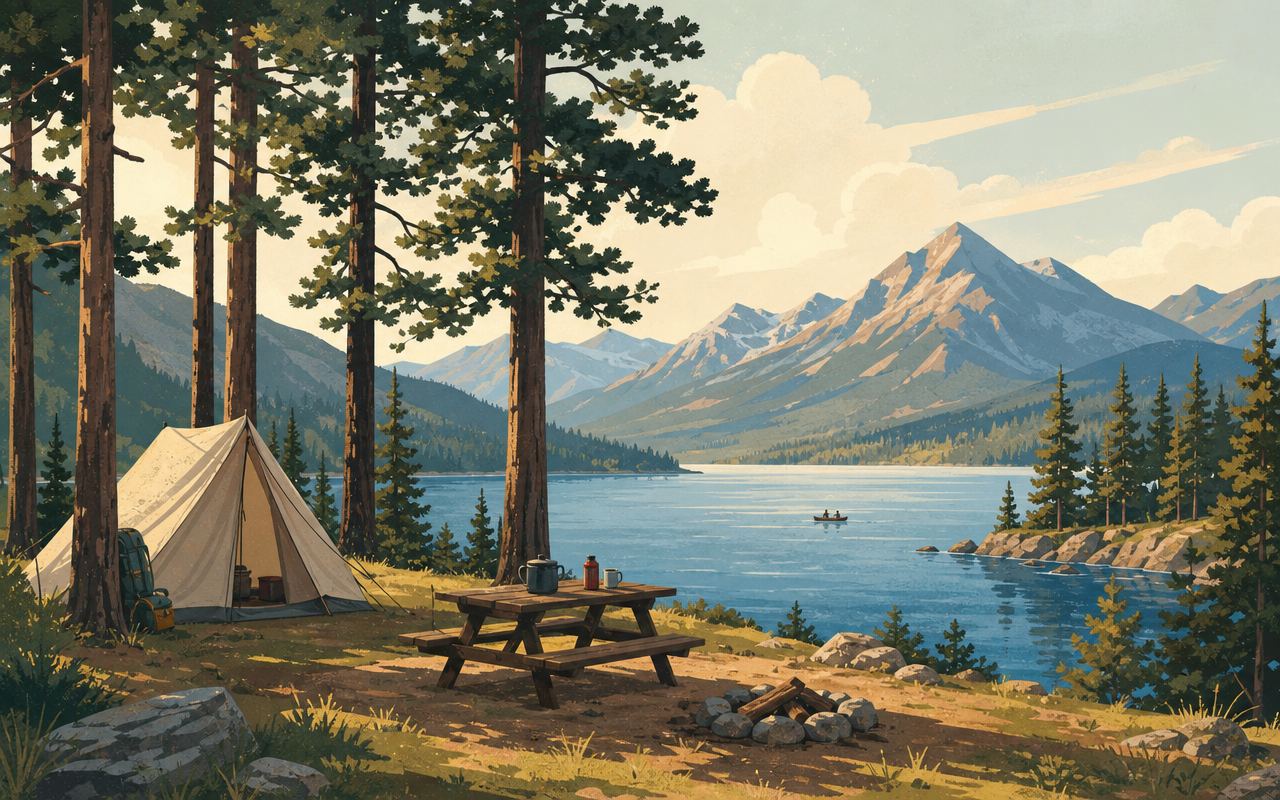
Across the four full-service units — Big Arm, West Shore, Wayfarers, and Finley Point — the shared elements are direct lake access, a mix of tent and RV sites, and basic developed amenities like restrooms and bear-resistant food storage, since black bears are present around the lake and proper food storage is treated as a standard expectation rather than an optional precaution. Beyond that baseline, the units differ in setting: Big Arm and Wayfarers sit closer to open shoreline, West Shore is tucked into denser forest and has a reputation as the quietest of the group, and Finley Point is built around a marina, which makes it the most boat-camping-oriented of the four.
Yellow Bay’s smaller, mostly tent-only campground is a step down in scale from the other four rather than a lesser version of the same setup — it suits a simpler, more low-key stay closer to the beach and Yellow Bay Creek than a full-facility RV trip.
What none of the units offer is a guarantee of specific amenities without checking first — site counts, hookup availability, exact restroom types, and fee schedules are all details that shift over time and are best confirmed against the current Montana State Parks listing for the unit in question rather than assumed from a general description. That’s true of the units-compared guide on this site as well: the aim here is to explain how the system and the season work, not to lock in figures that a park update could make outdated. Booking early, expecting basic rather than luxury facilities, and treating the reservation system’s three-month window as the real deadline are the parts of the picture that hold steady from one summer to the next.
What a Site Actually Looks Like: Wayfarers as an Example
Because exact site counts and amenities are the kind of detail that shifts as parks upgrade facilities, it’s more useful to walk through one real unit in specific terms than to quote figures for all five camping units that could be outdated by the time of a trip. Wayfarers, just south of Bigfork on the east shore, is a reasonable example: it currently has 30 campsites, including a shared hike-bike site with 9 individual tent pads for cyclists and backpackers arriving without a vehicle, one fully ADA-accessible site, and a maximum RV or trailer length of 40 feet. Some sources describe most sites as primitive with no hookups, while at least one site has been upgraded with electric service — exactly the kind of detail worth confirming directly against the current park listing before counting on it, since a single upgraded site can be booked well in advance precisely because it’s the exception rather than the rule.
That level of specificity — real numbers, tied to one named unit, sourced to the park’s own current information rather than a general description — is the right way to plan a Flathead Lake State Park camping trip. The other four camping units (Big Arm, West Shore, Yellow Bay, and Finley Point) each have their own site counts, hookup situations, and amenities that differ from Wayfarers’ and from each other’s, and all of them are subject to change as Montana State Parks continues to invest in the system. Treat Wayfarers’ numbers here as an illustration of what “a developed Flathead Lake State Park campground” actually looks like on the ground, not as a stand-in for every unit’s specifics.
Frequently asked questions
What reservation system does Flathead Lake State Park use?
Montana State Parks bookings, including all five camping units at Flathead Lake, run through the state's reservation portal at stateparks.mt.gov, which is built on the ReserveAmerica platform, or by phone through the ReserveAmerica call center. It's the same system used across Montana's state park campgrounds, not something unique to Flathead Lake.
How far in advance can I book a campsite?
Reservations open up to three months ahead of an arrival date and can be made as late as the day before. For a specific summer date, that means the booking window opens exactly three months earlier — a detail worth tracking if a particular weekend matters.
When should I actually book for a summer trip?
As close to the three-month mark as possible, especially for a Friday or Saturday night in July or August. Popular lakeshore sites at units like Big Arm and Wayfarers are known to fill within the reservation window rather than lingering, and holiday weekends go faster still. Booking three months out isn't just cautious advice here — it lines up with when the system actually opens availability for that date.
Which units at Flathead Lake State Park allow camping?
Big Arm, West Shore, Wayfarers, and Finley Point all have developed campgrounds bookable through the same reservation system. Yellow Bay has a small, tent-oriented campground open in the main summer season only. Wild Horse Island has no camping at all — it's a day-use-only unit with no overnight facilities, so it never appears as a bookable campground option.
Can I show up without a reservation and still get a site?
Sometimes. Montana's state park system generally holds back a portion of sites — roughly a fifth of total capacity — for first-come, first-served use rather than reservation, which gives some room for spontaneous trips. It's a real option, not a guarantee, and it favors weekdays and shoulder-season visits far more than a July Saturday.
Is there a limit on how long I can stay at one site?
Yes. Montana State Parks caps reserved stays at seven nights per site, which applies at the Flathead Lake units along with the rest of the state park system.
What does a reservation cost on top of the nightly site fee?
Booking online or by phone adds a flat reservation fee on top of the nightly camping fee. Montana State Parks has published nightly camping fees in roughly the $4-to-$34 range depending on the season and the site's amenities, but exact figures change from year to year — check the current listing for the specific unit and site type before counting on a number.
How many campsites does a typical unit actually have?
It varies by unit, and treating any single figure as universal is a mistake. Wayfarers, for example, currently has 30 sites, including a 9-pad hike-bike site and one ADA-accessible site, with a 40-foot maximum for RVs and trailers. Big Arm, West Shore, Yellow Bay, and Finley Point each have their own separate counts and amenities — check the current listing for the specific unit you're booking.
Is camping available at Flathead Lake State Park year-round?
Not at every unit, and not without limits even where it is offered. The main camping season runs roughly late May through late September, when the reservation system is active; Yellow Bay in particular shifts to day-use only outside that window, and off-season camping elsewhere depends on which facilities a given unit keeps open. Confirm current seasonal status before planning anything outside peak summer.