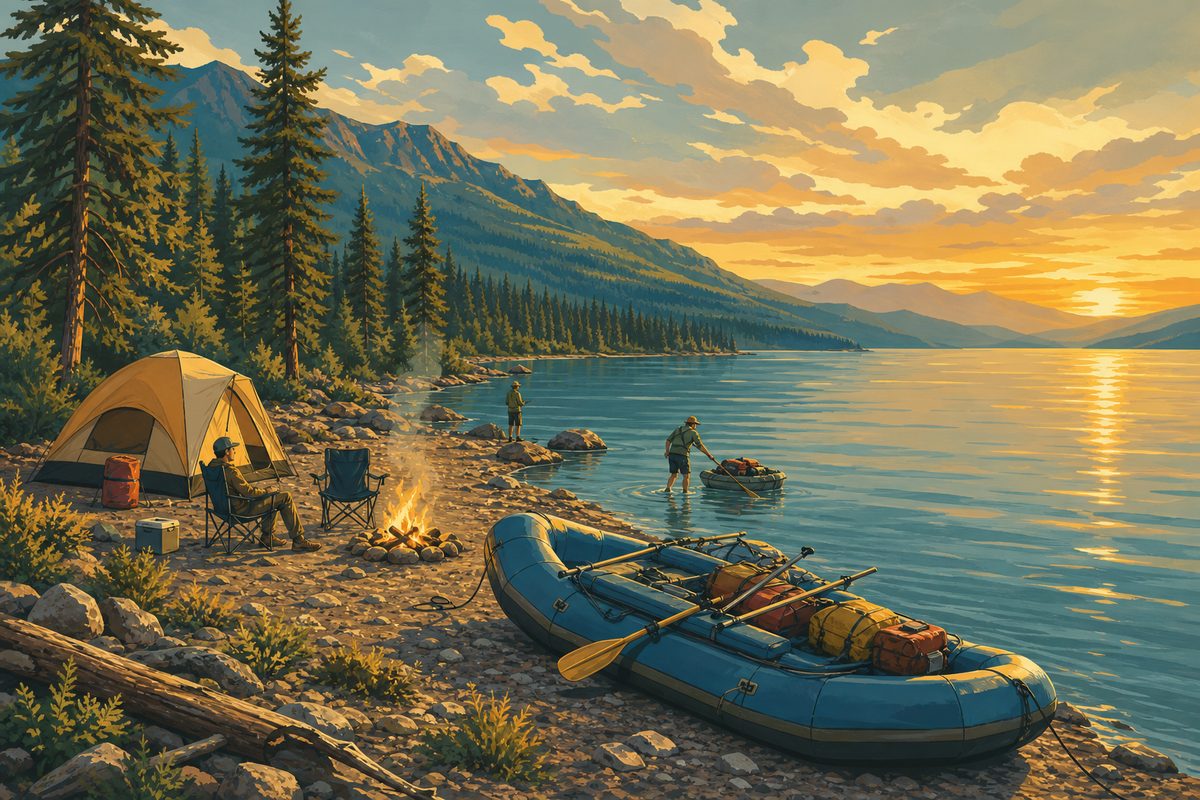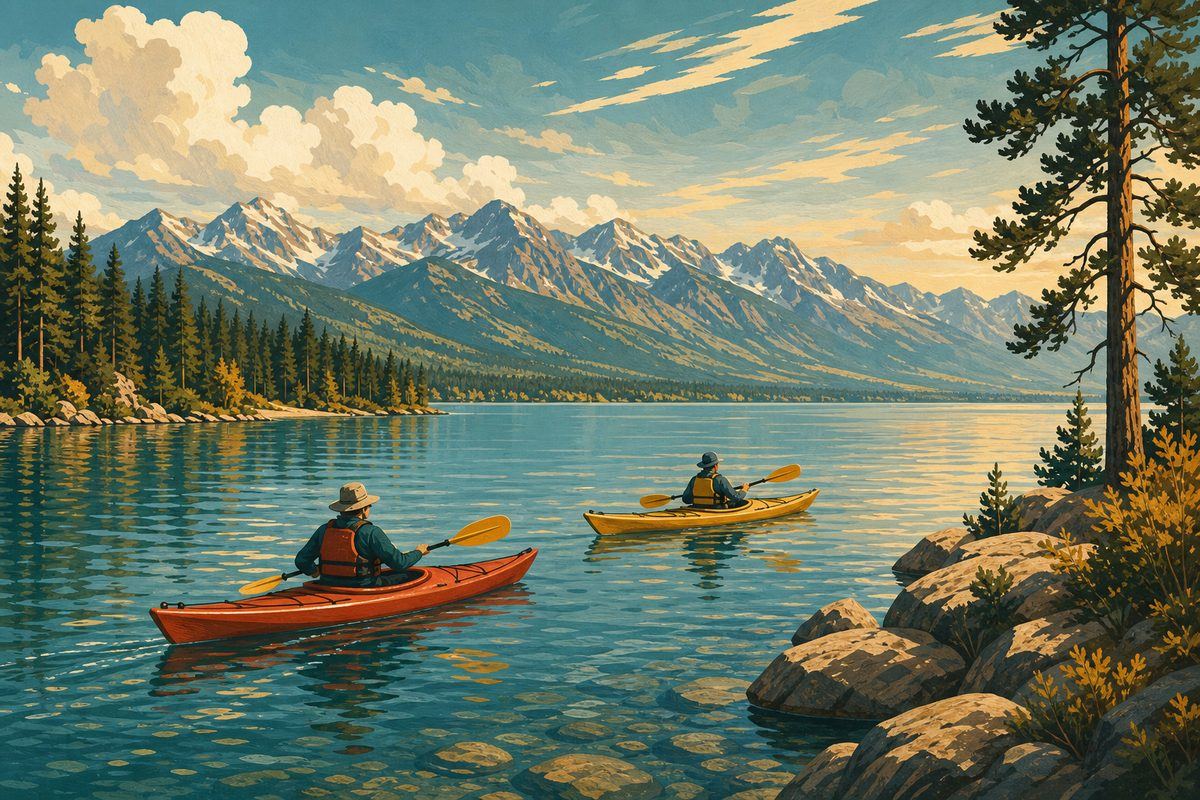
Flathead Lake State Park is not one park with one entrance. It’s six separate units, managed by Montana Fish, Wildlife & Parks, scattered around the lake’s shoreline and out onto its largest island — three on the east shore, two on the west shore, and one reachable only by boat. Anyone planning a trip around “the state park” without knowing which unit they mean can end up an hour’s drive from the amenities they wanted, since a campground reservation at one unit does nothing for a day-use stop at another.
This guide compares all six units: what’s documented at each — camping, day-use areas, boat launches, hiking — and how each fits into the water recreation covered elsewhere on this site, from the Wild Horse Island crossing to Yellow Bay’s research station to the paddling routes near Bigfork. It also clears up a common point of confusion: Somers Beach State Park, a newer park on the lake’s north shore, is not one of the six units, even though it sits on the same lake and shares the same manager.
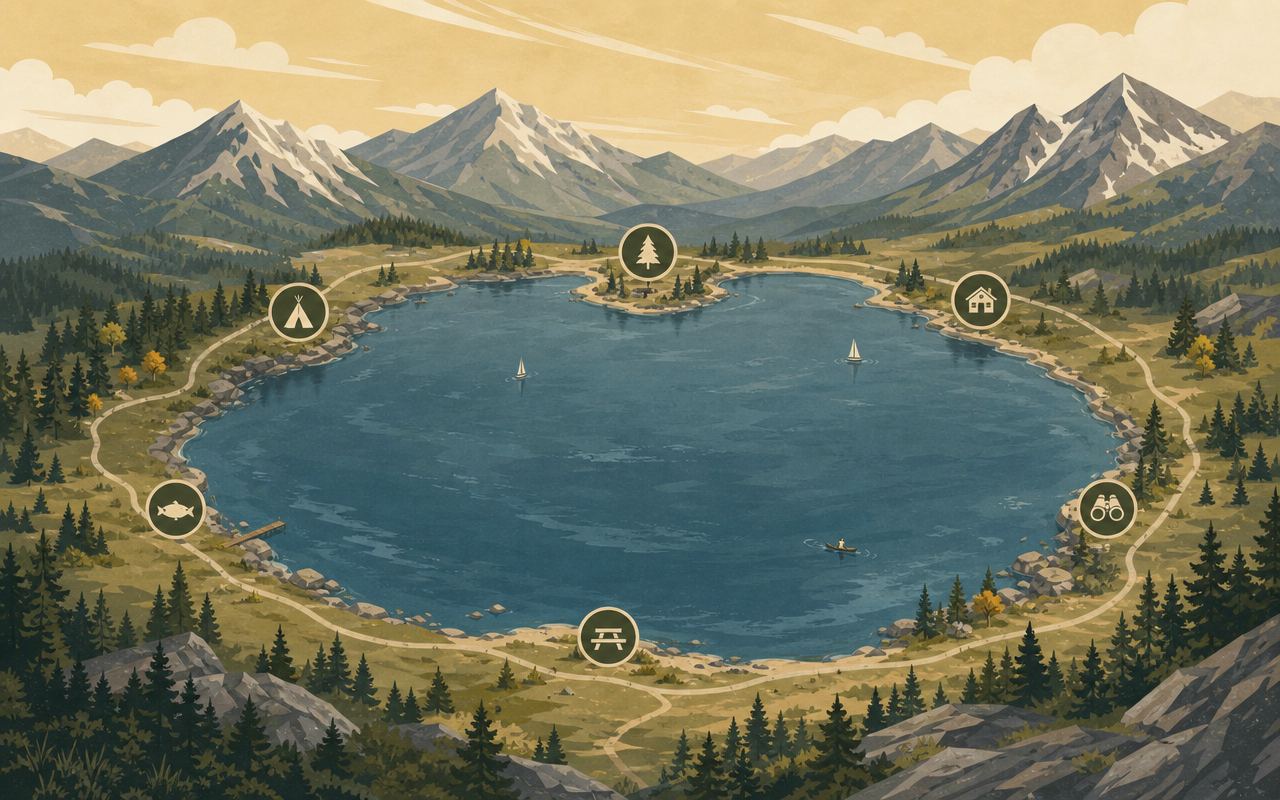
The six units at a glance
Working roughly clockwise from the lake’s northwest corner: West Shore and Big Arm sit on the west side of the lake along U.S. Highway 93, with Big Arm farther south and closer to Polson. On the east side, Wayfarers sits just south of Bigfork, Yellow Bay is roughly midway down the shore, and Finley Point is near the lake’s south end, close to Polson. Wild Horse Island, the lake’s largest island, sits out in open water off the west shore and is reachable only by boat.
That spread is the whole point of treating the park as six units rather than one. A trip based near Bigfork has easy access to Wayfarers and, farther south, Yellow Bay, but a long drive around the lake to reach Big Arm or West Shore. A trip based near Polson is close to Finley Point and a short drive from Big Arm, but well south of Wayfarers.
Big Arm: the Wild Horse Island launch point
Big Arm sits on the west shore, north of Polson on U.S. Highway 93, and is best known as the standard mainland launch point for the crossing to Wild Horse Island — a trip this site covers in detail in its Wild Horse Island and lake-kayaking guides. It’s the closest developed unit to the island, which makes it the shortest realistic open-water route, whether by motorboat or paddle craft.
Beyond that role, Big Arm is a full-service shoreline campground with both RV and tent sites plus a small number of yurts, a boat launch with docks suited to motorized boats as well as kayaks and canoes, bear-resistant food storage, and both flush and vault restrooms. Most sites sit right along the water, giving direct lake access for swimming and launching on top of the developed ramp.
For paddlers following this site’s kayaking guide, Big Arm is the unit that matters most: it’s the jumping-off point for the island crossing, and its developed launch is part of why that crossing is done from here rather than elsewhere on the west shore.
West Shore: the quiet forested unit
A short distance north of Big Arm, near Lakeside, West Shore is set back into a mature forest of fir, pine, and larch rather than sitting directly in the open the way some of the lake’s other units do. That forested setting makes it, by reputation, the quietest of the six units — a contrast to the more exposed shoreline camping at Big Arm.
West Shore has its own developed campground with both tent and RV sites, including hookups at some sites, and a deep-water boat launch that reportedly stays usable outside the main summer season. In season, a concessionaire has offered kayak, paddleboard, and pedal-boat rentals directly from the unit, a workable option for visitors who want to get on the water without hauling their own boat. Hiking trails and a lake-viewing platform round out the day-use appeal for anyone not staying overnight, and the unit’s position on U.S. 93 gives easy road access both north toward Kalispell and Somers and south toward Big Arm and Polson.
Wayfarers: the Bigfork-adjacent unit
Wayfarers is the unit most closely tied to Bigfork, sitting about half a mile south of town on the lake’s northeast shore. For anyone whose trip is centered on Bigfork — covered in its own guide elsewhere on this site — Wayfarers is the natural state park stop, requiring no significant detour around the lake.
The unit has a developed campground set in mixed pine and fir forest, with a boat launch and dock typically usable through the main summer season, depending on lake levels. Its rocky shoreline and cliffs are a recognized draw for photographers, swimmers, and hikers, giving Wayfarers a distinct look compared to the sandier shoreline at some of the lake’s other units, and a shared hike-bike site reflects its position along a regional cycling route.
Because of its location, Wayfarers works well as a paired stop with Bigfork itself — a short trip out of town for lake access or camping, rather than a destination requiring its own dedicated drive.
Yellow Bay: research station and swimming beach
Yellow Bay sits roughly midway down the lake’s east shore, about 14 miles south of Bigfork, and is one of the smaller units in both land area and camping capacity — a modest, largely tent-oriented campground rather than a full RV facility. Its wide, gravelly beach and Yellow Bay Creek make it a popular spot for swimming and sunbathing as well as shoreline paddling, and this site’s kayaking guide identifies Yellow Bay as one of the lake’s three most commonly used paddling access points, alongside Somers and Big Arm.
Yellow Bay is also home to the University of Montana’s Flathead Lake Biological Station, a freshwater research facility that has operated on this stretch of shore for well over a century — covered in its own guide on this site. The station’s long presence is part of what makes Yellow Bay a well-documented piece of shoreline rather than an obscure pull-off, even though visiting the station itself isn’t necessary to enjoy the beach or the paddling.
Unlike the lake’s larger campground units, Yellow Bay shifts to day-use only outside the main season, so anyone planning an off-season visit should check current hours rather than assuming year-round overnight access.
Finley Point: the marina unit
Finley Point, about 12 miles north of Polson on the lake’s southeast shore, is the one unit built around a proper marina rather than a simple boat ramp. Alongside its campground — set in a secluded stand of mature ponderosa pine, with a mix of RV sites, cabins, and boat-camping slips — Finley Point offers rentable marina slips, some with water and electric hookups, making it a practical option for anyone camping aboard their own boat rather than in a tent or RV.
The unit’s boat ramp, day-use picnic area, and proximity to Polson round out its appeal: close enough to town for golf, shopping, and dining, while still offering a quieter, forested camping experience on the water and more marine infrastructure than the other units provide.
Wild Horse Island: the boat-only unit
Wild Horse Island stands apart from the other five units in one obvious way: there’s no road to it, no campground, and no boat launch of its own, because it’s the destination the other units’ launches lead to, not a shoreline facility in itself. It’s the largest island on Flathead Lake and a state park unit in its own right, managed as a day-use site with no overnight camping anywhere on the island — a point covered in full in this site’s dedicated Wild Horse Island guide, along with the island’s wildlife, trail network, and rules.
The standard route onto the island is the crossing from Big Arm described above, though longer crossings from other points around the lake, including the east shore, are also used. Whichever unit a visitor launches from, Wild Horse Island’s day-use-only status means every visit has to be planned as an out-and-back trip within a single day, with everything needed for the visit — food, water, sun protection — brought along and packed back out.
Somers Beach State Park: a separate park, not a seventh unit
It’s worth being direct about a point of real confusion: Somers Beach State Park, on the lake’s north shore near the town of Somers, is not one of Flathead Lake State Park’s six units, despite sitting on the same lake and being managed by the same agency. FWP acquired the 106-acre Somers Beach property in 2021 and opened it to the public in 2022 after a multi-year planning process, but it’s listed and managed as its own, separate state park rather than being folded into the Flathead Lake State Park grouping.
That distinction matters mainly for anyone searching FWP listings or making a reservation: Somers Beach won’t appear as a seventh “unit” alongside Big Arm, West Shore, Wayfarers, Yellow Bay, Finley Point, and Wild Horse Island, and its amenities — a hand-launch area for paddle craft, trails, picnic areas, and a small number of planned rental cabins — are oriented more toward day use and human-powered boats than the six Flathead Lake State Park units’ mix of campgrounds and boat ramps. This site’s guide to Somers covers that park and the town around it in more depth.
Planning around the units
The single most useful habit for planning a visit is deciding which unit actually matches the trip, rather than assuming any one of them stands in for the whole park. A camper wanting a marina and boat slips wants Finley Point, not Yellow Bay. A paddler aiming for Wild Horse Island wants Big Arm, not Wayfarers. Someone based in Bigfork for a few days is better served by Wayfarers than by driving around to the west shore units.
It’s also worth building trips around what this site covers elsewhere: the Wild Horse Island crossing from Big Arm, the paddling routes that touch Yellow Bay and the Biological Station, and the town-level detail on Bigfork and Somers surrounding several of these units. Treat the six units as distinct tools for distinct trips — camping at Wayfarers, a marina stay at Finley Point, a beach afternoon at Yellow Bay, a quiet forested camp at West Shore, or the launch at Big Arm for a day on Wild Horse Island — rather than one interchangeable experience.
Details that change year to year — exact fees, specific facility counts, seasonal closures for upgrades — are worth confirming directly with Montana Fish, Wildlife & Parks or a current reservation listing before a trip, rather than relying on any older description, this one included.
Frequently asked questions
How many units make up Flathead Lake State Park?
Six. Montana Fish, Wildlife & Parks manages Flathead Lake State Park as six separate units scattered around the shoreline rather than one contiguous park: Big Arm and West Shore on the west side, Wayfarers, Yellow Bay, and Finley Point on the east side, and Wild Horse Island out in the lake itself.
Is Somers Beach State Park one of the six units?
No. Somers Beach State Park, on the lake's north shore near the town of Somers, is a separate state park in its own right. FWP acquired the 106-acre property in 2021 and opened it to the public in 2022, but it isn't grouped under the Flathead Lake State Park umbrella — it's managed and listed as its own unit of the state park system.
Which unit is the launch point for Wild Horse Island?
Big Arm, on the west shore. It's the closest mainland unit to the island, which makes it the shortest realistic open-water crossing, and it has a developed boat launch that both motorized boats and paddlers use to reach the island.
Which units allow camping, and which are day-use only?
Big Arm, West Shore, Wayfarers, and Finley Point all have developed campgrounds. Yellow Bay has a small tent-only campground but shifts to day-use-only outside the main season. Wild Horse Island has no camping at all — it's a day-use site with no overnight facilities of any kind.
Which unit is closest to Bigfork?
Wayfarers, about half a mile south of Bigfork on the lake's northeast shore. It's the most convenient unit for anyone basing a trip out of Bigfork rather than Polson or Kalispell.
Which unit has a marina?
Finley Point, near the lake's south end, is the one unit built around a marina rather than just a boat ramp, with slips available for rent alongside its campground and day-use area.
Can I visit Wild Horse Island without camping gear?
Yes — in fact you have to, since overnight stays aren't permitted there. It's meant to be visited as a day trip by boat, with everything you need brought along and everything you bring packed back out.
Do all six units have boat launches?
Most do. Big Arm, West Shore, Wayfarers, and Finley Point all have developed boat launches or ramps. Yellow Bay's access leans more toward hand-launched craft and swimming than a full trailer ramp, and Wild Horse Island has no launch of its own — it's reached by boat from elsewhere, not launched from.
Is there an entrance fee for these units?
A day-use fee applies at Flathead Lake State Park units generally, consistent with other Montana state parks, and camping carries its own separate fee on top of that. Exact amounts change from year to year, so check current Montana State Parks or FWP listings before a trip rather than relying on an older figure.