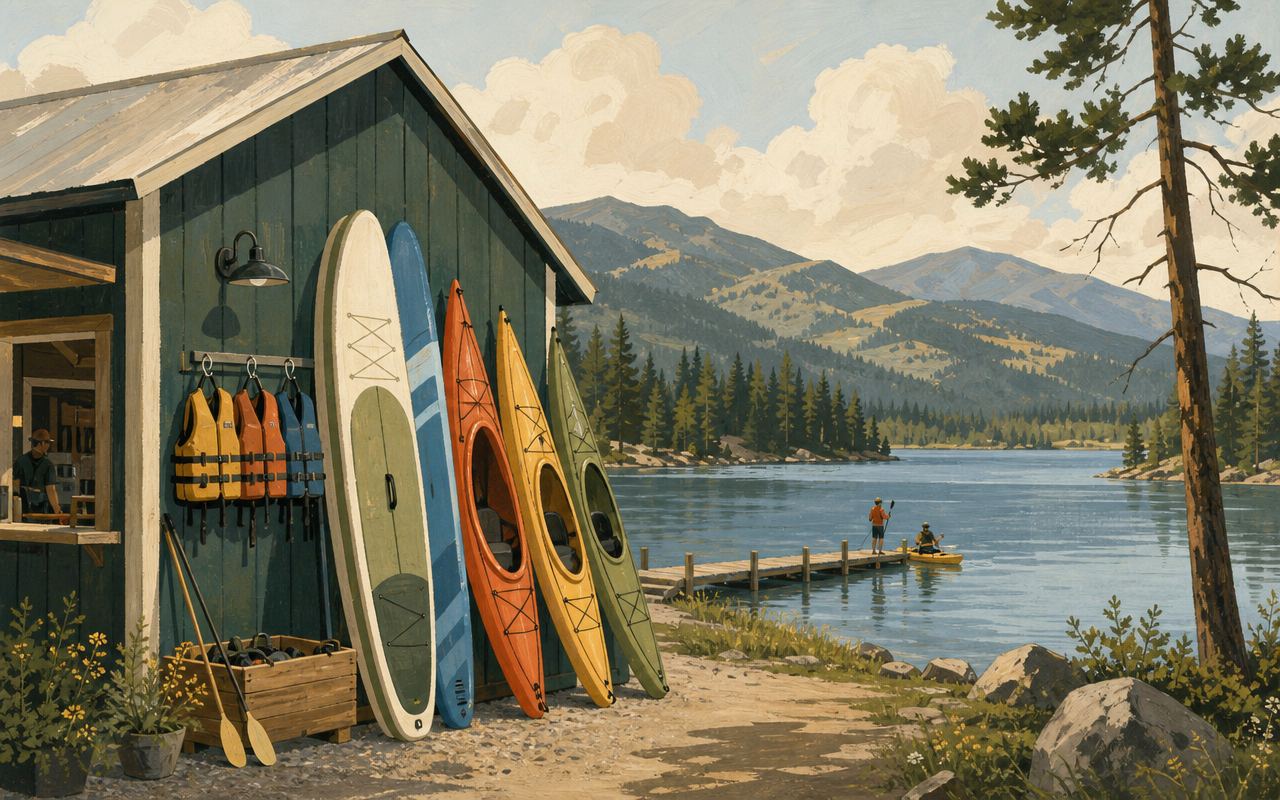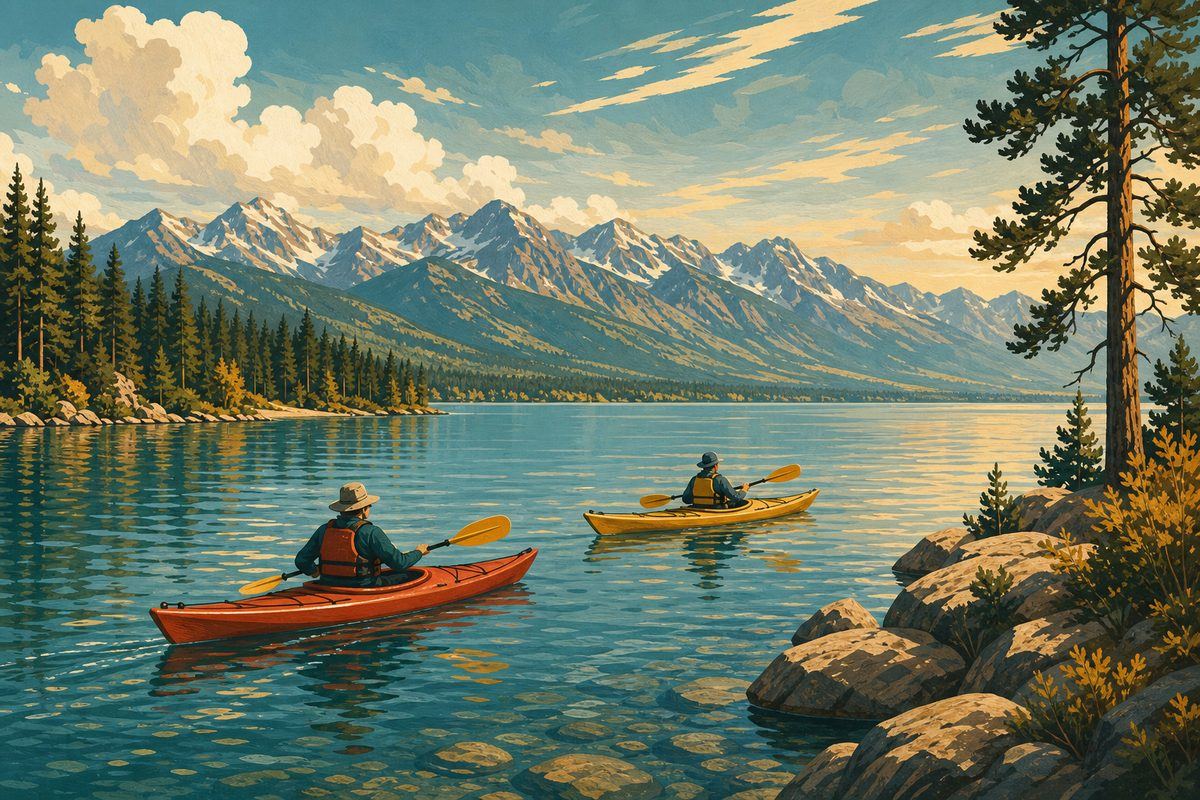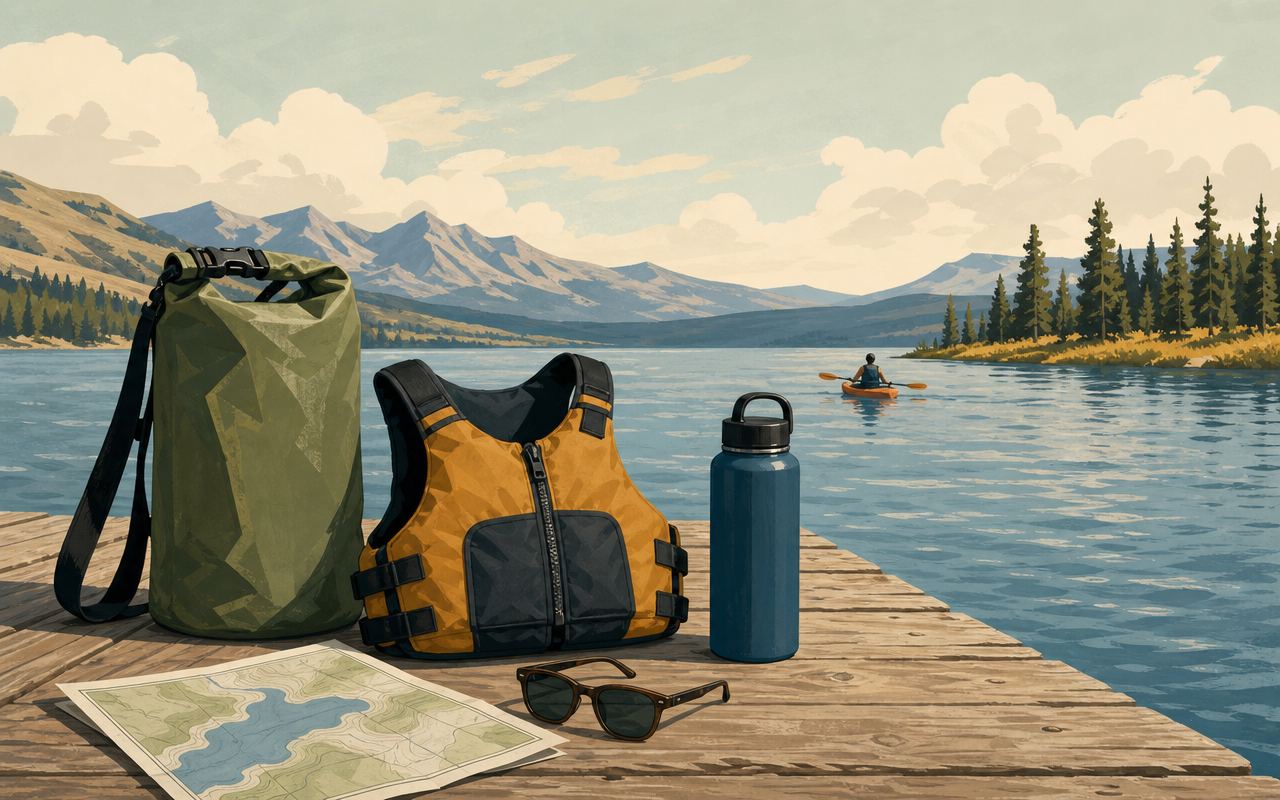
A day trip on Flathead Lake looks, on paper, like it should need a short list: a boat, a paddle, and maybe a sandwich. In practice, the lake’s size and cold, glacially fed water mean a few items earn a permanent spot in the boat regardless of how calm the morning looks or how short the route is. This isn’t an exhaustive backpacking checklist — it’s what actually matters for a single day of paddling on open, wind-exposed lake water, trimmed down to the things worth carrying every time.
Safety gear that isn’t optional
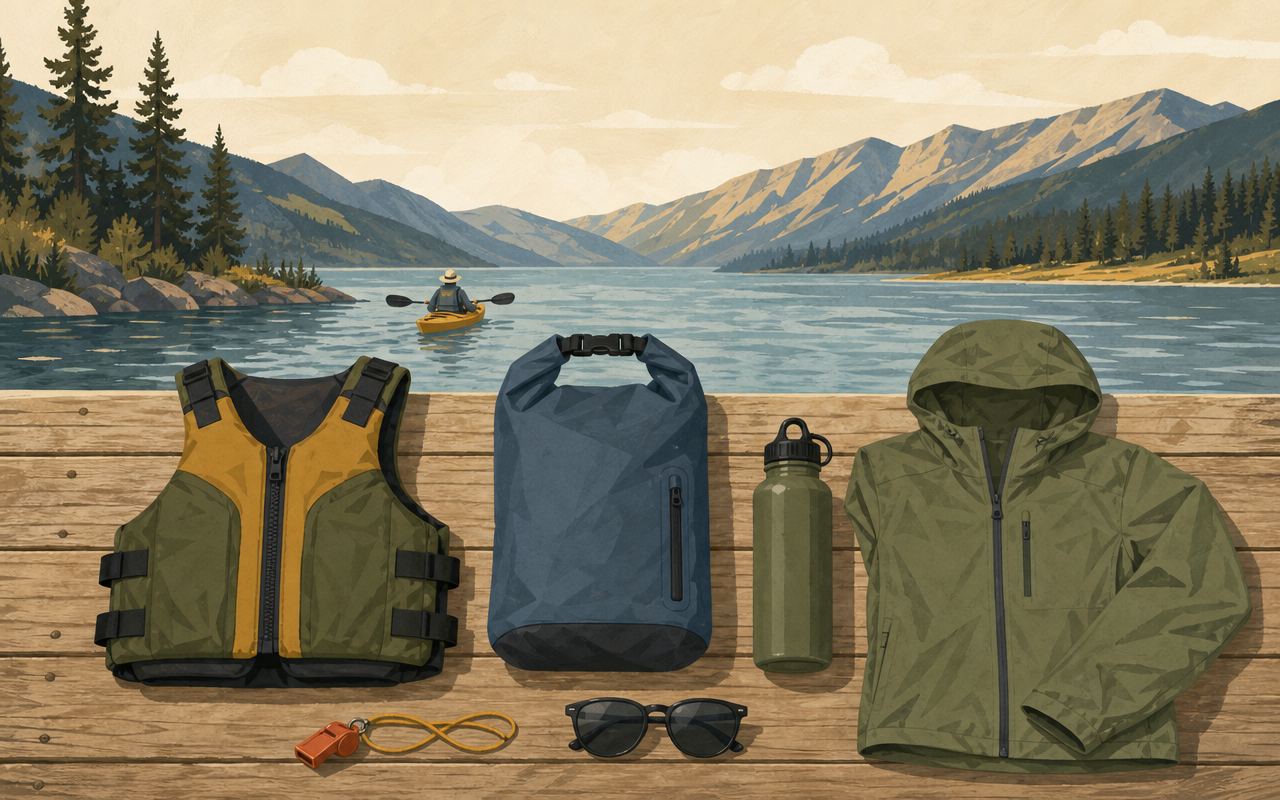
A properly fitted life jacket, worn, not stowed. This is the one item on this whole list that does the most work if something goes wrong. Cold-water immersion saps arm and hand strength within minutes, which makes putting on a stowed life jacket after an unexpected swim far harder than it sounds from dry land. Montana law requires a wearable personal flotation device aboard for every paddler in a non-motorized craft, but the legal minimum — having one on board — is a lower bar than the practical standard, which is wearing it the entire time you’re on the water.
A whistle or other sound-signaling device. Attach it to your life jacket, not to a bag that might not be within reach if you end up in the water. A whistle carries much farther than a shout and takes no effort to use when you’re cold or winded.
A way to call for help that doesn’t depend on a wet phone screen. A phone in a sealed, floating waterproof case is the baseline. Anyone spending real time on open water, particularly on a crossing away from shore, should also think about whether cell coverage is reliable on the stretch they’re paddling and plan accordingly.
A basic float plan left with someone on shore. Where you’re launching, roughly where you’re headed, and when you expect to be back. This costs nothing and takes a minute, and it’s what turns “overdue” into an actionable piece of information for someone else rather than a slow-building worry with no next step.
Clothing and layers
Dress for the water, not the air. Flathead Lake stays cold well below the surface even in the height of summer, and a warm, sunny day on shore says very little about what a capsize into open water would actually feel like. Sheltered, shallow bays can warm into comfortable swimming temperatures by midsummer, but that surface warmth doesn’t extend to open water or to the lake’s depths.
Skip cotton entirely. Cotton holds water and loses almost all of its insulating value once wet, which is exactly the wrong property to have on a lake where an unplanned swim is the scenario you’re dressing for. Synthetic or wool layers that stay warm wet are worth the switch, even for a short paddle.
Bring a warm layer beyond what the morning temperature suggests. Mornings on the lake often start cool regardless of the forecast high, and wind over open water drops the effective temperature further than the air temperature alone implies. A packable fleece or synthetic jacket in a dry bag costs little space and covers a wide range of conditions.
Consider a wetsuit or splash gear for open crossings or shoulder-season trips. For a calm summer day close to shore, standard quick-dry layers are usually enough. For an open-water crossing, a spring or fall trip, or any day with a marginal forecast, added insulation against a capsize is a reasonable and not excessive precaution given how cold the lake stays.
Footwear that can get wet. Launching and landing usually means wading in cobble shallows, and shoes that dry quickly and grip wet rock beat anything you’d mind ruining.
Sun and weather protection
Open water reflects sun in a way that shoreline hiking doesn’t, and a full day of exposure with no shade adds up faster than it feels like it should while you’re paddling.
Sunscreen, reapplied, and a hat that stays on in wind. A hat with a chin strap or cord is worth it the first time a gust takes an ordinary one into the lake.
Sunglasses with a retention strap. The same logic applies — anything that can blow or bounce off into the water should be tethered if you want to keep it past the first hour.
A lightweight, packable rain layer. Flathead Lake’s wind pattern is well known among paddlers and sailors: mornings are frequently calm, and wind tends to build through the afternoon, sometimes accompanied by squally weather. A rain shell that packs small is cheap insurance against getting caught out by a shift you didn’t plan for.
A real wind and weather check, done the night before and again the morning of launch. This isn’t gear you pack, but it belongs on this list anyway, since it’s what tells you whether the rest of the list needs to lean toward the cautious end or not.
Where to actually get that forecast. The National Weather Service’s Missoula office covers the Flathead Valley and publishes a point forecast for the Flathead Lake area directly through forecast.weather.gov, which is a more useful source for a paddling trip than a generic phone weather app, since it’s built around the same wind and mountain-influenced weather patterns this site’s guides describe. NOAA Weather Radio also broadcasts continuous forecasts on dedicated frequencies if you’re carrying a marine or weather-band radio, which is worth having for a longer trip or an open crossing where cell coverage isn’t guaranteed. Checking the actual point forecast for the lake, rather than a forecast for the nearest town, matters here specifically because the lake’s own wind pattern — calm mornings, building afternoon wind — doesn’t always match what a general valley forecast implies, and cell service itself can drop out well before you’re far from shore, so pulling the forecast before you launch beats trying to check it mid-paddle.
Water, food, and hydration
More water than the trip seems to call for. Sun, wind, and physical effort on open water dehydrate faster than a similar amount of paddling on a sheltered pond, and there’s no reliable place to refill mid-trip on most routes. A day trip doesn’t need a backpacking-scale food and water haul, but running short of water on an exposed stretch of the central lake, with wind between you and the nearest shore, is a worse position than most paddlers expect going in.
Simple, easy-to-eat food. Something that doesn’t require preparation on the water — bars, fruit, sandwiches made ahead — covers most single-day needs without adding bulk.
The dry bag and other extras
A dry bag for anything that can’t get wet. Phone, car key, wallet, spare layer, and any electronics belong sealed away rather than loose in the boat. A capsize or a splashy, windy stretch can soak an open boat’s contents fast, and losing your way to call for help or your only dry layer at the same moment you need them most is an entirely avoidable problem.
A bilge pump or bailer, particularly for an open kayak or canoe that can take on water from waves or spray. A small hand pump or even a cut-down container works and takes up almost no space.
A basic first-aid kit, sized for a day trip rather than an expedition — enough for a cut, a blister, or a minor scrape.
Sun-safe clothing you can layer over swimwear, since a full day of direct and reflected sun on open water burns faster than the same hours on land.
What changes for a longer or more exposed route
Everything above scales up rather than changes for a longer route or an open-water crossing like the paddle out to Wild Horse Island. Carry more water, commit more firmly to keeping the life jacket on the entire way, check the wind forecast more carefully, and make sure your float plan names the specific route rather than a general direction. An open crossing has no shoreline to bail out to partway across, which is exactly why the margin on food, water, warmth, and signaling gear should be wider than it needs to be for a route that keeps you close to shore the whole time.
If you’re on the lake’s southern half, it’s also worth knowing that water there falls within the Flathead Indian Reservation, under the jurisdiction of the Confederated Salish and Kootenai Tribes, which can affect permit and access rules on adjoining land even where the packing list itself doesn’t change. Check current CSKT guidance if a planned route touches that area.
None of this list requires specialized or expensive gear, and most of it — a whistle, a dry bag, a sealed phone case, extra layers — is inexpensive and reusable trip after trip. What it does require is treating Flathead Lake as the open, cold, wind-exposed body of water it actually is, rather than the calm, postcard-blue lake it looks like from a still morning shoreline.
Frequently asked questions
What's the single most important item on this list?
A life jacket you actually wear, not one stowed under a seat. Everything else on this list matters, but cold-water immersion takes away useful arm and hand strength within minutes, which makes putting on a stowed life jacket after a capsize far harder than it sounds from dry land. On Flathead Lake, a worn life jacket is the one item that does the most work if something goes wrong.
Do I need a wetsuit to paddle Flathead Lake?
Not necessarily for a calm summer day of paddling close to shore, but it's worth thinking about honestly rather than dismissing. The lake is deep and glacially influenced and stays cold well below the surface even when a sheltered bay feels warm. A wetsuit or drysuit becomes a more serious consideration for open-water crossings, shoulder-season trips in spring or fall, or any day where the forecast looks marginal. At minimum, dress for the water temperature, not the air temperature, and skip cotton in favor of layers that stay warm when wet.
Does the packing list change if I'm renting a kayak instead of bringing my own?
The core safety items are the same either way, but confirm what's actually included before you show up empty-handed. Most rental outfitters supply a properly fitted life jacket with the boat, and some include a whistle, but don't assume — ask directly, and check that whatever you're handed fits and is in good condition. A dry bag, sun protection, water, extra layers, and a way to call for help are on you either way, since those aren't standard rental inclusions.
Is a dry bag really necessary for a short day trip?
Yes, and it's one of the cheaper, lower-effort items on this list relative to how much it helps. A capsize or even a splashy afternoon can soak anything not sealed away, and a phone, car key, or extra layer that gets wet on a cold, windy stretch of open water is more than an inconvenience — it can remove your way to call for help or stay warm right when you need it most. A single small dry bag clipped to the boat covers the essentials.
What food and water should I bring for a single-day paddle?
More water than you think you'll need, since sun and wind exposure on open water dehydrate faster than the effort of paddling suggests, and simple, easy-to-eat food that doesn't require much preparation on the water. There's no need to pack for an overnight trip — this is a day-trip list, not a backpacking one — but running out of water on the lake's open central basin with no shade and a headwind between you and shore is a genuinely bad position to be in.
Do I need to leave a float plan even for a short paddle near shore?
It costs nothing and it's worth doing regardless of how short or sheltered the route looks. A basic plan — where you're launching, roughly where you're headed, and when you expect to be back — is what lets someone raise an alarm at a useful time instead of hours after something's already gone wrong. Even a text to a friend covers this; it doesn't need to be formal.
Where should I actually check the weather before a paddling trip?
The National Weather Service's Missoula office publishes a point forecast for the Flathead Lake area at forecast.weather.gov, which is built around the same local wind and mountain-driven weather patterns covered throughout this site's guides — a better source than a generic app forecast for the nearest town, since the lake's own conditions, especially its afternoon wind buildup, can differ from the general valley forecast.
What should I do differently if I'm planning to cross toward Wild Horse Island rather than paddle close to shore?
Treat the packing list the same but raise the margin on almost everything: more water, a firmer commitment to wearing the life jacket the whole way, a real wind forecast checked the night before and the morning of, and a float plan that names the specific crossing. An open crossing has no shoreline to duck into partway across, so the gear that lets you self-rescue or wait out a problem matters more than it does on a shoreline paddle you could end at any point.