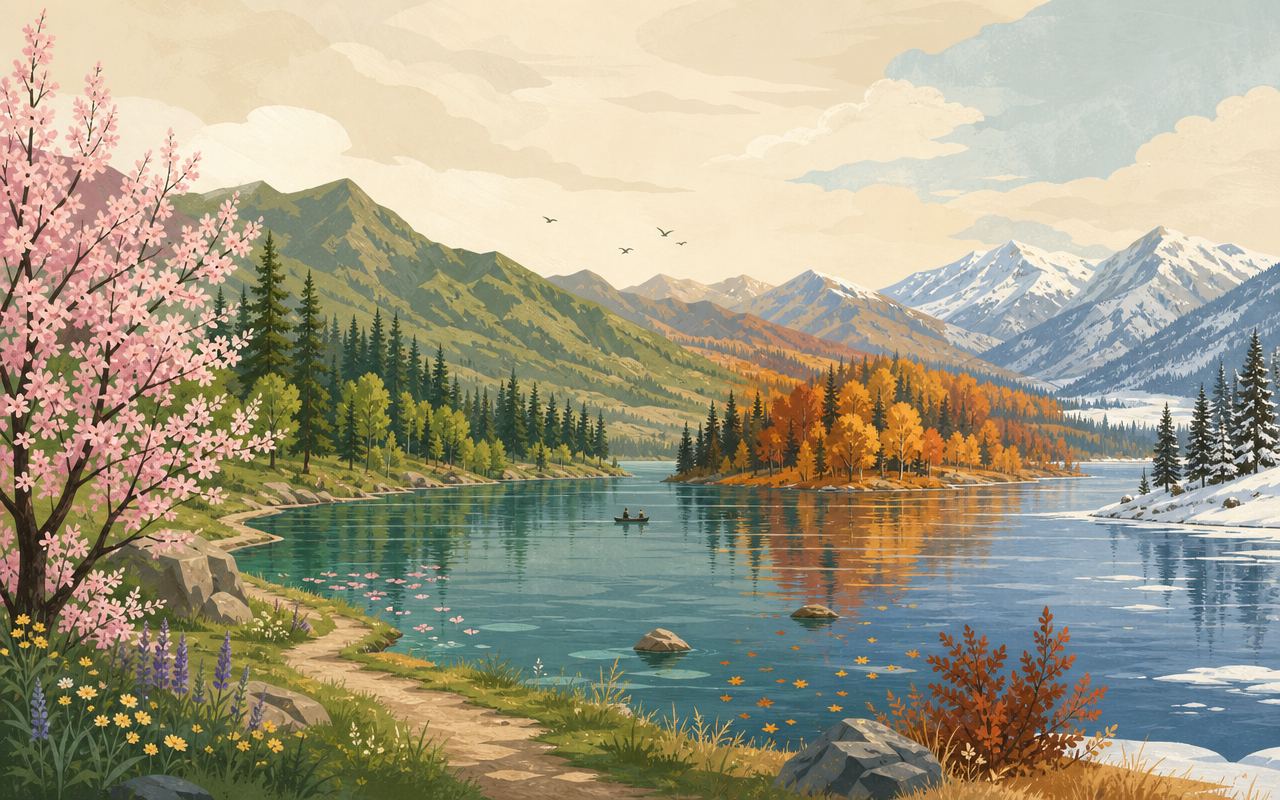
Flathead Lake doesn’t have a single “best” season so much as a rotating cast of best seasons, depending on what brought you here. A paddler chasing big, cold whitewater on the Middle Fork wants a different month than a family looking for a calm morning of flatwater kayaking, and both want something different from a photographer hoping to catch larch turning gold along the shoreline. This guide walks through the year roughly season by season, grounding each recommendation in how the lake and its surrounding rivers actually behave rather than in a generic travel-calendar guess.
The short version: the lake’s size and depth, combined with a valley climate driven by mountain snowpack, create a handful of recurring patterns — spring runoff, building summer wind, a slow fall cooldown, and a winter that flirts with freezing but rarely commits to it. Understanding those patterns matters more than memorizing a single “go in July” answer, because the right window shifts depending on whether you’re rafting, paddling, swimming, or just driving the shoreline for the view.

Spring: runoff, whitewater, and a lake still shaking off winter
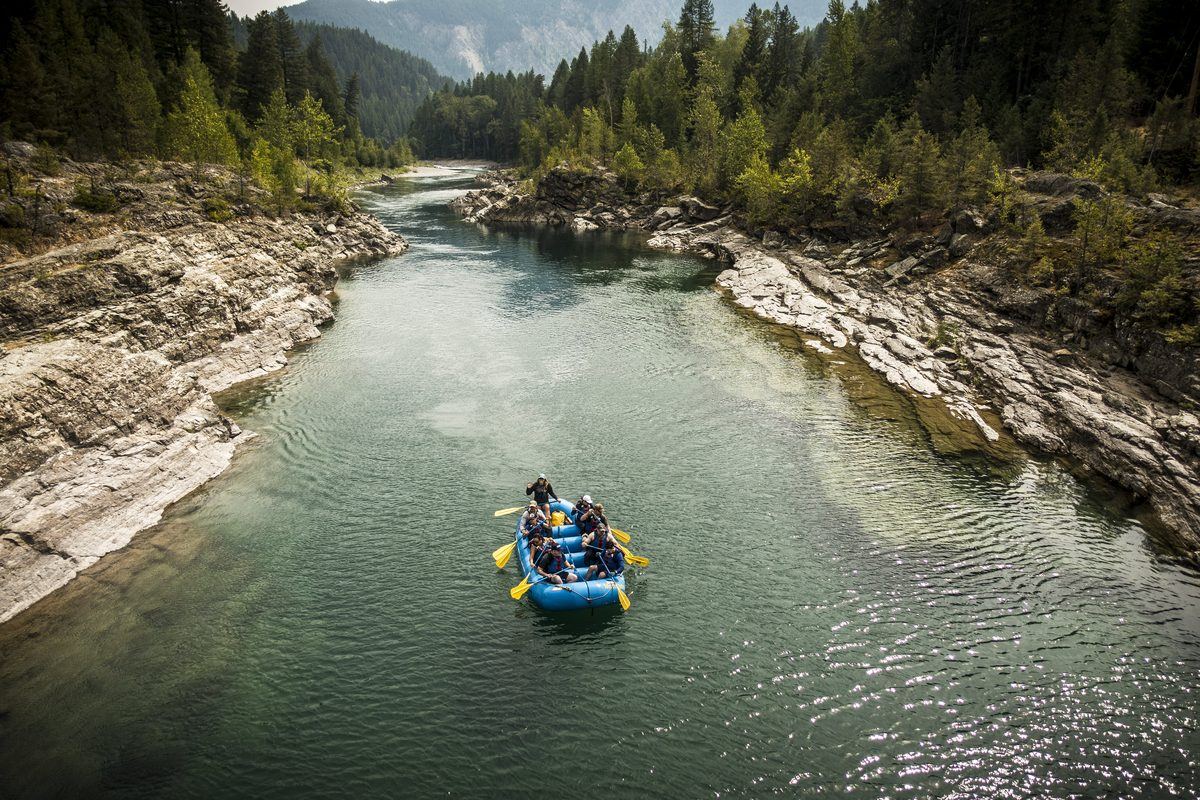
Spring in the Flathead Valley is defined by snowmelt. As the surrounding mountains shed their winter snowpack through April, May, and into June, that meltwater floods into the rivers that feed Flathead Lake, and nowhere is the effect more dramatic than on the Middle Fork of the Flathead River. Flow there follows the broad Rocky Mountain pattern of being driven by snowpack rather than rainfall, and the highest, pushiest water of the year typically shows up sometime between late May and late June — though the exact timing shifts from year to year depending on how much snow fell over the winter and how quickly it melts.
For experienced whitewater paddlers, this runoff window is the draw: John Stevens Canyon runs at its biggest and coldest during peak runoff, with rapids at their most powerful and the margin for error at its narrowest. It’s an exciting time to be on the river, but a demanding one, and it’s a tougher entry point for someone rafting for the first time than the calmer water that follows in midsummer.
On the lake itself, spring is a quieter, more transitional season. Boat launches and marina services are still coming back online — some Flathead Lake State Park docks, like Big Arm, are typically available only from mid-March through November, so early spring can still mean limited access at some units. Water temperatures are at their coldest of the open-water season, well below anything comfortable for casual swimming, and spring weather in the valley is genuinely changeable, with warm afternoons giving way to cold fronts and lingering snow at higher elevations. Wildflowers and young wildlife are more active in spring, but anyone heading out on open water this early should treat cold-water safety as a serious, not theoretical, concern.
Late May and early June sit in an in-between zone: warm enough for many visitors to start thinking about lake activities, but still cold on the water and unpredictable in the weather, making this more of a shoulder season than a peak one for anything beyond whitewater.
Summer: the reliable season, with an afternoon catch
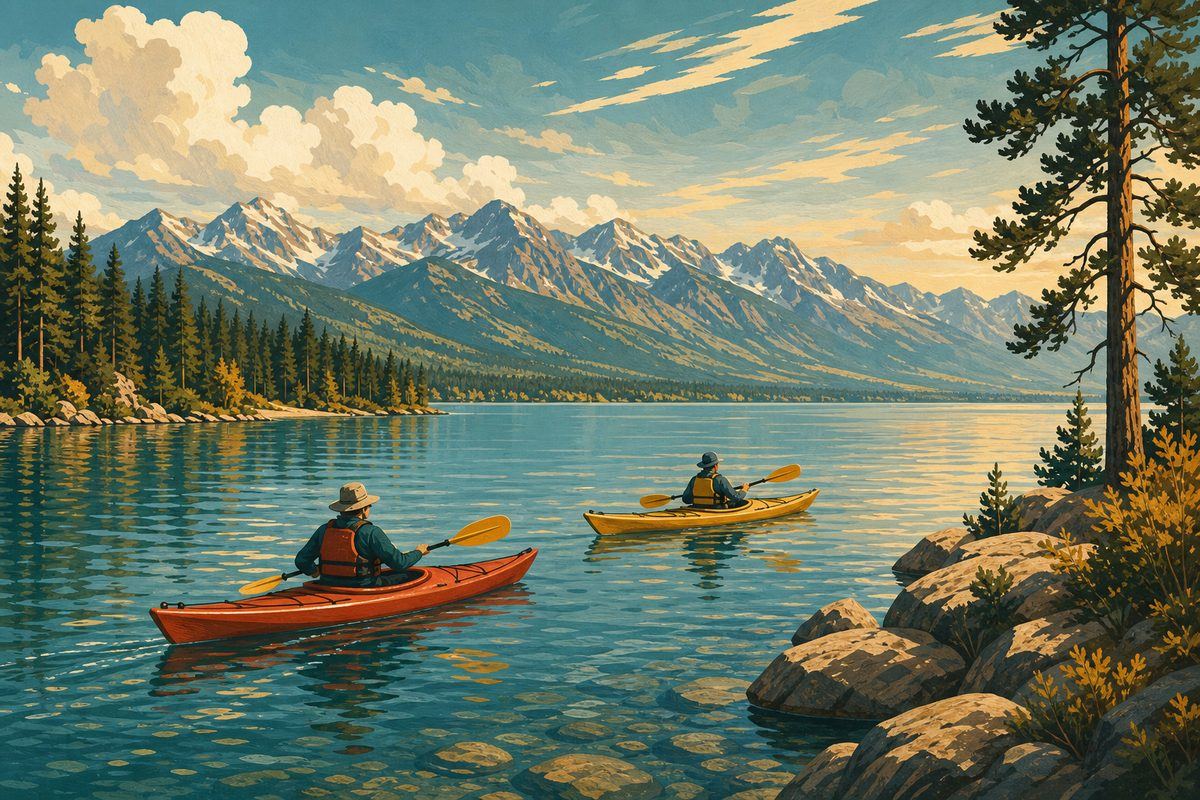
Summer is when Flathead Lake runs at full capacity — warmest water, longest days, fullest slate of open marinas and launches, and the busiest boat traffic of the year. Roughly June through September is the realistic paddling and swimming season, the stretch when both air and water temperatures make a full day on open water comfortable rather than punishing. Within that window, July and August bring the warmest water and the most stable weather, which is also part of why they’re the busiest months on the lake for boats of every kind, from small fishing skiffs to sailboats.
But summer on a lake this large comes with a well-documented catch: wind. Flathead Lake is the largest natural freshwater lake west of the Mississippi, a long, deep basin that generates its own local weather as the surrounding land heats up through the day. Air moves across the open water and tends to build through the afternoon, funneled by the trench the lake sits in. This is a widely reported, genuinely common daily rhythm on the open central and southern basin, and it’s exactly why local paddlers, sailors, and outfitters repeat the same standard advice: get your open-water miles in during the morning, and be back near shore before the wind has a chance to build.
Water temperature is the other summer surprise. Flathead Lake is deep enough to stay cold well below the surface even in August, and it’s fed substantially by snowmelt and glacially influenced tributaries. Shallow, sheltered bays can warm into genuinely comfortable swimming water during the warmest stretch of summer, but that surface warmth is local and can be misleading — a capsize or a swim out in open water, away from a warm shallow cove, can mean water cold enough to bring on hypothermia surprisingly fast. Dress and plan for the water’s real temperature, not the air temperature on a hot afternoon.
On the river side, midsummer is generally the more approachable window for whitewater on the Middle Fork. As spring runoff tapers, flows drop to friendlier levels — the same rapids are still there, but less powerful and more forgiving, which is why many outfitters point first-time rafters toward July specifically. By late summer, though, flows can drop quite low, and some of the smaller rapids in the canyon lose much of their character, shifting the trip’s appeal more toward scenery than big water.
Summer is also cherry season on the lake’s east shore. Flathead cherry harvest generally runs from around the second week of July through the second week of August, with ripening progressing geographically around the lake — orchards near Polson typically starting first, followed by Finley Point, Blue Bay, Yellow Bay, and Woods Bay. A summer visit timed for late July or early August can combine warm-water paddling with a stop at one of the roadside orchards near Yellow Bay, a small but genuinely seasonal reason to time a trip for that particular stretch of summer.
Fall: cooling water, thinning crowds, and turning color
September and into October bring a gradual, welcome cooldown after peak summer. Crowds thin out as the school year resumes and the busiest boat traffic eases, while weather often stays stable enough for a comfortable trip early in the season. This is a genuinely good window for anyone who wants a quieter version of the same lake, provided expectations shift with the calendar: water is colder than midsummer, and the margin for error narrows the later into fall a trip is planned.
Fall color is one of the valley’s better-timed rewards for visiting outside peak summer. Valley-elevation color, including around the lake’s shoreline, tends to peak later than the surrounding mountains — generally mid-to-late September into mid-October — with aspen groves often turning first and larch holding its gold display into October. Because higher terrain colors up earlier than the valley floor, a fall visit aimed at the lake itself is generally better timed for late September through early-to-mid October than for the earliest weeks of autumn.
Boat access starts to contract as fall progresses. Some Flathead Lake State Park docks, including Big Arm, are typically available only through November before closing for winter, so a late-fall trip should factor in which launches are still open. Wind remains a factor in fall, if a somewhat less punishing one than at the height of summer, and mornings continue to be the more reliable window for calm water.
Winter: a lake that rarely fully freezes
Winter is the season most visitors underestimate, largely because the popular image of a frozen northern lake doesn’t actually match how Flathead Lake behaves most years. Because of its large volume and long open fetch, the lake needs an unusually specific combination of conditions to freeze over completely: an extended stretch of very cold air — roughly ten or more consecutive days at minus 10°F or below — combined with dead-calm conditions, since even a modest wind is enough to keep ice from forming across open water. That combination doesn’t come together most winters. A complete freeze of the entire lake is a genuinely rare event, having happened only a handful of times in recent decades, most recently in 1989, with a partial freeze noted again in 2019.
What does happen most winters is partial ice: sheltered bays and shallow margins freeze over while the open central and southern basin typically stays as liquid water, sometimes visibly steaming on the coldest mornings as relatively warmer lake water meets frigid air. This creates a real, if narrow, ice fishing season in specific bays — Somers Bay, Big Arm Bay, Polson Bay, and several others are the spots local anglers watch for reliable ice, targeting whitefish and lake trout. Ice thickness and safety vary bay to bay and winter to winter, so checking current local conditions rather than assuming a given bay is safe is essential before walking out onto any ice.
Boat access shrinks accordingly. Several Flathead Lake State Park docks close for the winter months, typically reopening in mid-March, while a few deep-water launches are generally kept ice-free and usable year-round. Whitewater rafting and lake paddling are effectively off the table in winter given both water temperature and the scarcity of open services, making this the season for shoreline drives, valley scenery, and — conditions permitting — ice fishing in the right bay, rather than for the paddling and rafting activities the rest of this site focuses on.
Choosing a window that matches your trip
The year on Flathead Lake breaks down less by calendar month and more by what you’re trying to do. Big, technical whitewater on the Middle Fork points toward the late-May-to-June runoff window, trading colder water and a narrower margin for error for the year’s biggest rapids. A mellower, more forgiving rafting trip points toward July, once flows have dropped from their spring peak. A first open-water kayak crossing or a lake swim points toward the heart of summer, June through September, with mornings as the reliable time of day regardless of month. A quieter trip with fall color and thinner crowds points toward late September into early October, and a cold-weather visit built around ice fishing or valley scenery, rather than paddling, points toward the deep winter months with realistic expectations about what will and won’t be open or frozen.
None of these windows is exclusive, and the lake’s size means conditions vary shoreline to shoreline on the same day — a sheltered bay near Somers can be glassy while the open southern basin is already building whitecaps. Whatever month you choose, checking current, real conditions — a wind forecast, river flow data, or a call to a park ranger station about dock and ice status — will tell you more than any calendar guide, including this one.
Frequently asked questions
What is the single best month to visit Flathead Lake?
There isn't one answer, because it depends on what you want. July and August bring the warmest water, the most stable weather, and the fullest slate of open services and boat access — but also the biggest crowds and the strongest afternoon wind. Late May and June suit paddlers chasing bigger whitewater on the Middle Fork. September offers a quieter, still-comfortable version of summer with cherries wrapping up and the first hints of fall color.
Does Flathead Lake freeze over in winter?
Rarely, and not predictably. The lake is large, deep, and exposed to wind, so a complete freeze needs an extended stretch of very cold, very calm air — roughly ten or more days at minus 10°F or below with no wind to break up forming ice. That combination is uncommon; the lake has fully frozen only a handful of times in recent decades, most notably in 1989. In most winters, sheltered bays and shallow margins ice over while the open central and southern basin stays open water.
Can you go ice fishing on Flathead Lake?
Yes, in the bays that reliably ice over, even in winters when the main lake doesn't freeze. Somers Bay, Big Arm Bay, Polson Bay, and several other sheltered bays are the areas anglers watch, with whitefish and lake trout as the main targets. Ice thickness varies bay to bay and year to year, so checking current local conditions before heading out onto any ice is essential rather than optional.
When does the whitewater season peak on the Middle Fork Flathead?
Spring snowmelt typically pushes the highest, coldest, and pushiest water through the Middle Fork's John Stevens Canyon sometime between late May and late June, though the exact window shifts year to year with snowpack and melt speed. Flows drop and become friendlier through midsummer, and by late summer the river can run quite low, shifting the trip's character from big water toward scenery.
Is Flathead Lake water ever warm enough to swim in comfortably?
Shallow, sheltered bays can warm into genuinely comfortable swimming temperatures during the warmest stretch of summer. But the lake as a whole is deep and fed substantially by snowmelt, so it stays cold well below the surface even in August, and open water away from a warm shallow bay can be cold enough to matter for safety. Treat surface warmth in a calm cove as a local exception, not a sign the whole lake has warmed up.
When do the Flathead cherry orchards near Yellow Bay open for picking?
Flathead cherry harvest generally runs from around the second week of July through the second week of August, with exact timing depending on the variety and the orchard's spot around the lake. Ripening progresses geographically, with orchards near Polson typically starting first, followed by Finley Point, Blue Bay, Yellow Bay, and Woods Bay.
When is fall color at its best around Flathead Lake?
Valley-elevation color, including along the lake's shoreline, tends to peak later than the mountains — generally mid-to-late September into mid-October, with aspen groves often turning first and larch holding its gold into October. Higher terrain around the valley turns earlier, so timing a fall visit around the lake itself usually means aiming for late September through early-to-mid October.
Are boat launches and marinas open at Flathead Lake year-round?
Not all of them. Some Flathead Lake State Park docks, including Big Arm, are typically available from mid-March through November and closed in winter, while a few deep-water launches, including West Shore and Yellow Bay, are generally kept ice-free and usable through winter. Availability varies unit by unit and with lake level, so checking current status before a winter or shoulder-season trip is worth the extra step.