Flathead Lake and Glacier National Park sit close enough together that a lot of visitors staying at the lake end up wondering whether Glacier is a realistic add-on to their trip rather than a separate vacation entirely. The short answer is yes, with some caveats: Glacier’s west side is close enough for a genuine day trip from the lake, but the park is large, its main road is snow-dependent and only fully open part of the year, and its access rules have shifted from summer to summer in recent years. This guide covers what a day trip actually looks like, what changes year to year that you need to check before you go, and how it fits alongside the water-based trips this site otherwise focuses on.
The Drive From Flathead Lake
Glacier’s west entrance, at West Glacier, sits just north of the Flathead Valley, and the drive from Flathead Lake is genuinely short by national park standards. From the lake’s north shore — around Somers, Bigfork, or Kalispell — the drive to West Glacier runs roughly an hour, following Highway 35 or Highway 2 depending on your exact starting point, then Highway 2 the rest of the way into West Glacier. That “roughly an hour” figure holds up as a general planning number for a north-shore start, though actual drive time depends on traffic, road work, and exactly where along the shore you’re staying.
From other points around the lake, add time. Kalispell sits closer to West Glacier than most of the lake’s shoreline, so a Kalispell base can shave a little off that drive. Polson, at the lake’s south end, is considerably farther — closer to two hours than one — so a day trip from the south shore means a longer round-trip commitment and less time actually inside the park.
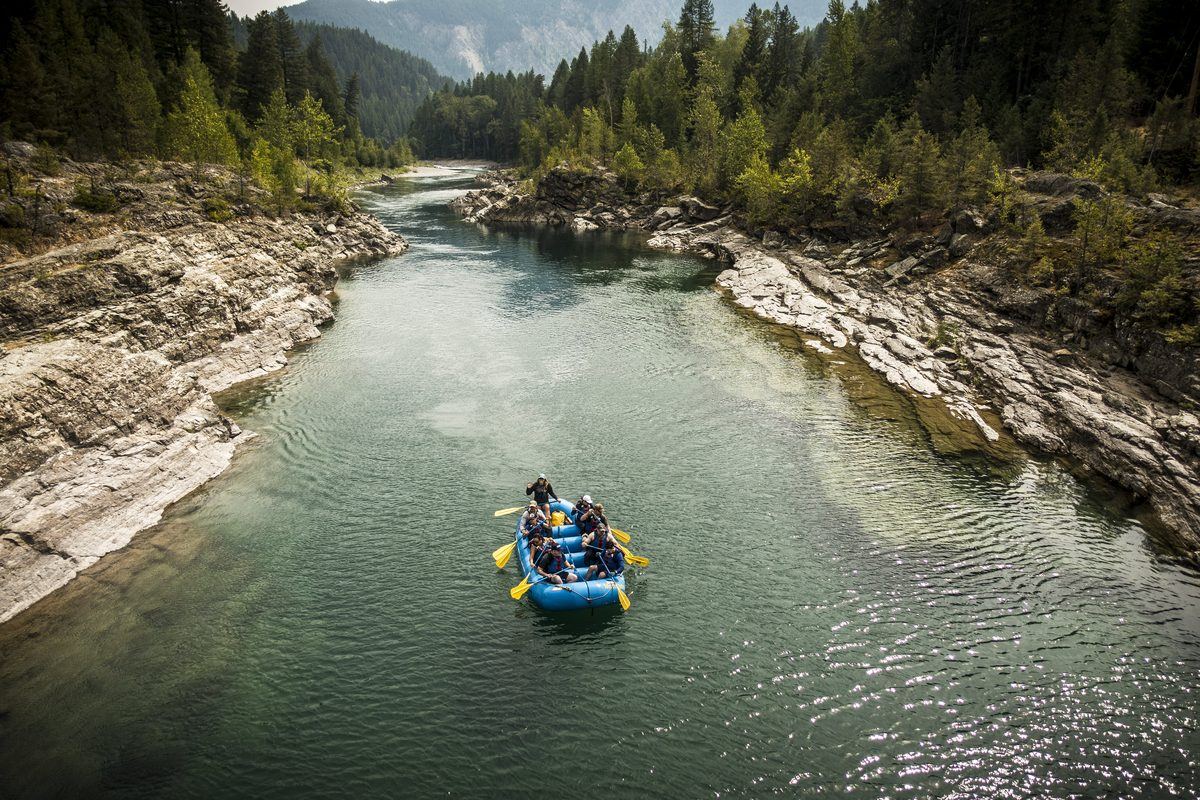
Because West Glacier and the Middle Fork of the Flathead River sit right next to each other, the drive to Glacier and a whitewater trip on the Middle Fork cover a lot of the same ground. The Middle Fork forms part of Glacier’s southwestern boundary for a long stretch, and John Stevens Canyon, the whitewater run near West Glacier that’s covered in more depth in this site’s rafting guide, runs directly along that boundary. A day-tripper driving toward Glacier passes close to the same river corridor rafting groups use, even without setting foot in the park.
Peak summer traffic is worth planning around separately from the base drive time. West Glacier and the entrance station can back up during the busiest hours of the busiest months, so building in extra time — or aiming for an early start — makes for a more predictable day than treating the one-hour estimate as a door-to-door guarantee.
What a Day Trip Actually Allows
Glacier National Park is large, and most of what makes it famous — its backcountry lakes, its longer trails, its full range of terrain — takes more than a single day to reach on foot. A realistic day trip from Flathead Lake should be framed as a meaningful sample of the park’s west side, not a complete visit.
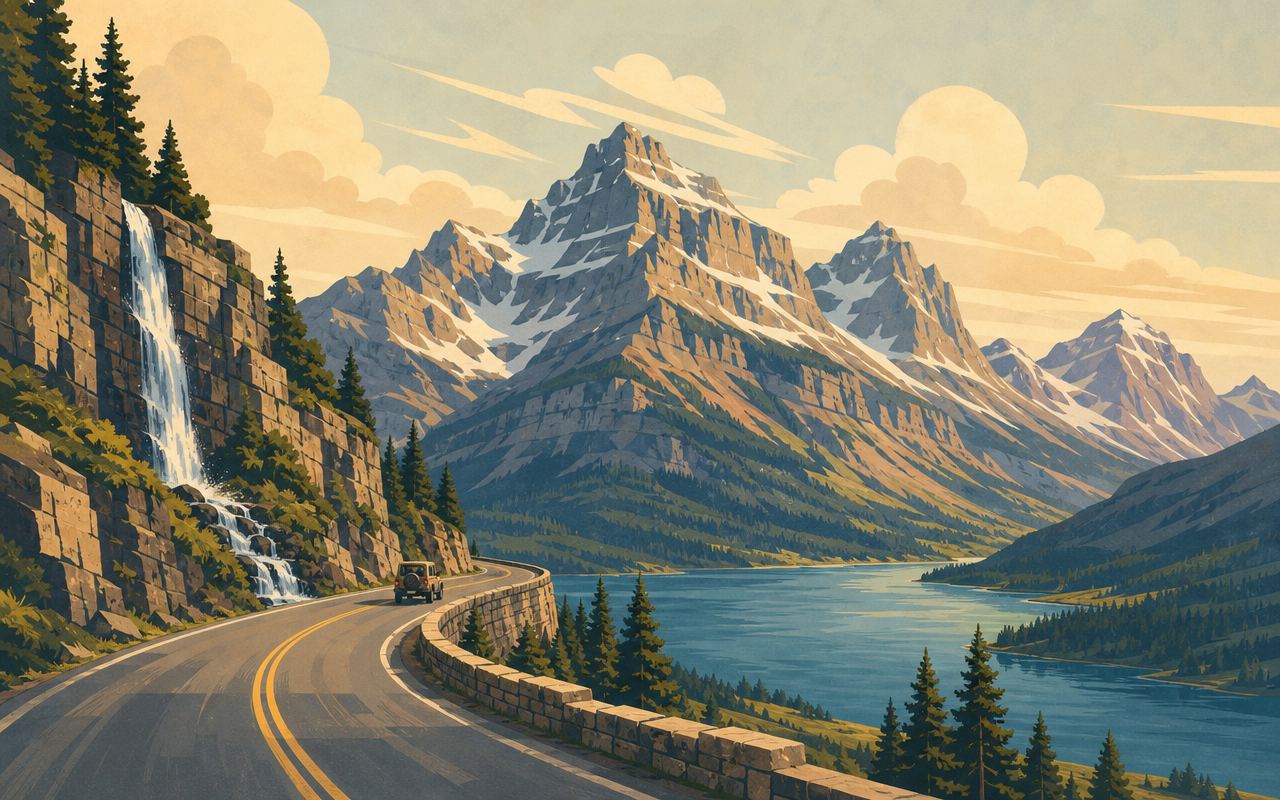
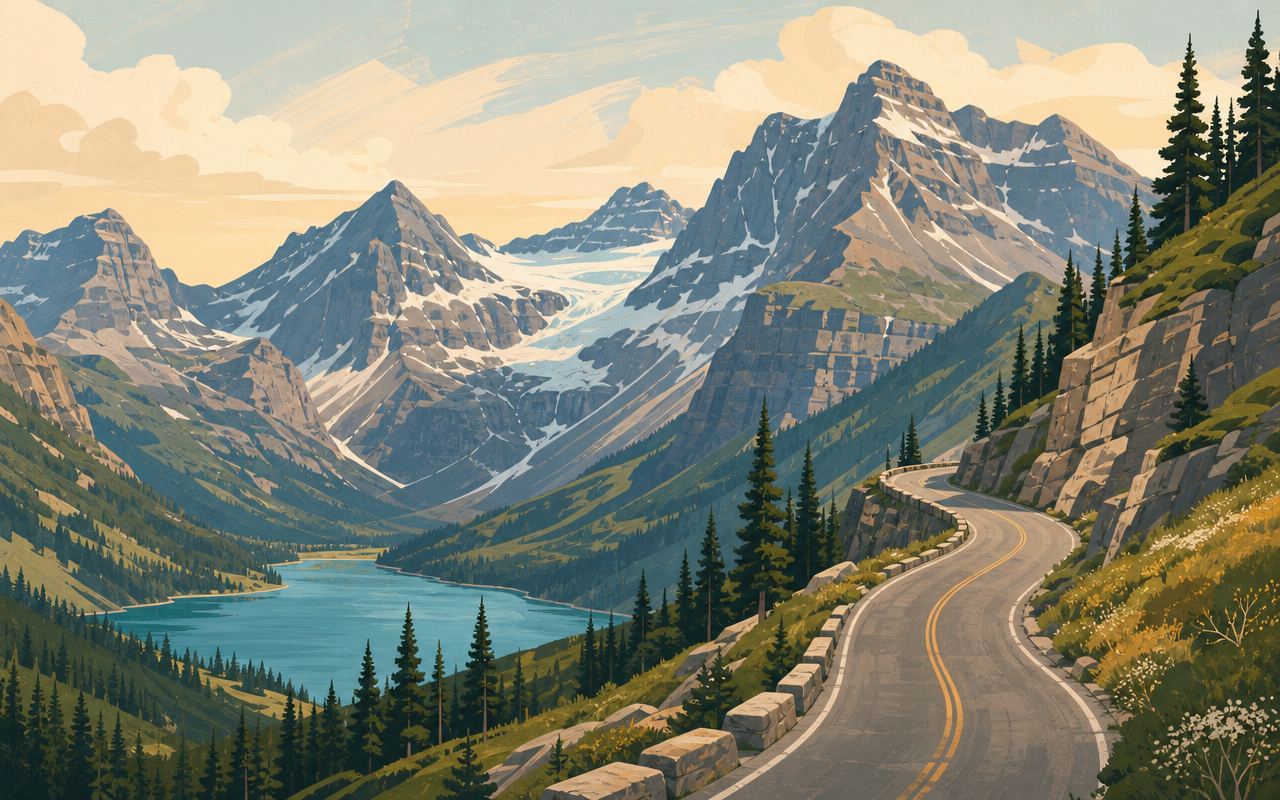
When Going-to-the-Sun Road is open for the season, the drive itself is the centerpiece of a west-side day trip. It’s one of the most well-known scenic drives in the National Park System, climbing from forested valley floor up to Logan Pass along the Continental Divide, with pull-offs and viewpoints along the way. Driving the full road and back, with stops, reasonably fills a large part of a day on its own, especially with any time spent at Logan Pass itself.
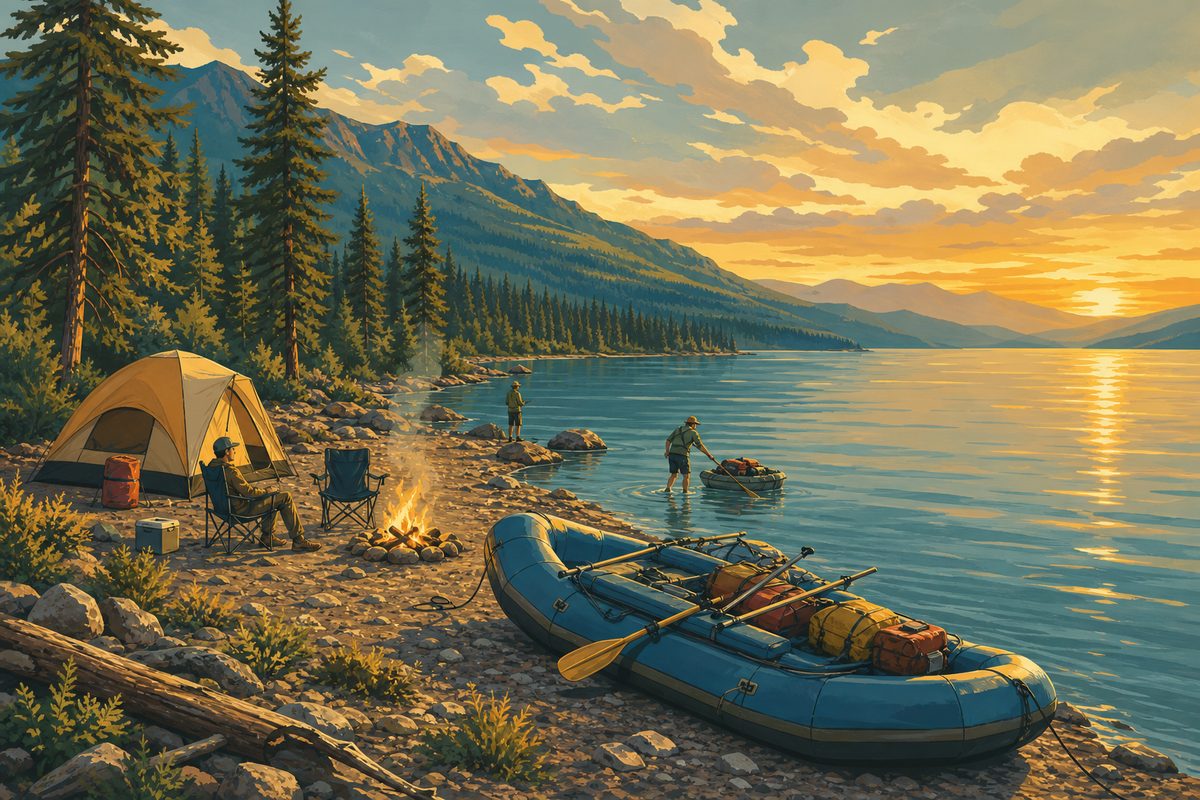
Lake McDonald, the large lake near the west entrance, is one of the more accessible and consistently worthwhile stops on the west side regardless of what else is open. It’s reachable early in the season, before the full road clears, and it’s a natural stop for a short walk along the shore or a look at the lake’s clear water and rounded, colorful lakebed stones.
Beyond the drive and Lake McDonald, a day-tripper’s realistic options include a handful of short, accessible trails near the west entrance and lower sections of Going-to-the-Sun Road — the kind of walk that takes an hour or less rather than a half-day backcountry hike. This site is focused on Flathead Lake and its rivers rather than on Glacier’s trail network, so treat any specific trail as something to look up and confirm directly through the park’s own current trail information rather than something to plan around sight unseen; conditions, closures, and crowding on any given trail can change quickly, and Glacier’s own visitor resources are the more reliable and current source for that level of detail.
The practical takeaway: build a day trip around the drive, Lake McDonald, and whatever short walks are open and appealing on the day you visit, and treat anything more ambitious — a longer hike, a visit to Many Glacier or the park’s east side, an overnight in the backcountry — as a reason to come back for a dedicated Glacier trip rather than something to squeeze into a single day alongside a Flathead Lake stay.
Current Access Considerations — Check Before You Go
This is the part of a Glacier day trip that changes most often, and it’s worth treating as a “verify right before you leave” item rather than something to plan around months in advance.
Going-to-the-Sun Road’s opening date moves every year. The road crosses Logan Pass, an area that collects some of the deepest snowpack in the park, and it takes plow crews an extended stretch each spring — commonly framed as roughly two months of work — to clear it. In a typical recent year, the full road has opened somewhere in the mid-June to mid-July range and closed for the season around the third week of October, but that window is not fixed. A heavy winter, a late-season storm, or avalanche debris on the road can push the opening later, and there’s no way to know the exact date for a given year until the park announces it. If you’re planning a trip earlier in the season, check the current status directly on the National Park Service’s Glacier website rather than assuming last year’s, or any other year’s, dates will repeat.
Entry rules for vehicles have shifted from year to year. For a stretch of recent summers, Glacier ran a timed-entry vehicle reservation system on its busiest corridors, including the west-side approach to Going-to-the-Sun Road, requiring visitors to book a reservation in addition to a standard park pass during peak hours. Whether a reservation system, some modified version of it, or no reservation requirement at all applies for the year and dates you’re planning to visit is something that has genuinely changed from season to season, so treat any specific claim about “you do” or “you don’t” need a reservation — including anything written here — as something to reconfirm on nps.gov/glac close to your trip date rather than take at face value.
A standard park entrance pass is still the baseline requirement regardless of whatever reservation system is or isn’t in place in a given year — either a per-vehicle weekly pass purchased at the gate or online, or a broader interagency annual pass that covers Glacier along with other federal recreation sites. Current pricing and purchase options are best checked on the NPS site as well, since fees are subject to change.
The pattern across all of this: Glacier’s own website is the authoritative, current source for road status, reservations, fees, and trail conditions. This guide can describe how those systems generally work and how the pieces tend to fit together, but the specific numbers, dates, and rules for your particular visit deserve a direct check rather than a guess based on a previous year.
Pairing a Glacier Day Trip With a Water-Based Flathead Lake Trip
Because Glacier’s west side and the Flathead River system sit so close together geographically, a Glacier day trip pairs naturally with the water-based trips this site otherwise focuses on — as a complement across a multi-day stay rather than something to squeeze into the same day.
A half-day or full-day whitewater trip on the Middle Fork, including a run through John Stevens Canyon near West Glacier, covered in this site’s Flathead River whitewater guide, takes most of a day on its own between the shuttle, the outfitting, and the time on the water. A meaningful Glacier day trip — the drive, Lake McDonald, a stop or two — likewise fills most of a day. Trying to combine both into one day generally means shortchanging one or the other, so a stay of three or more days at Flathead Lake gives a more realistic structure: a day on the water, a separate day for Glacier, and time left over for the lake itself, whether that’s paddling, a shoreline drive, or one of the towns around the lake.
For visitors planning a longer stay built around exactly this kind of split itinerary, this site’s guide to multi-day rafting trips lays out how a longer water-based trip on the Flathead River can anchor a stay that also leaves room for a Glacier day trip on a non-rafting day. Because the geography lines up so closely — the Middle Fork forming part of Glacier’s own boundary — treating a Flathead Lake stay and a Glacier visit as two halves of one trip, rather than entirely separate vacations, tends to make the logistics easier than they might first appear.
Whichever order you tackle them in, the same general advice applies to both: check current conditions close to your trip date, whether that’s river flow and outfitter availability for a rafting day or road and access status for a Glacier day, rather than relying on a fixed plan made months in advance.
Frequently asked questions
How far is Glacier National Park's west entrance from Flathead Lake?
From the lake's north shore, around Somers or Bigfork, the drive to the West Glacier entrance runs roughly an hour, depending on traffic and exactly where you start. From Kalispell it's shorter, and from the lake's south end near Polson it's longer — plan on adding time rather than cutting it close, especially in peak summer when the road into West Glacier can back up.
Do I need a reservation to enter Glacier National Park?
This has changed from year to year, so don't rely on last year's rule. For a period, Glacier ran a timed-entry vehicle reservation system for its busiest corridors during peak summer hours. Whether that system, some version of it, or no reservation requirement at all is in effect for your visit is something to confirm directly at nps.gov/glac shortly before you go, not something to assume.
When is Going-to-the-Sun Road open?
It varies by year and is never guaranteed on a fixed date. The road crosses Logan Pass, an area that collects extremely deep snowpack, and plow crews typically need a couple of months each spring to clear it. In a typical year the full road opens sometime between mid-June and mid-July and closes for the season in mid-October, but early-season snowstorms, avalanche debris, or a heavy winter can push the opening later. Check the current status on the NPS Glacier website before you go, especially for a trip planned before midsummer.
What can I actually see if Going-to-the-Sun Road isn't fully open yet?
The lower sections are typically plowed and opened first, so even before the full road clears you can usually reach Lake McDonald and drive partway up the valley before hitting a closure gate. That stretch alone — the lake, the forest, and the lower canyon — is worth a visit on its own, and many west-side visitor services and short trails near West Glacier and Apgar are accessible independent of the pass being open.
Is a day trip to Glacier from Flathead Lake enough time, or should I stay overnight?
A single day is enough to get a real, worthwhile look at Glacier's west side — a drive on Going-to-the-Sun Road when it's open, a stop at Lake McDonald, and a short walk or two. It is not enough time to see the park in any complete sense, since Glacier is large and much of it is reached only on foot. Treat a day trip as a genuine sample rather than the full experience, and consider a separate, dedicated Glacier trip if the park itself is your main goal.
Can I combine a Glacier day trip with rafting on the Flathead River?
Not comfortably on the same day, since a half-day or full-day rafting trip and a meaningful visit to Glacier both take most of daylight hours on their own. Many visitors instead pair the two across a multi-day stay — rafting the Middle Fork on one day and driving into Glacier on another — since both are within a similar drive time of a Flathead Lake or West Glacier-area base.
Does the Middle Fork of the Flathead River actually touch Glacier National Park?
Yes. The Middle Fork forms part of Glacier's southwestern boundary for a long stretch, including through John Stevens Canyon near West Glacier, so a whitewater trip on that section runs directly along the park's edge even without entering the park itself.
What entrance pass do I need for Glacier National Park?
A standard America the Beautiful interagency annual pass or a Glacier-specific weekly vehicle pass both work at the west entrance. Pass pricing and options are set by the National Park Service and can change, so check current fees at nps.gov/glac or buy in advance online rather than assuming a specific price at the gate.