Where Somers sits on the lake
Somers is a real, small town on the northwest shore of Flathead Lake, sitting almost exactly at the point where the Flathead River flows in from the north before continuing the length of the lake and exiting again at Polson, roughly forty-plus miles south. That position at the head of the lake — rather than out on the open central or southern shoreline — shapes almost everything else about the place: it’s close to Kalispell and the northern Flathead Valley, it sits on the calmer end of a lake known for building afternoon wind, and it’s one of the longer-established towns on the water rather than a newer lakeside development.
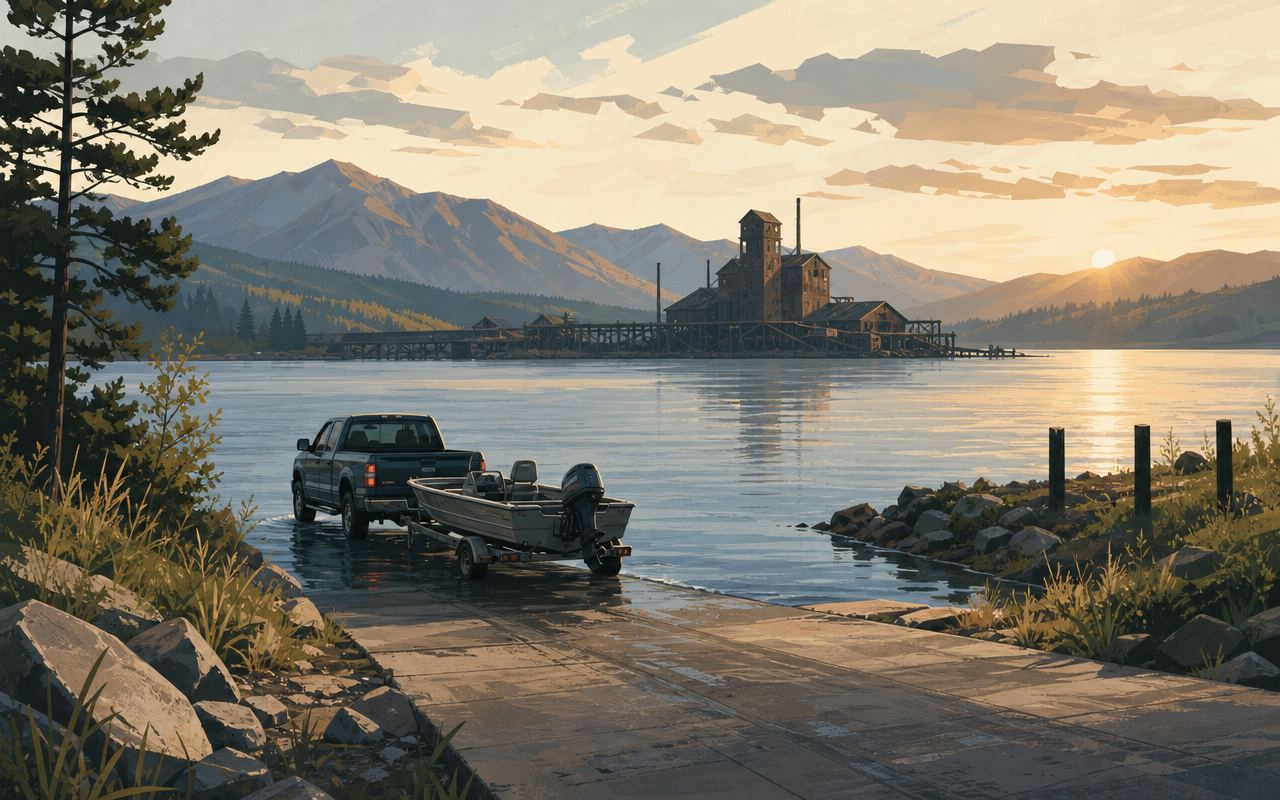
The town’s roots go back to 1900, when Great Northern Railway magnate James J. Hill contracted with the John O’Brien Lumber Company to build a sawmill on the lake’s north end, under an agreement that required the mill to supply the railroad with 600,000 railroad ties a year for twenty years. Logs reached the mill by water, floated down the Whitefish, Stillwater, Swan, and Flathead rivers and across the lake itself before being cut into ties and lumber; a tie-treatment plant was added in 1901, and the Great Northern purchased the operation outright a few years later. The company built and owned the town around its mill, including 122 homes for workers, and supplied their water and electricity directly. By 1937, close to 400 employees were turning out roughly 60 million board feet of lumber a year, at the time the largest lumber operation in the Flathead Valley. Hill named the settlement for George O. Somers, a Great Northern vice president who oversaw the project. The Great Northern closed the sawmill itself in 1948, but the tie-treatment plant continued operating under Burlington Northern ownership until it finally shut down in 1986 — meaning some form of the original mill operation ran on this site for the better part of 86 years. The town it built has persisted long past the mill’s closure, growing from a population of 556 at the 2000 census to 1,049 by 2020. Somers today reads as a genuine lake community rather than a resort creation — a real place with a mill-town history, not a town invented to serve tourism.
Lake access from town
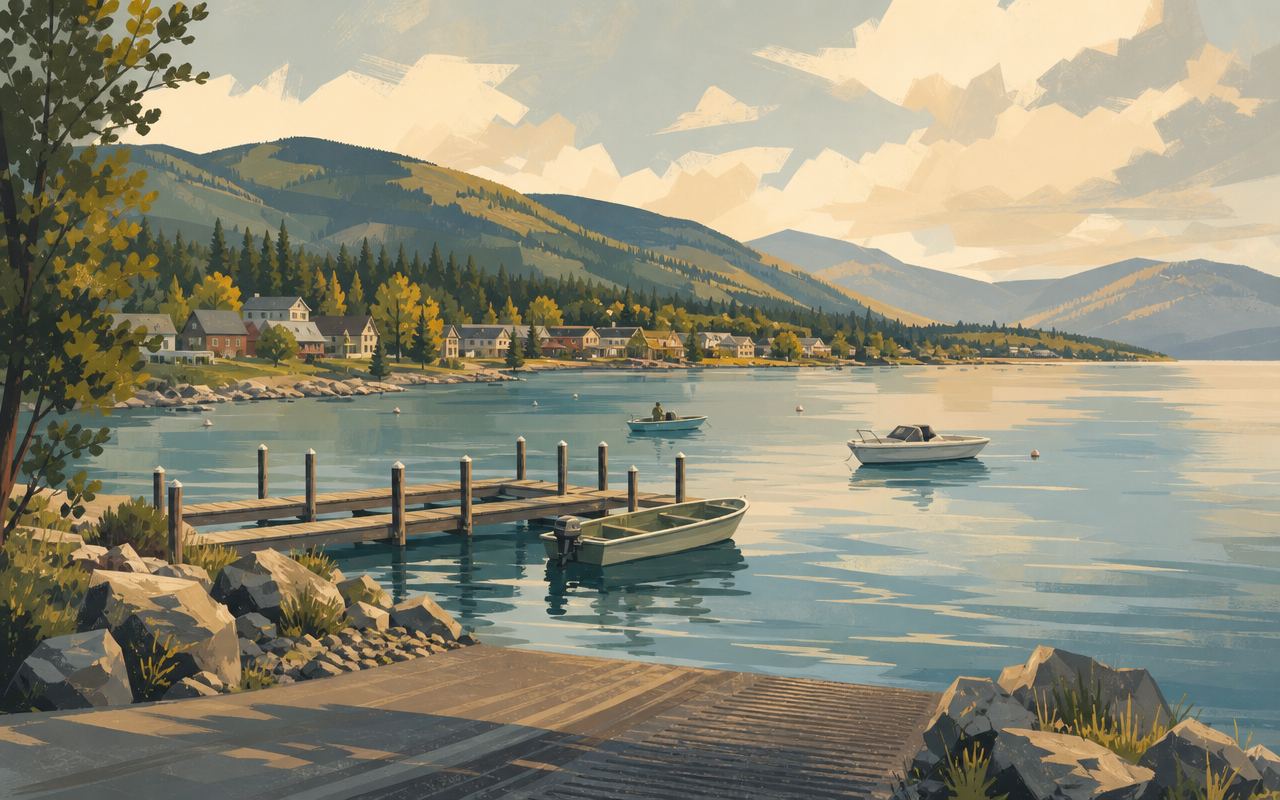
The most significant public access point in Somers is Somers Beach State Park, a 106-acre property on the north shore that Montana Fish, Wildlife & Parks acquired in 2021 and opened to the public in 2022. It’s a state park, not a private business, and it’s worth understanding what that means in practice: after a multi-year planning process, FWP finalized a development plan calling for day-use amenities — trails, picnic areas, a parking area, vault restrooms, and a hand-launch area suited to kayaks, canoes, and other small, human-powered craft — along with a small number of overnight rental cabins. This isn’t a boat-trailer ramp built for powerboats; it’s oriented toward day use and paddle craft, which fits the character of the shoreline here.
Beyond the state park itself, Somers’ position at the lake’s north end means the surrounding shoreline includes other points where the water is reachable from public roads and public land, as is generally true around much of Flathead Lake. Exactly what’s available in a given season — parking capacity, whether a particular access point is developed or just an informal pull-off — is the kind of detail that changes from year to year as FWP continues developing the newer park land, so it’s worth checking current conditions directly before you go rather than assuming a fixed setup. What doesn’t change is the basic geography: Somers sits on a stretch of shoreline with real, publicly accessible water, at a spot where the lake is narrower and more sheltered than it is farther south.
That combination — new public land still being built out, plus a long-settled town with its own established shoreline — is fairly typical of Flathead Lake as a whole. The lake’s edge is a patchwork of state park units, informal access points, and private property, and Somers Beach State Park is a reminder that this patchwork is still filling in: land that wasn’t public a few years ago can become a developed access point, and amenities that exist on paper in a planning document take time to show up on the ground. Anyone planning a trip around a specific amenity — a particular trail, a specific cabin, a certain number of parking spots — should treat the park’s own current listings as the final word rather than any older description, this one included.
Distinct from Somers Beach State Park, and easy to confuse with it, is the separate Somers Fishing Access Site, a Montana Fish, Wildlife & Parks day-use site built specifically for trailered boats rather than paddle craft. It has a concrete boat launch and dock, an ADA-accessible latrine, and room for trailers up to 35 feet, with the dock typically in the water from ice-off through November 15. Anyone launching a powerboat rather than a kayak or canoe from Somers should look for this site specifically, since Somers Beach State Park’s hand-launch area isn’t built for trailered craft.
How it fits into a paddling day
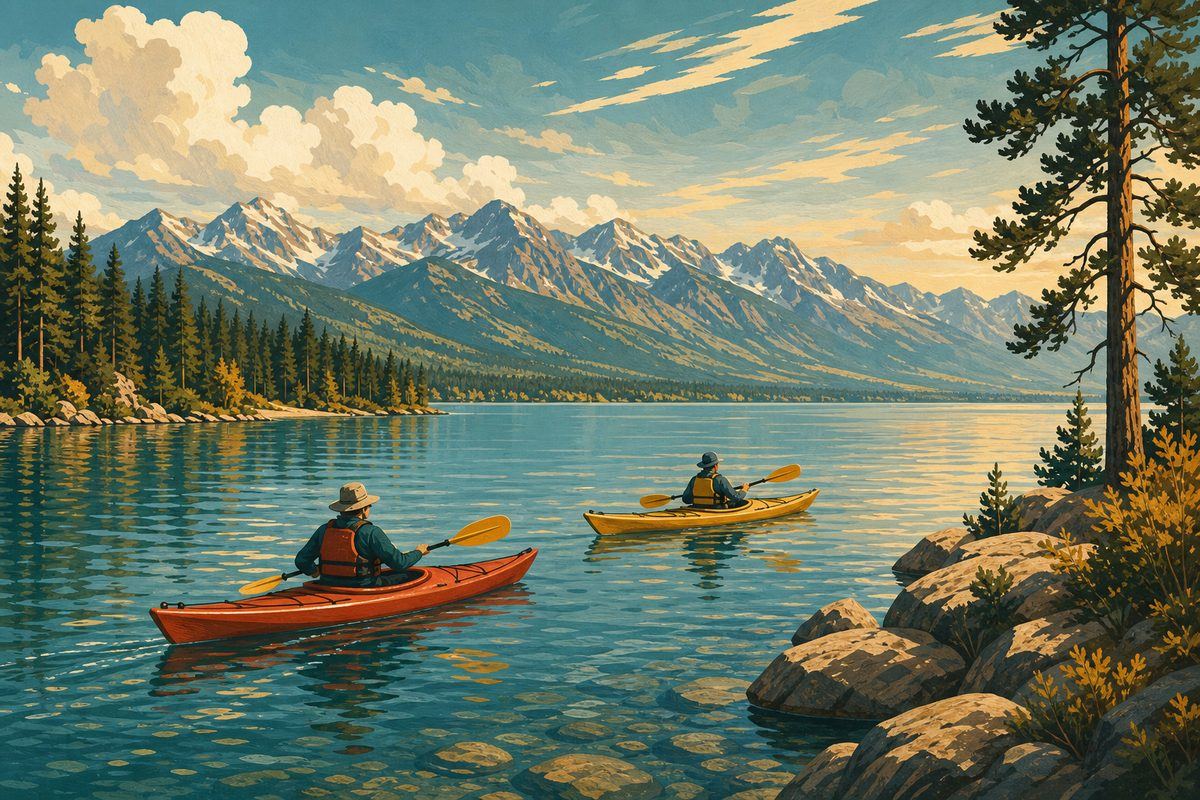
This site’s guide to kayaking Flathead Lake treats Somers as one of the lake’s handful of go-to launch points, alongside Yellow Bay on the east shore and Big Arm to the south. The reasoning is straightforward: the lake’s north end narrows near Somers, and the surrounding shoreline breaks up the open fetch that lets wind build serious chop farther out on the central and southern basin. That makes the water close to town noticeably calmer on an average day than the open lake, which in turn makes it a sensible place for a shorter, shoreline-hugging paddle, or simply a spot to get a feel for how the lake behaves before committing to a longer open-water outing elsewhere.
It’s worth being clear about what Somers isn’t, too. It is not a jumping-off point for the paddle out to Wild Horse Island, the lake’s largest island and its best-known paddling destination — that crossing is done from Big Arm, well to the south on the west shore, where the mainland sits closest to the island. Somers plays a different role: a comparatively gentle, well-established access point for building comfort on the water, exploring the calmer northern reaches of the lake, or simply getting out for an afternoon without taking on the exposure of a genuine open-water crossing. For paddlers new to Flathead Lake, or new to open water generally, that combination of real public access and sheltered conditions is exactly what makes a town like Somers useful as a starting point rather than a footnote.
The same sheltered water that suits a first paddling trip has also made this stretch of shoreline Montana’s home for competitive sailing. The North Flathead Yacht Club, based near Somers since its founding in 1975, has grown into what it calls the state’s premier sailing venue, though membership is deliberately capped at 140 active families given the club’s size and facilities. Paddlers sharing the water with sailboats on a summer weekend, especially during a regatta, are seeing the same calm-water advantage this guide describes for kayaking, just put to a different use.
Getting there
Somers sits directly on U.S. Highway 93, the road that runs along the lake’s western shore for its entire length, connecting Kalispell in the north to Polson at the lake’s southern tip roughly forty-plus miles away. From Kalispell, it’s a short trip south on 93 — on the order of nine to ten miles — making Somers an easy stop for anyone already staying in or passing through the northern Flathead Valley. Glacier Park International Airport sits on the north side of Kalispell, putting it within easy reach of Somers along the same corridor.
Heading east instead, Montana Highway 82 branches off toward Bigfork, on the lake’s northeast shore, giving travelers a direct link between the two towns without having to loop around the lake’s southern end. That makes Somers a workable base or waypoint for a broader loop of the lake: north to Kalispell, east to Bigfork via Highway 82, or south along 93 toward Polson and the lake’s more developed southern shoreline. Whichever direction you’re coming from, the drive along the lake’s west shore on 93 is itself a scenic approach, with the water visible for long stretches as the road hugs the shoreline into town.
For visitors flying in, Somers’ proximity to Glacier Park International Airport makes it a realistic first or last stop on a Flathead Valley trip, rather than a detour that requires backtracking. Travelers coming from the south, meanwhile, will find that 93 stays close to the lake almost the entire way up from Polson, so the approach to Somers is less a single moment of arrival and more the tail end of a drive that’s already been running alongside the water for the better part of an hour.
Frequently asked questions
Where is Somers, Montana, located?
Somers sits at the north end of Flathead Lake, on the northwest shore near where the Flathead River flows in before continuing the length of the lake to Polson. It's on U.S. Highway 93, roughly nine miles south of Kalispell.
Is there public boat access in Somers?
Yes. Somers Beach State Park, a 106-acre Montana Fish, Wildlife & Parks property on the north shore, opened to the public in 2022 and includes a hand-launch area for boats along with trails, picnic areas, and parking. It's public land, not a private marina, so there's no fee-based dock or full-service ramp to expect there.
Can I launch a kayak or paddleboard from Somers?
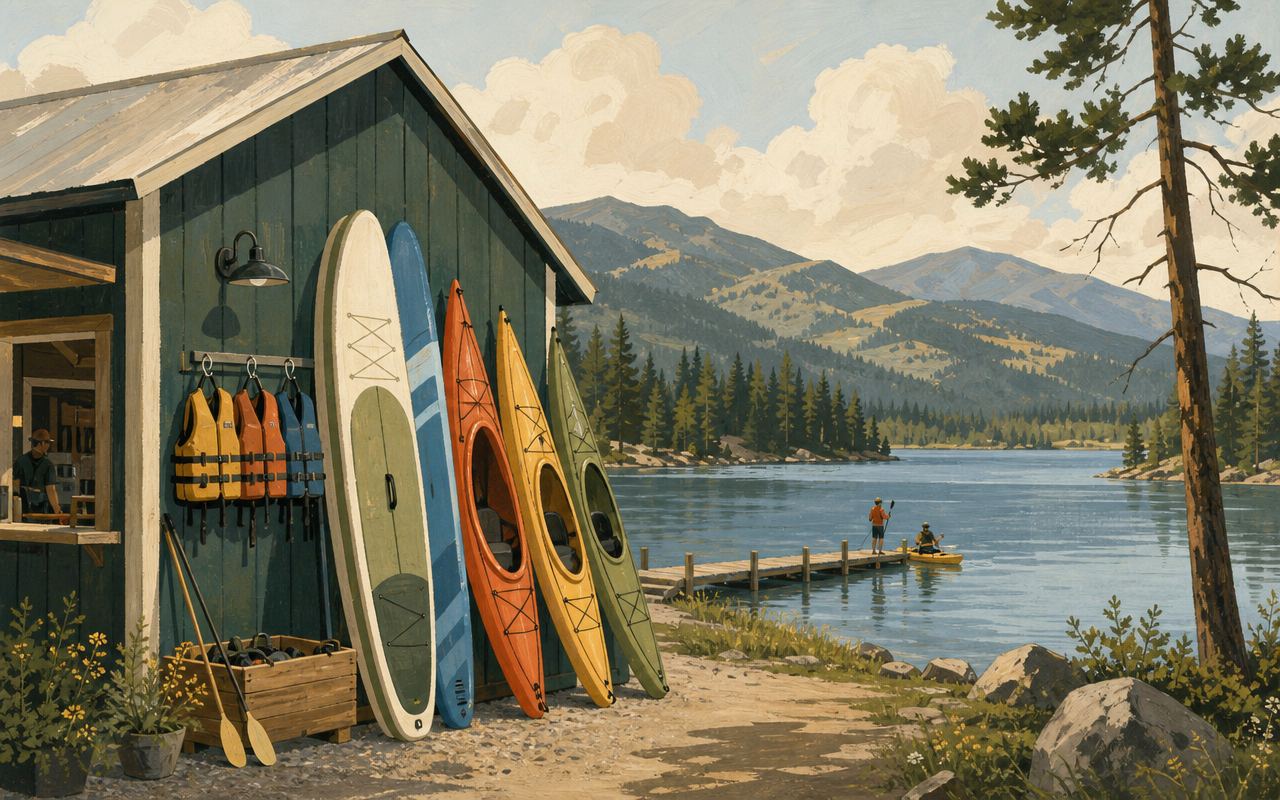
Yes. This site's guide to kayaking Flathead Lake identifies Somers as one of the lake's established launch points, with more sheltered water close to town than you'll find on the open central and southern basin. It suits shorter, shoreline-hugging paddles rather than long open-water crossings.
How far is Somers from Kalispell or the airport?
About nine to ten miles by car via U.S. Highway 93. Glacier Park International Airport, on the north side of Kalispell, is a short drive from Somers along the same route.
What is the history behind the town of Somers?
Somers began in 1900 as a company town built around a sawmill that Great Northern Railway magnate James J. Hill had constructed at the lake's north end. It was named for George O. Somers, a Great Northern vice president. By 1910 the Somers Lumber Company mill was the largest in the Flathead Valley; the sawmill itself closed in 1948, though the mill's tie-treatment plant kept running under Burlington Northern ownership until 1986.
How long did the Somers mill actually operate?
In some form, for the better part of 86 years. The Great Northern Railway closed the original sawmill in 1948, but the mill's tie-treatment plant kept running under Burlington Northern ownership until 1986. At its 1937 peak, the operation employed close to 400 workers producing roughly 60 million board feet of lumber a year.
Does Somers have visitor services like lodging or restaurants?
Somers is a small, real town rather than a built-up resort strip, so travelers should expect modest small-town services rather than a concentrated tourist district. Kalispell, a short drive north, and Bigfork, connected by Montana Highway 82, both have more extensive lodging, dining, and outfitting options.