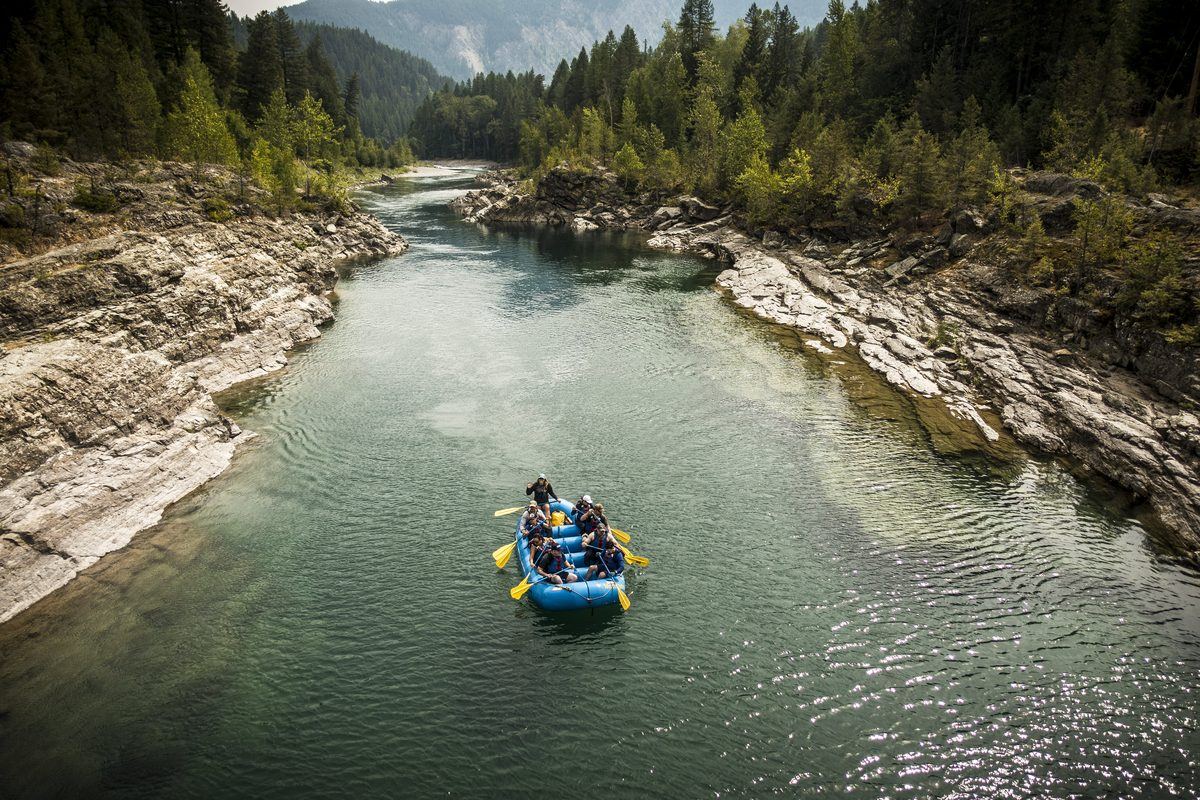
Most fish caught on Flathead Lake are either kept for dinner or released by choice. Bull trout are the one species where release isn’t optional — it’s the law, and understanding why gets at one of the more genuinely important conservation stories tied to this lake.
This guide covers what makes bull trout different, how to actually identify one on the end of your line, what the current regulations require, and what recent population data says about how the species is really doing here.
Why this species is specifically protected
Bull trout were listed as threatened under the federal Endangered Species Act in 1998, and the population in the Flathead system falls squarely under that protection. That listing wasn’t a precautionary formality — it reflected a genuinely documented decline across the species’ range, driven by a combination of habitat degradation, warming water, and competition from non-native fish species introduced into western river systems over the past century.
In Flathead Lake specifically, the rule that follows from that federal listing is direct: any bull trout caught must be released immediately, full stop, regardless of size or your fishing license type. This is one of the very few Flathead Lake fishing rules that leaves no discretion — there’s no season, size limit, or bag limit to work around, because the answer for every bull trout caught here is the same.
Bull trout vs. lake trout: the distinction that actually matters
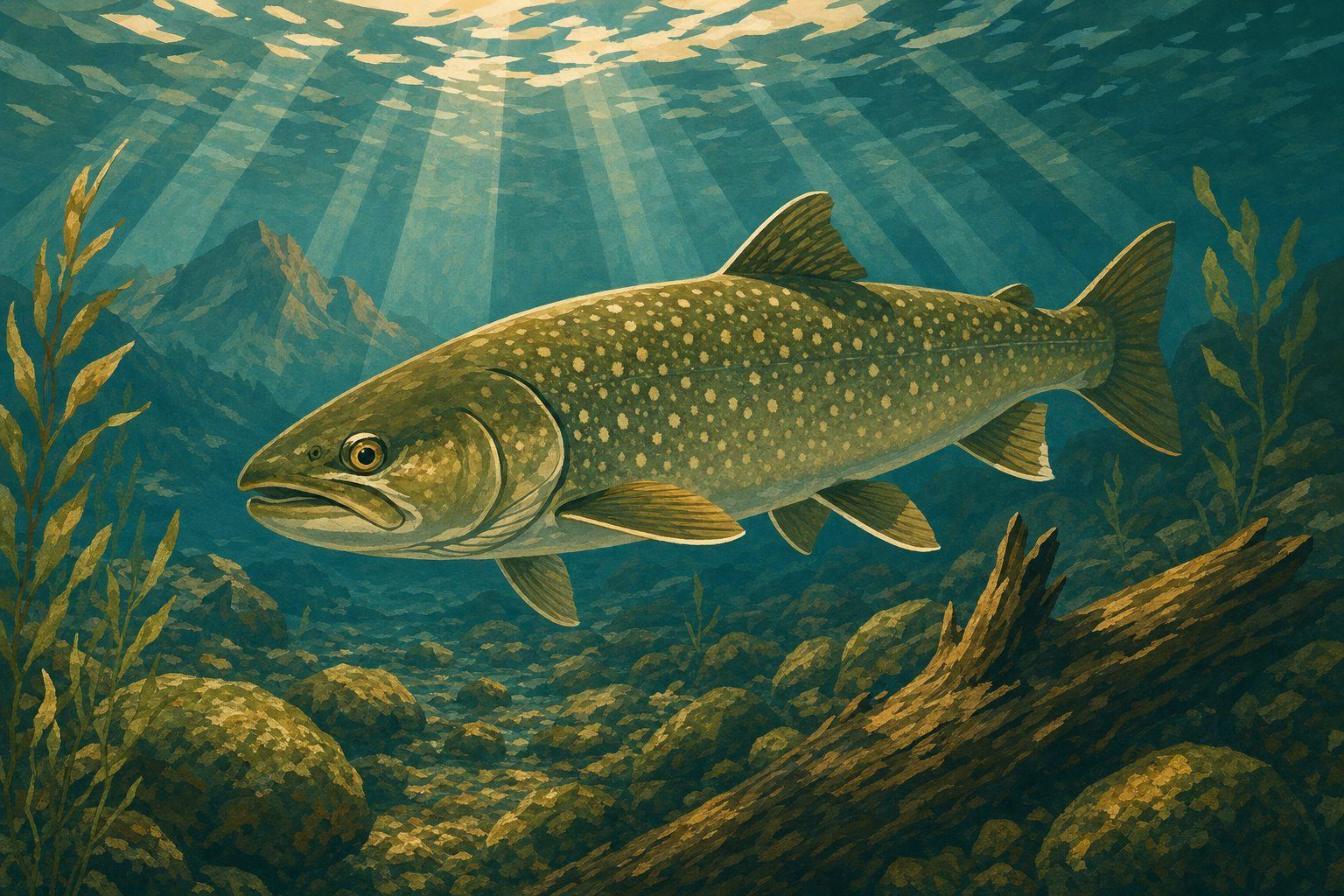
Getting this identification right matters more here than almost any other species-ID question an angler on Flathead Lake will face, because confusing a bull trout for a lake trout and keeping it by mistake is a genuine legal violation, not just an embarrassing mix-up. The two species share a superficial resemblance as large, silvery-to-olive trout-like fish, but the details separate them clearly once you know what to look for. Bull trout carry pale, cream-to-pink spots scattered across an olive-green to grey body, distinct from the smaller, more numerous light spots typical of lake trout on a darker background. Bull trout also generally lack dark spots on their dorsal fin, a detail lake trout usually show. Montana Fish, Wildlife & Parks publishes a dedicated bull trout identification guide specifically because this mix-up happens often enough among anglers who aren’t specifically looking for the difference — worth reviewing before a Flathead Lake trip if you’re not already confident telling the two apart on sight.
What “threatened” actually means in practice
The 1998 Endangered Species Act listing didn’t happen in isolation — it followed documented, sustained declines across the bull trout’s range in the western United States, driven by the same pressures still shaping the species’ status today. A threatened listing sits one step below endangered, but it carries real legal weight: federal agencies must consult on actions that could affect the species and its habitat, and take (harming, harassing, or killing a listed animal) is generally prohibited without specific authorization. For an angler, the practical translation is the mandatory-release rule covered above — a direct, everyday consequence of a designation that, on paper, sounds like a distant regulatory matter but shows up concretely the moment a bull trout takes your line on Flathead Lake.
Recovery efforts tied to that listing extend well beyond fishing regulations. Habitat restoration in spawning tributaries, water temperature monitoring, and the lake trout suppression effort covered later in this guide are all part of a coordinated response to the same listing — a threatened species designation isn’t just a rule anglers follow, it’s the legal foundation underneath a broader, multi-agency conservation effort involving state, federal, and tribal management working across the same watershed.
What’s actually driving the decline
The pressures on Flathead Lake’s bull trout population are well documented and layered. Bull trout require colder, cleaner water than many other trout and char species, making them more vulnerable to warming water temperatures and habitat degradation than more adaptable fish. They also compete poorly against lake trout, a non-native species whose population in Flathead Lake expanded dramatically after opossum shrimp — introduced upstream in the mid-twentieth century as a food source for another species — reshaped the lake’s food web in ways that ultimately favored lake trout at the expense of native bull trout and westslope cutthroat trout. That combination of a cold-water specialist competing against a booming non-native predator in a changing system is at the core of why bull trout protection here is treated as an ongoing, active conservation concern rather than a settled issue.
What recent numbers actually show
The most recent, concrete data available paints a genuinely concerning picture rather than a recovery story. Redd counts — spawning nest counts used as the standard method for tracking bull trout population trends — in Big Salmon Creek, a key spawning tributary in the watershed, were the lowest on record in both 2023 and 2024 since systematic counting began in 1993, coming in at only around 42 percent of the historical average. Numbers like that don’t happen in isolation; they’ve prompted regulators to respond, including new bull trout-related fishing restrictions adopted on the Flathead River following the record-low counts. For a visitor, the practical takeaway is straightforward: this is an active, evolving conservation situation, not a stable baseline, and checking current Montana Fish, Wildlife & Parks regulations close to your trip date matters more here than it does for a healthy, stable species.
What anglers can actually do beyond releasing fish
Compliance with the release requirement is the baseline, but a few additional habits genuinely help beyond the legal minimum. Learning the identification differences covered above well enough to recognize a bull trout before it’s even fully out of the water reduces handling time for the fish and reduces the odds of an honest misidentification turning into an accidental violation. Reporting bull trout catches, where a current program exists to collect that data, gives researchers additional real-world observations beyond formal redd counts and can help track how the population is distributed across the lake, not just at known spawning tributaries. And supporting the broader lake trout suppression effort — whether by participating directly in an event like Mack Days or simply understanding why that program exists — reflects an awareness that bull trout recovery in this specific watershed depends on more than any single angler’s individual catch-and-release choices; it depends on sustained pressure on the competing species that’s been outcompeting bull trout for decades.
Fishing responsibly for a threatened species
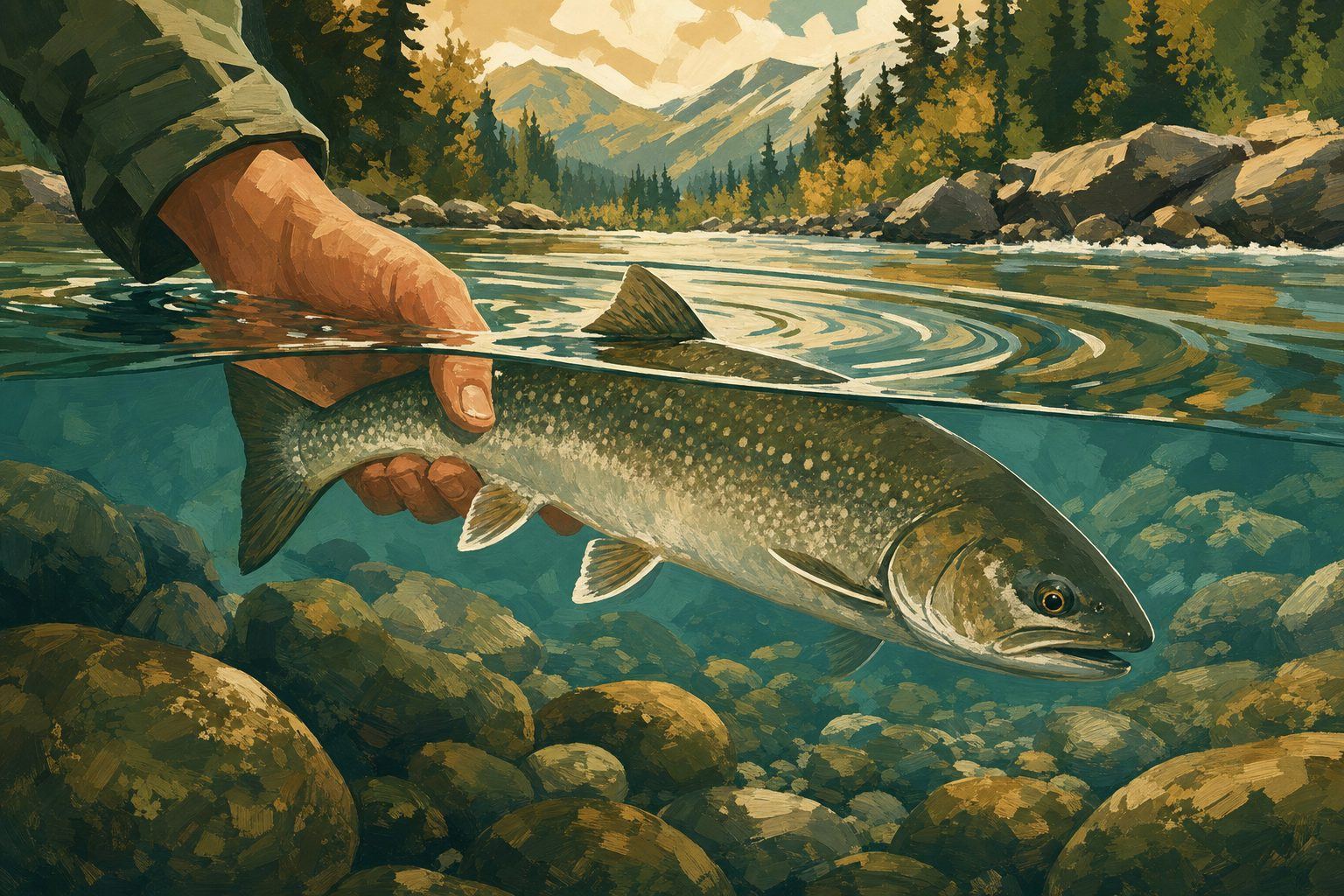
If a bull trout does take your line, the goal is a quick, careful release with as little stress on the fish as possible. Keep it in the water while removing the hook if you can manage it, avoid excessive handling for photos, and get it back into the lake as quickly as the situation allows. None of that guarantees survival after release, but minimizing handling time is a documented factor in improving a released fish’s odds — a meaningful difference for a threatened population already under real pressure, in a way it wouldn’t be for a common, abundant species.
The broader lake trout suppression effort covered in this site’s guide to the Mack Days fishing event is a directly related piece of the same conservation picture: fewer competing lake trout, in theory, means more room for native bull trout and cutthroat trout to recover. Understanding one helps make sense of the other, and together they explain why Flathead Lake’s fishing regulations look the way they do — not as arbitrary restrictions, but as a genuine, ongoing attempt to manage a lake whose native fish populations have been reshaped by decisions made decades ago.
None of this is unique to Flathead Lake in isolation — bull trout populations face similar pressure across much of their historic range in the interior Pacific Northwest and northern Rockies, and this specific watershed’s ongoing monitoring, redd counts, and habitat work are part of a larger, regional recovery effort spanning multiple states and river systems. A visitor who releases a bull trout on Flathead Lake is participating, in a small but real way, in that broader effort.
Frequently asked questions
Do I need a special license to legally catch and release a bull trout?
No special license is required just to release one — a standard Montana fishing license, or the joint state-tribal license required on the lake's southern reservation waters, covers you. What matters is what happens after the catch: bull trout caught in Flathead Lake must be released immediately, not kept, regardless of your license type.
How do I tell a bull trout from a lake trout?
This distinction matters legally, not just for identification's sake. Bull trout have pale, cream-to-pink spots on an olive-green to grey body and lack the black spots typical of lake trout; bull trout also generally lack any dark spots on their dorsal fin, while lake trout usually have some. Montana Fish, Wildlife & Parks publishes a bull trout identification guide specifically because confusing the two species and keeping a bull trout by mistake is a real, documented risk for anglers unfamiliar with the difference.
Why are bull trout protected here specifically?
Bull trout were listed as threatened under the federal Endangered Species Act in 1998, and Flathead Lake's population falls under that protection. The species is sensitive to water temperature, competition from non-native fish, and habitat degradation, and its numbers in this watershed have been a documented conservation concern for decades — the protection here exists specifically because of a genuinely at-risk population in this system, not as a blanket rule applied everywhere.
Are bull trout numbers actually improving or getting worse?
Recent data points to real concern rather than recovery. Redd counts — the spawning nests used to estimate population trends — in Big Salmon Creek, a key spawning tributary, were the lowest on record in both 2023 and 2024 since counting began in 1993, at only about 42 percent of the historical average. That's part of why regulators have continued tightening related rules, including new bull trout restrictions on the Flathead River adopted after those record-low counts.
Can I keep a bull trout anywhere in the broader Flathead system?
Rules vary by specific water body and can change, so always check current Montana Fish, Wildlife & Parks regulations before you fish rather than assuming last year's rule still applies. Some nearby waters in the broader region have historically allowed a very limited, specific harvest under separate regulations, while Flathead Lake itself requires release of every bull trout caught — the two aren't interchangeable, and assuming a rule from one location applies to another is exactly the kind of mistake that leads to accidental violations.
What's actually threatening bull trout in this watershed?
A combination of factors, most documented over decades of research: bull trout need very cold, clean water and are more sensitive to warming and habitat degradation than many other trout species; they also compete poorly against non-native lake trout, whose population boomed in Flathead Lake after an invasive shrimp species introduced upstream reshaped the lake's food web in the late twentieth century, indirectly disadvantaging native bull trout and cutthroat trout.
If I accidentally catch a bull trout, what should I do?
Handle it as briefly and gently as possible, keep it in the water if you can while removing the hook, and release it immediately without unnecessary delay for photos. Minimizing handling time and stress genuinely improves a released fish's odds of survival, which matters more for a threatened species already dealing with population pressure than it does for a healthy, abundant species.
Does the Mack Days lake trout program help bull trout?
That's the stated conservation purpose behind it. The Confederated Salish and Kootenai Tribes run the Mack Days fishing event specifically to reduce non-native lake trout numbers on Flathead Lake, with the goal of easing competition for native bull trout and westslope cutthroat trout — a separate but directly related piece of the same broader conservation picture.