Ice fishing on most Montana lakes is a straightforward winter tradition. Flathead Lake is the exception that makes the rule worth stating carefully: this is one of the largest, deepest natural lakes in the western United States, and it does not freeze the way smaller lakes do. Ice fishing here is real and genuinely practiced, but it happens on specific bays under specific conditions — not across the open lake as a whole.
This guide covers where ice actually forms safely, what to fish for, and the access and safety rules that matter more here than on a typical frozen lake.
The one fact that matters most: this lake doesn’t freeze like others
Flathead Lake’s size, depth, and river-fed flow work directly against the kind of uniform, thick ice cover that makes other Montana lakes reliable winter fishing destinations. The lake rarely freezes completely, and its southern basin — deeper and more exposed than the north end — never freezes safely at all. That’s not a minor caveat; it’s the central fact that shapes everything else about ice fishing here. Anyone picturing walking out onto the middle of Flathead Lake the way they might on a smaller local pond is picturing the wrong lake entirely.
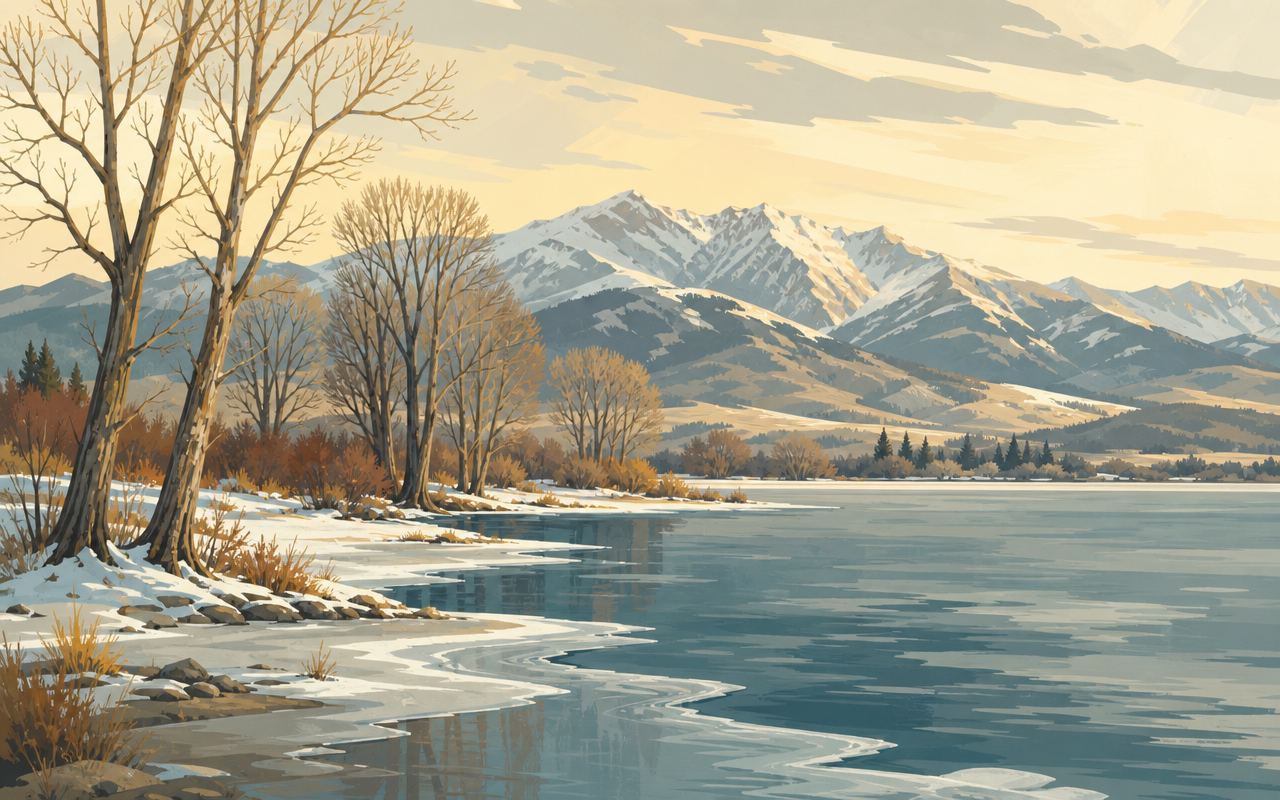
What actually happens is more localized: certain shallower, more sheltered bays, particularly toward the lake’s north end around areas like Somers, are meaningfully more likely to develop ice thick enough to fish from than the open lake or the southern basin. Even those areas aren’t a sure thing every winter — ice conditions shift with weather, snow cover, and water movement, and a bay that froze reliably one year can be unsafe the next.
Why this specific lake almost never freezes
The reason comes down to sheer size and depth, not just cold-weather luck. Flathead Lake is the largest natural freshwater lake west of the Mississippi River, with an average depth around 165 feet and a deepest point just under 371 feet — a genuinely enormous volume of water that acts as a heat sink, absorbing and holding warmth far longer than a shallow pond or small lake ever could. Cooling that much water down to freezing requires a sustained, serious cold snap: roughly ten or more consecutive days of air temperatures at minus-10 degrees Fahrenheit or colder, combined with dead-calm conditions, since wind and wave action mix and re-warm the surface faster than still air allows ice to form.
That combination of requirements is rare enough that Flathead Lake historically froze completely only about once per decade even in colder climate periods — and it hasn’t frozen over completely since the winter of 1989-90, a gap of multiple decades that reflects both the specific conditions required and broader shifts in regional winter weather. For a visitor, the practical upshot is simple: don’t plan a trip around the expectation of walking onto open lake ice, because on any given winter, the odds are that it simply won’t happen across the lake as a whole — which is exactly why this guide focuses on the specific sheltered bays where localized freezing is actually plausible, rather than the lake in general.
What to actually target
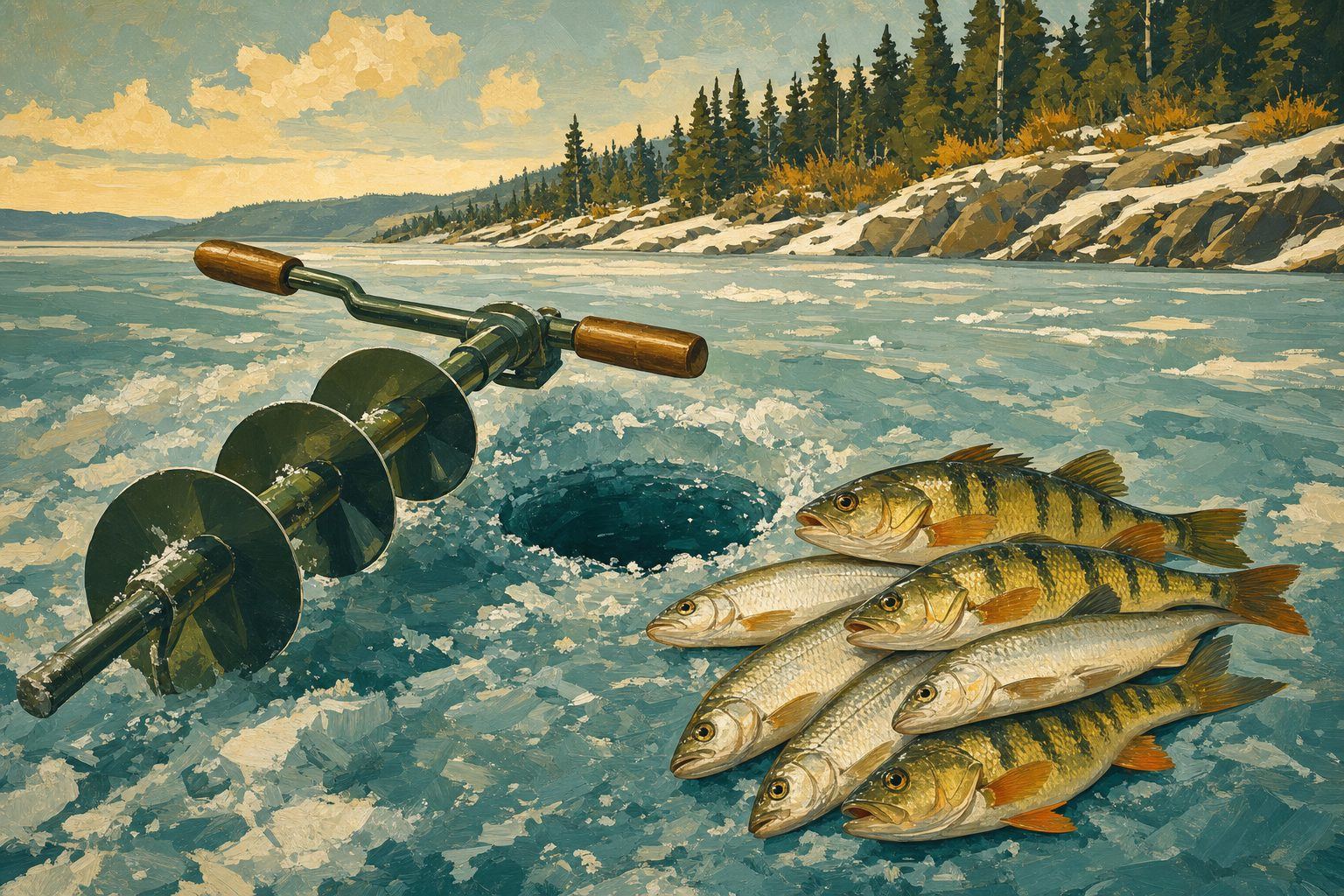
Lake whitefish and yellow perch are the two species most commonly caught through the ice on Flathead Lake, both typically taken on small jigs rather than heavier gear. Whitefish are a genuinely popular winter target across the broader Flathead system, prized by many anglers specifically for the cold-season fishery they provide when other options are limited by ice and weather. Yellow perch offer a more classic, approachable ice-fishing experience — active biters, forgiving of moderate technique, and a reasonable target for anglers who haven’t ice fished extensively before, provided the ice itself is safe to begin with.
Checking ice safety: not optional, not something this guide can do for you
No general guide, this one included, can responsibly tell a reader that ice is currently safe on any specific part of Flathead Lake on any given day — conditions change too fast and vary too much by exact location for that kind of blanket statement to be honest or useful. What a responsible visitor actually does is check current, local information immediately before heading out: local bait and tackle shops, published fishing reports, and other anglers already active on a given bay are the most reliable, up-to-date sources, since they reflect conditions as of that week or even that day rather than a general seasonal assumption.
Basic ice-safety practice still applies everywhere this lake does ice over: never assume ice thickness from appearance alone, test it directly as you go, avoid ice near moving water, inflow points, or areas with visible cracks or dark patches, and never fish alone on a body of water with this lake’s track record for unreliable, inconsistent freezing.
Access rules on the southern half of the lake
The Confederated Salish and Kootenai Tribes manage significant shoreline and water rights on the southern half of Flathead Lake, within the Flathead Indian Reservation — the same jurisdictional split covered in this site’s general fishing guide. Non-tribal-member anglers need a tribal recreation permit to access tribal lands and fish tribal waters there, a separate requirement from a standard Montana fishing license and worth confirming before assuming access to any specific southern shoreline spot, ice fishing included.
Pairing it with the rest of a winter visit
Because reliable ice fishing here depends on genuinely cooperative winter weather, it’s worth building flexibility into any trip planned around it rather than treating it as the sole reason for a visit. This site’s guide to winter on Flathead Lake covers the broader seasonal picture — road conditions, what the shoreline and towns actually look like in the cold months, and other activities that don’t depend on ice forming at all. A visitor who arrives hoping for ice fishing but finds conditions unsafe still has a genuine winter Flathead Lake experience available: open-water shoreline fishing where accessible, wildlife viewing for the valley’s winter-concentrated eagles and swans, or simply the quieter, off-season character of towns like Somers and Polson without the summer crowds. Building the trip around “ice fishing if conditions allow, with real alternatives if they don’t” is a more realistic approach than planning around ice fishing as a certainty on a lake this famously unreliable.
Gear and getting started
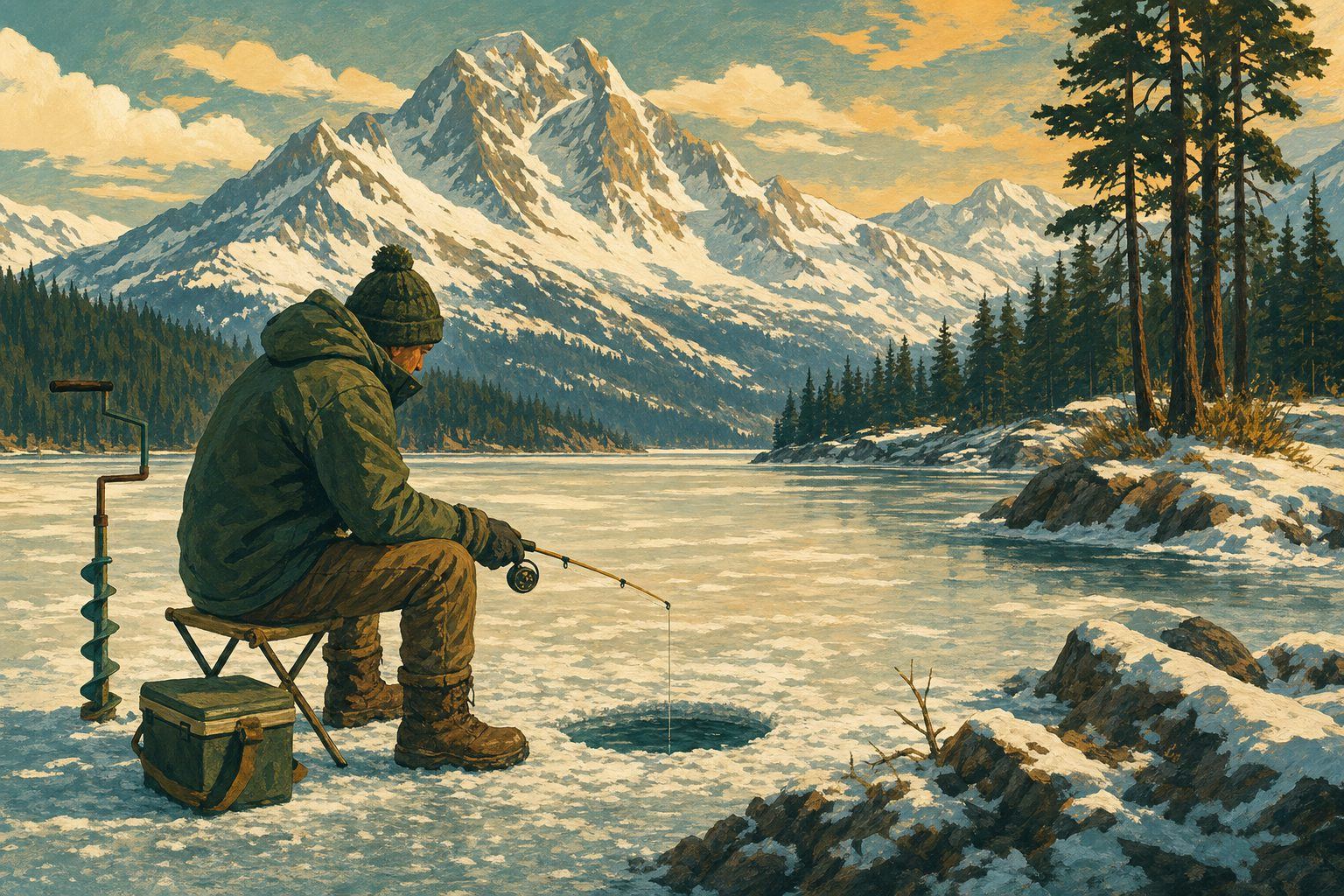
Beyond a rod and small jigs, practical ice fishing gear includes an auger or spud bar for creating and checking holes, ice cleats for safe footing on what’s often genuinely slick surface ice, and cold-weather clothing rated for standing still for extended periods — a meaningfully colder experience than staying active while hiking or paddling. A direct means of checking ice thickness as you move across a frozen bay, rather than trusting appearance alone, rounds out the safety essentials. For a first attempt on a lake with Flathead’s specific unreliable-ice reputation, going with a local guide or an experienced local angler, at least for the first outing, is a reasonable way to learn which bays are currently trustworthy before heading out independently in future seasons.
None of this caution is meant to discourage ice fishing here altogether — it’s a real, established activity for anglers who approach it with the right expectations. The point is simply that Flathead Lake asks for more judgment and local knowledge than a smaller, more predictably frozen lake would, and treating that seriously from the first trip is what separates a good winter fishing day from a genuinely dangerous one on a lake this large and this unpredictable in winter — a lake that, on most years, simply never fully commits to being frozen at all. Respect that reputation, check conditions honestly rather than hopefully, and the reward is a genuinely quiet, uncrowded winter fishery that most visitors never realize exists here at all, tucked into the handful of bays where this famously stubborn lake actually cooperates.
Frequently asked questions
Does Flathead Lake actually freeze over completely?
No, and this is the single most important fact for anyone considering ice fishing here. Flathead Lake rarely freezes completely, and its southern basin never freezes safely — the lake is deep, large, and fed by significant river flow, all of which work against uniform, reliable ice formation across the whole surface. Ice fishing here means fishing specific bays and shallower areas that do freeze, not walking out onto the open lake.
Which parts of the lake are more likely to have safe ice?
Shallower, more sheltered bays on the lake's north end — areas around Somers and similar protected shoreline — are more likely to develop rideable ice than the open, deep southern basin, which essentially never freezes safely. Even so, ice conditions vary significantly year to year and week to week depending on weather, and local knowledge of which specific bays are currently trustworthy matters more than any general rule.
What species can I actually catch ice fishing here?
Lake whitefish and yellow perch are the two species most commonly targeted through the ice on Flathead Lake, typically using small jigs. Whitefish are a popular winter target throughout the broader Flathead system, and perch fishing through the ice is a genuinely enjoyable, approachable activity for anglers of most experience levels.
How do I check ice safety before heading out?
Always check current ice thickness and local conditions before venturing onto any ice on Flathead Lake — this isn't optional, and it isn't something a general guide like this one can respond to in real time. Local bait shops, fishing reports, and other anglers already on a given bay are the most current sources, since conditions change through a season and even day to day with temperature swings.
Do I need a special permit to ice fish on the southern half of the lake?
Yes. The Confederated Salish and Kootenai Tribes manage significant shoreline and water on the southern half of Flathead Lake, within the Flathead Indian Reservation, and non-tribal-member anglers need a tribal recreation permit to access tribal lands and fish tribal waters there, separate from a standard Montana license.
What gear do I actually need beyond a rod?
Basic ice-fishing gear beyond a rod and small jigs includes an ice auger or spud bar to create and check holes, ice cleats or grippers for safe footing, and cold-weather layers rated for standing still on open ice for extended periods, which is considerably colder than moving around on land. A means of checking ice thickness directly, rather than assuming it based on appearance, is a genuine safety essential, not an optional extra.
Is ice fishing here beginner-friendly?
The fishing technique itself — small jigs for whitefish and perch — is approachable for most skill levels. The safety judgment required to pick a trustworthy spot on a lake that's famous locally for NOT freezing reliably is the part that actually demands caution and, ideally, local knowledge or a guide for a first outing, rather than technical fishing skill.
When does the ice fishing season typically run?
It depends entirely on winter conditions in a given year, since safe ice formation on any part of Flathead Lake isn't guaranteed on a fixed calendar. Checking current conditions each winter, rather than assuming a repeat of a previous year's timeline, is the only reliable approach here.