Flathead Lake gets most of the attention in this corner of Montana, but the river system that feeds and drains it offers some of the calmest, most family-friendly paddling in the region — if you know which stretch to choose. The Flathead River isn’t one uniform run. Up near the Canadian border and the western edge of Glacier National Park, the North Fork moves as a cold, clear, snowmelt-fed channel braided across wide gravel bars. Lower down, after the North, Middle, and South Forks come together, the main stem widens and slows into long, looping bends as it works its way toward the lake near Kalispell. Both are floatable. Neither is the same trip.
This guide covers the gentle end of what the Flathead system offers: no whitewater, no permits for private non-commercial floats, and realistic expectations about water temperature, timing, and what to pack. It’s aimed at families and casual paddlers looking for a scenic, low-drama afternoon on the water rather than a whitewater run.
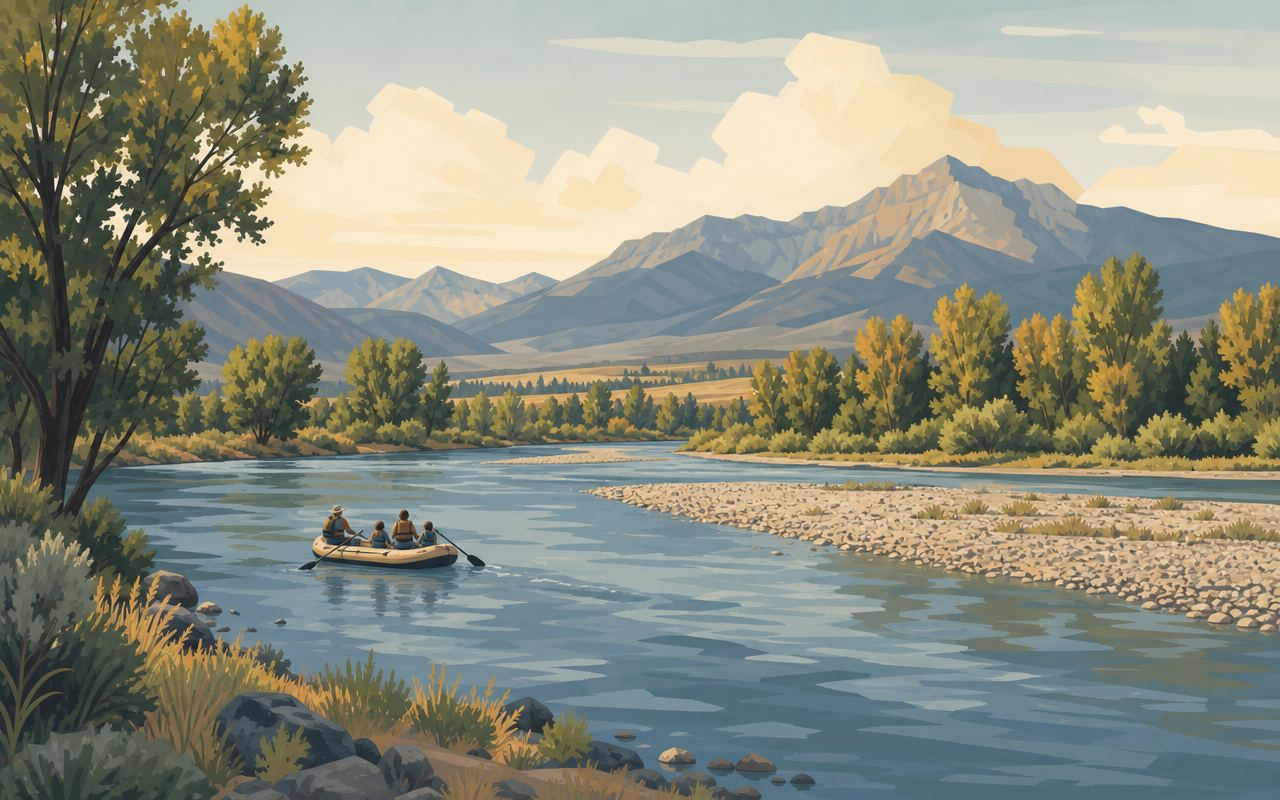
The North Fork: cold, clear, and wild
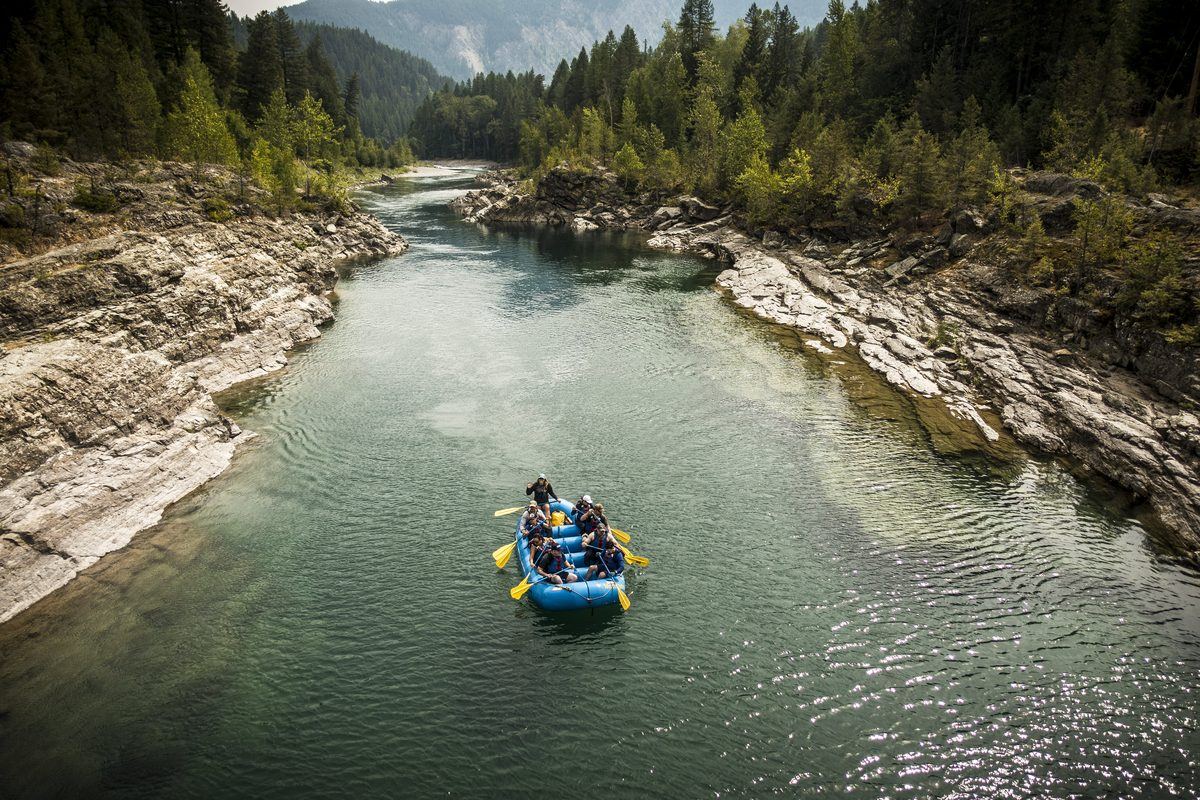
The North Fork of the Flathead River is one of three forks — along with the Middle and South Forks — designated as part of the National Wild and Scenic Rivers System in 1976. That designation has helped keep long stretches of the river corridor free of development, and it shows: the North Fork runs clear over a shifting bed of gravel and cobble, braiding around bars and small islands rather than cutting one fixed channel. For much of its length it also forms the western boundary of Glacier National Park, so a float here often means mountains rising directly from one bank while the road on the other side stays largely gravel, unpaved, and remote.
That remoteness is part of the appeal and part of the caution. The North Fork Road that parallels the river is not a quick-access highway — expect a slower, bumpier drive in than you’d have to a main-stem put-in, and plan for limited cell service once you’re off the pavement. The water itself is fed primarily by mountain snowmelt, which keeps it cold well into summer even when the air temperature is warm. Depending on the stretch and the season, current can also be brisk, and the braided channel means depths and gravel bars shift from year to year.
None of this makes the North Fork off-limits to a family float — plenty of people paddle it every summer — but it rewards a bit more preparation and paddling comfort than the calmer main stem does. It’s a better fit for families who already have some time on moving water, or who are floating with someone experienced, rather than a first-ever river outing for small children.
Scenery is the other half of the North Fork’s appeal, and it’s substantial. The river corridor sits below the Livingston Range on the park side, with peaks visible for much of the float and very little built development along the banks. Cottonwood stands line the wider gravel bars, and the water’s clarity means you can often see the bottom in stretches that would be murky on a more silted river. Wildlife sightings — eagles, ospreys, deer along the banks, occasionally bear sign on the gravel — are common enough that it’s worth having binoculars or a camera within reach, though as with any wildlife encounter, keep distance and don’t approach.
Because the North Fork is remote by design — that’s largely the point of its Wild and Scenic status — trip planning matters more here than on the main stem. Cell coverage is unreliable to nonexistent along much of the corridor, so let someone know your put-in, take-out, and expected return time before you go. Shuttle logistics also take more thought: you’ll need a vehicle at both ends, and the unpaved road network on the North Fork side means a shuttle can take longer than the float itself.
The main stem near Kalispell: gentler, slower, more forgiving
Below the confluence of the three forks, the character of the river changes. The main stem Flathead widens out and slows down as it loops through the valley on its way to Flathead Lake, passing near Columbia Falls and Kalispell along the way. The current here is generally easier to read, the channel is less braided and more predictable, and the water — having already picked up flow from all three forks — tends to run a touch warmer than the North Fork, though it is still cold enough to take seriously.
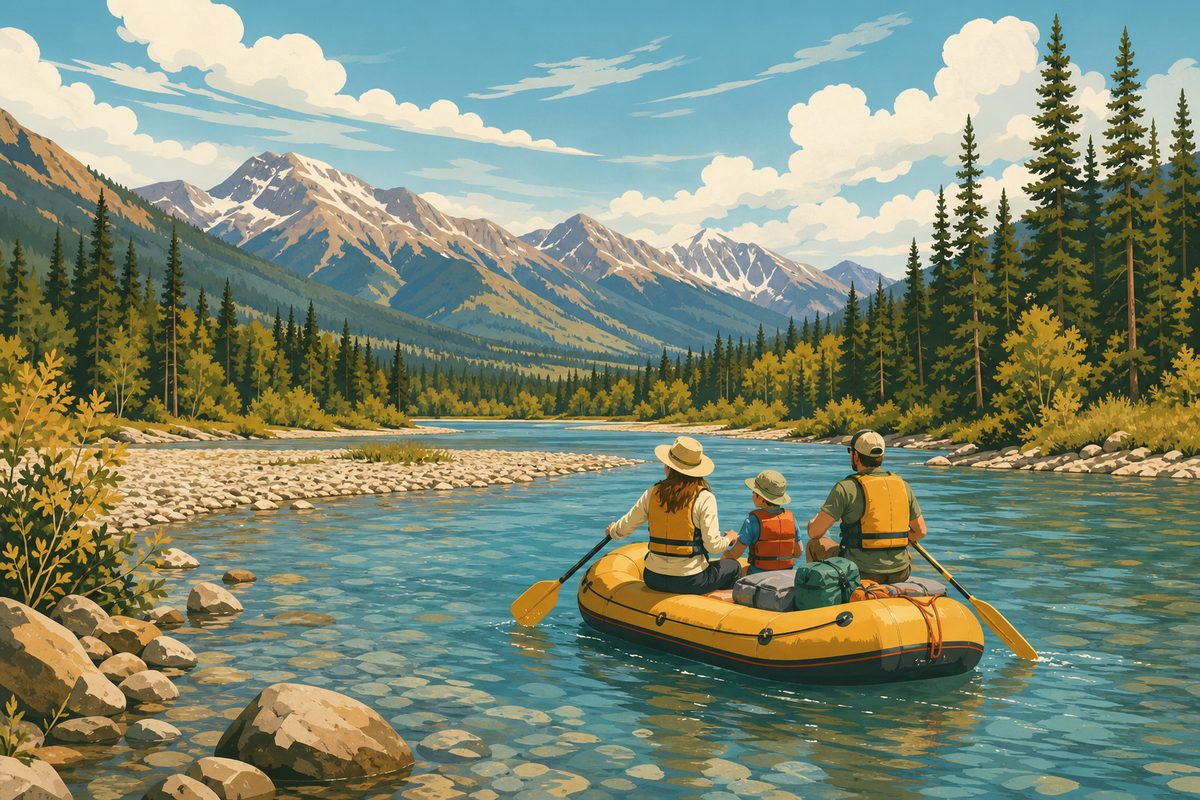
This is the stretch better suited to true beginners: young families, first-time paddlers, and anyone who wants scenery and a relaxed pace without technical water to manage. Access is also more convenient. Montana Fish, Wildlife & Parks maintains several public fishing-access sites along this section of the river, offering parking and boat/wade-in points that double as put-ins and take-outs for a float. Because these sites and their conditions change over time, it’s worth checking current Montana FWP fishing-access listings for the exact locations and any seasonal closures before you go, rather than relying on an old map.
A typical family float on this stretch runs a few hours from put-in to take-out, depending on which access points you choose and how much time you spend drifting versus paddling. Because the current is gentle, groups can generally set their own pace — stopping on gravel bars, wading in shallow water, or just letting the boat drift — without needing to fight the river to stay on schedule.
What to bring and basic safety
A cold-water river doesn’t forgive a casual approach to safety gear, even on its gentlest stretches. At a minimum:
- Life jackets for everyone, worn the whole time. Not just packed in the boat — worn. Fit matters especially for kids; a jacket that rides up over a child’s head in the water isn’t doing its job.
- Footwear you can swim in. Water shoes, river sandals with a back strap, or old sneakers. Bare feet and gravel bars do not mix, and flip-flops come off in current.
- Sun protection. Water reflects sun back up at you, and a day on the river in Montana’s high-altitude light can burn faster than expected. Hat, sunglasses with a strap, and reapplied sunscreen.
- A dry bag. Phones, keys, and snacks all end up in the water eventually if they’re not secured. A simple roll-top dry bag solves most of that risk cheaply.
- Drinking water. It sounds obvious on a river, but river water isn’t drinking water, and a hot afternoon on an open boat dehydrates people faster than they expect.
- A whistle on each life jacket. If a group spreads out or someone ends up separated from the boat, a whistle carries much farther than a shout.
Respect the cold water above everything else. Because the North Fork especially is snowmelt-fed, an unplanned swim — tipping a raft, stepping into a deep pocket, or simply falling in while wading — can chill a person fast enough to affect their judgment and strength within minutes, even when the air feels warm. Keep young or inexperienced swimmers within arm’s reach in current, and treat “it’s a hot day” as no guarantee about water temperature.
Check river flows before you go. Both forks and the main stem run higher, faster, and colder during spring snowmelt, and levels can shift meaningfully through the season. A stretch that’s a lazy float in August can be a genuinely different, more demanding river in late May or June.
When to go
For a calm, family-oriented float, timing matters as much as location. Spring and early summer bring runoff: flows are higher, water is colder, and current is faster and less predictable on both the North Fork and the main stem. That’s the window experienced paddlers often look for, but it’s the wrong time for a first family outing.
Most casual, family-friendly floating on the Flathead system happens from around mid-July through early September, after runoff has tapered and flows have dropped to a gentler, more consistent level. Water is still cold — this is a snowmelt-fed system, not a warm-water river — but current is easier to manage and gravel bars and shallows become more reliable for wading, picnicking, or simply pulling over for a break.
By late September, flows on both the North Fork and the main stem are typically at their lowest of the year, which can mean easier, slower water but also more exposed gravel and the occasional need to walk a boat over a shallow bar. Check current conditions close to your trip date regardless of the calendar, since a wet or dry year can shift the comfortable floating window in either direction.
Whichever stretch you choose, the basic formula for a good day on the Flathead is the same: match the water to your group’s experience, respect the cold, bring the right gear, and let the current — rather than the clock — set the pace.
The Best Family Guide to Flathead River Float Trips
A short summary for anyone comparing Flathead River float trips before picking a stretch: the North Fork is the wilder, colder option, and the main stem near Kalispell is the best family-friendly water on this whole guide. Most flathead river float trips montana visitors are looking for exactly that main-stem stretch — flat, slow, forgiving — rather than the North Fork’s braided, snowmelt-fed channel. If you’re planning your first family trip and want the best possible outcome, start on the main stem in mid-summer, not the North Fork in June. This guide to Flathead River float trips will keep steering true beginners toward the gentler water and save the North Fork for a crew that already has some flatwater experience. This float trips flathead river montana guide will keep repeating that same advice: main stem for families, North Fork for confident paddlers who don’t mind cold water. Whichever stretch you pick, treat this float trips flathead river montana page as the starting point, not the final word — conditions change season to season.
Frequently asked questions
Is floating the Flathead River safe for young kids?
On the calmer, wider stretches of the main stem near Kalispell, generally yes, with normal caution: a properly fitted life jacket on every person at all times, a day when flows aren't running high with runoff, and an adult in the boat who's comfortable reading current. The North Fork is a different proposition — colder, faster in spots, and better suited to families with some paddling experience already under their belt.
Do you need a permit to float the Flathead River?
For a private, non-commercial float on the stretches covered here, no permit is required. Commercial outfitters operate under separate permitting, and rules can differ where the river borders Glacier National Park or national forest land, so it's worth checking current park and forest river-use pages before a North Fork trip.
How cold is the water, really?
The North Fork is fed largely by mountain snowmelt, so even in mid-summer the water stays cold enough that an unexpected swim can bring on hypothermia surprisingly fast. The main stem near Kalispell runs a little warmer since it has already gathered the South and Middle Forks, but 'warmer' is relative — it's still cold water, not a lake on a hot afternoon.
What's the best time of year to float?
Most family floats happen from mid-July through early September, once the spring runoff peak has passed and flows have settled to a gentler, more predictable level. Late May and June often bring high, fast, cold water that's better left to experienced paddlers.
Which stretch is easier for a first-time floater — the North Fork or the main stem?
The main stem near Kalispell is the more forgiving of the two: wider, slower, and less demanding of a precise line. The North Fork's braided, gravel-bar channel is beautiful and often shallow, but its snowmelt-driven current, colder water, and remote setting call for a little more paddling comfort.
Do I need a permit to float through Glacier National Park's boundary on the North Fork?
The North Fork forms part of Glacier National Park's western boundary, and rules along that stretch can differ from the river further downstream. Check current park guidance directly before planning a trip along the park boundary, since backcountry and river-use requirements are updated from time to time.
What should I bring on a family float?
Life jackets sized correctly for every paddler, water shoes or sturdy sandals rather than bare feet or flip-flops, sun protection, drinking water, and a dry bag for phones and snacks. A whistle attached to each life jacket is a simple, cheap safety add for signaling if a group gets separated.
Can you swim in the Flathead River during a float?
On the slower main-stem sections, many people do wade and swim in shallow, calm spots, but the cold temperature and variable current mean it's worth checking depth and flow before jumping in, and keeping young swimmers within easy reach at all times.
Is the North Fork Flathead a designated Wild and Scenic River?
Yes. The North Fork was designated as part of the National Wild and Scenic Rivers System in 1976, along with the Middle and South Forks of the Flathead, which is a large part of why the upper river corridor has stayed so undeveloped.
Are there guided float trips available on these stretches?
This guide focuses on independent floating information rather than recommending specific operators. If you'd rather not go it alone, a local search for licensed Montana river outfitters will turn up options for both the North Fork and the main stem.