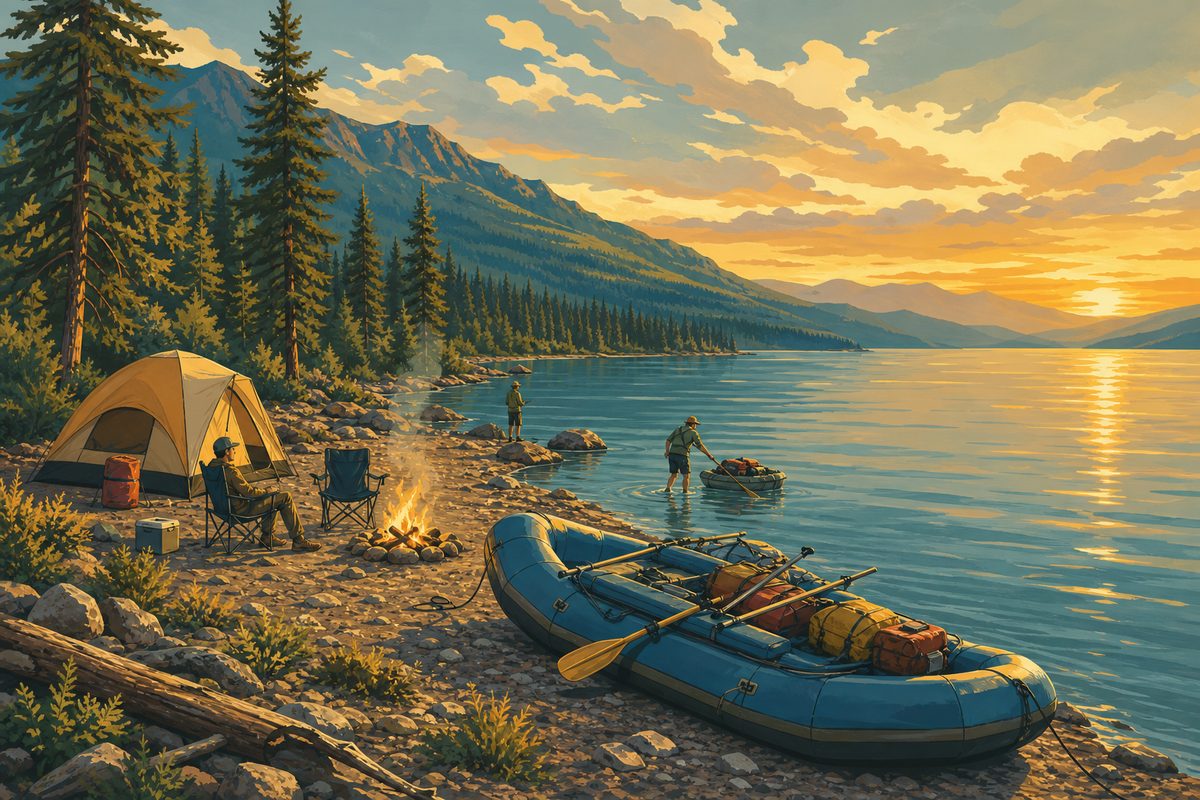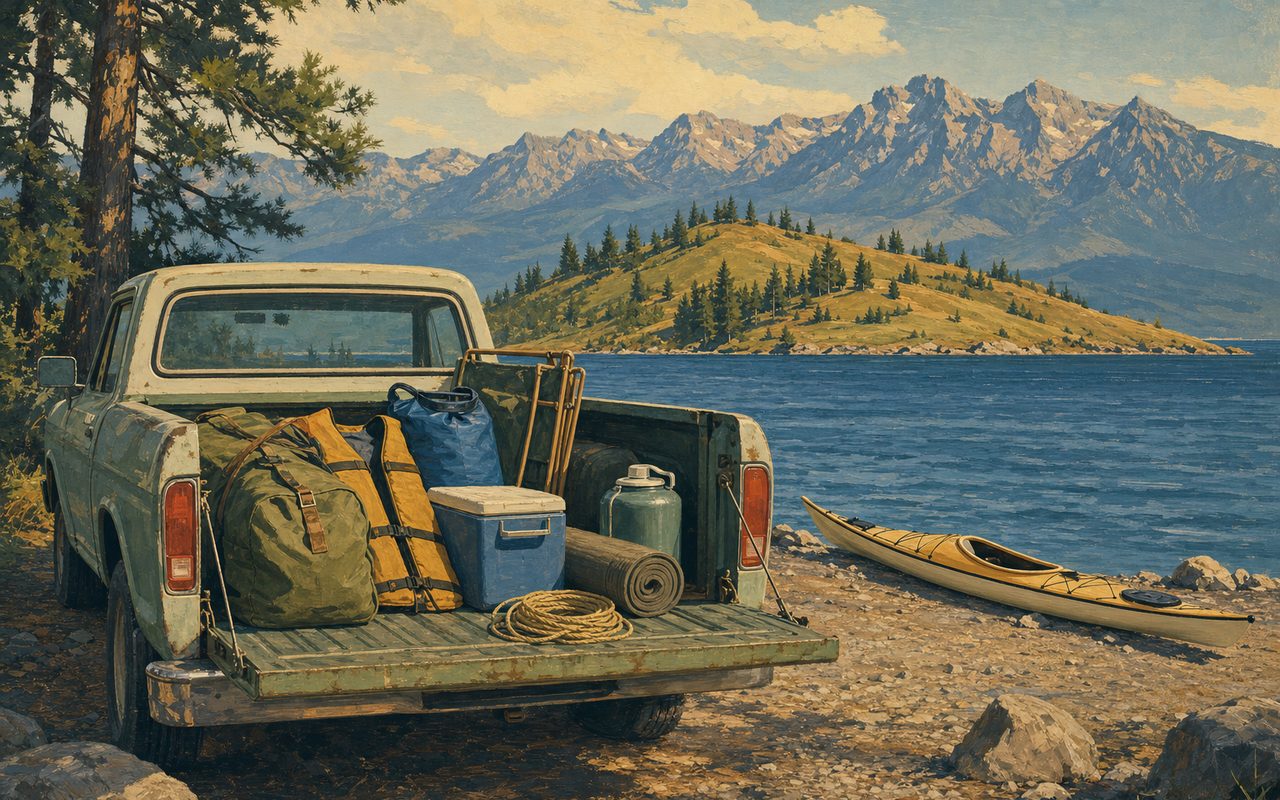
A week on Flathead Lake is a different packing problem from a single afternoon on the water. A day trip asks what fits in the boat. A week asks what you can keep dry, organized, and fed for seven days, across cold mornings, hot middays, at least one windy afternoon, and a crossing to an island with no dock, no water, and no services at all. The answer isn’t more gear so much as better-sorted gear: a car kit that stays put, a day bag that gets rebuilt each morning, and a short list of items you never leave on shore.
This guide is built around a typical week: a base or two on the mainland, a few shoreline paddles, a drive around the lake, and one full day set aside for Wild Horse Island.
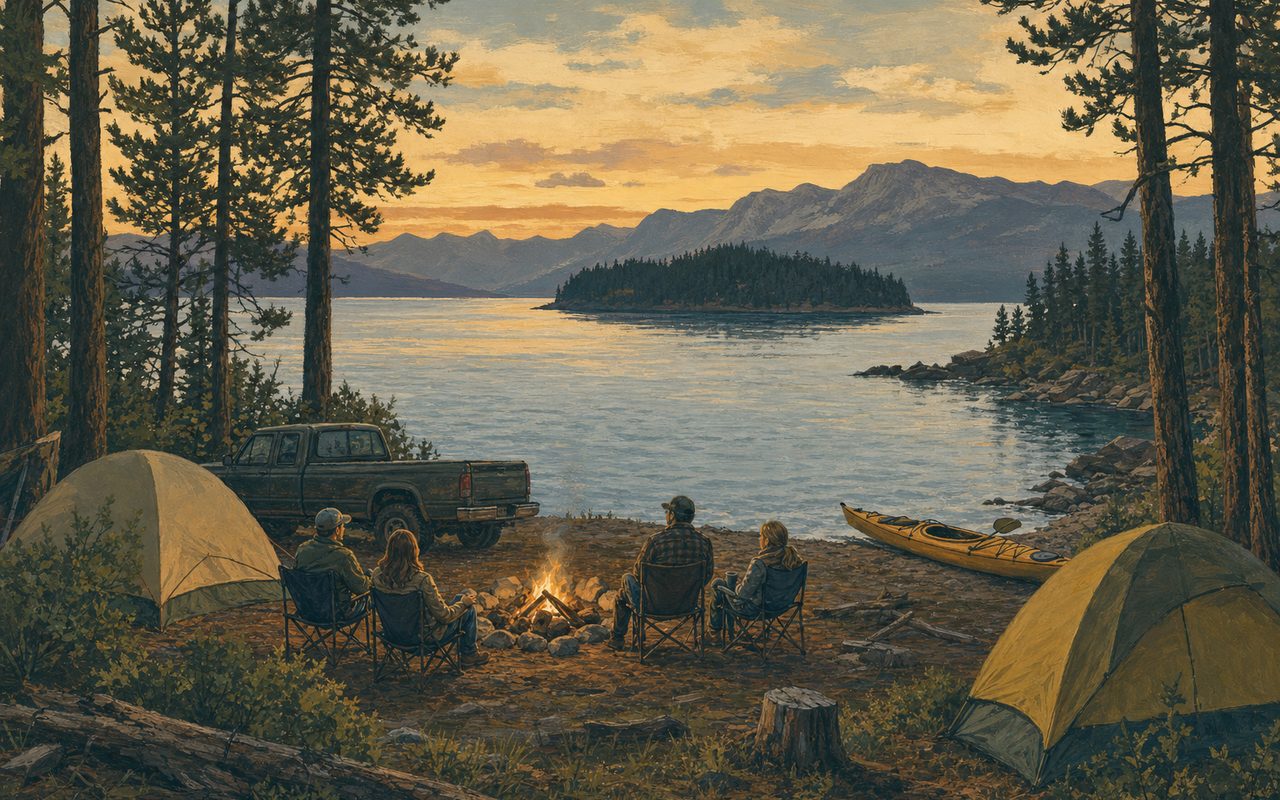
Plan the week before you pack it
Flathead Lake doesn’t have a single hub. Polson sits at the south end, Bigfork at the northeast corner, Somers on the north shore, and the Big Arm area on the west shore is the usual jumping-off point for Wild Horse Island. Highway 93 runs the west shore and Highway 35 the east, and a full loop is a real day of driving rather than a quick lap. Many week-long visitors split their stay between two bases rather than commuting the whole shoreline every day.
That matters for packing because it decides how often you unload the car. If you’ll move once mid-week, pack in modules: one bin for the kitchen, one for paddling gear, one for clothes, and one small bag for the island day. It’s faster to swap a bin than to dig through a pile, and it keeps wet paddling gear away from your dry clothes.
Timing matters too. The lake’s calmest window is usually the morning, with wind tending to build through the afternoon, so most days end up front-loaded: water early, driving or town time later. Our month-by-month guide to the best time to visit covers how water temperature, crowds, and weather shift across the season, and it’s worth reading before choosing your week.
The car kit: what stays in the vehicle all week
The car is your base camp, so it carries the things you need every day but not on the water.
A full change of clothes, kept sealed. If anything goes wrong on the water, a dry set waiting in the car is the fastest way to warm up.
Water in bulk. A large refillable jug or two lets you top up bottles each morning without hunting for a tap.
A cooler with a plan. Pack it in the order you’ll eat, keep raw food low and sealed, and know where you’ll buy ice. Polson, Bigfork, and the Kalispell area are the reliable resupply points.
Drying gear. A length of cord and a few clips for a campsite clothesline, plus a quick-dry towel per person. Over a week, the difference between damp and dry layers is mostly about having somewhere to hang them.
Basic repair and first-aid supplies. Duct tape, a multi-tool, spare straps for roof racks, and a first-aid kit sized for a week rather than an afternoon.
Paper maps. Cell coverage around the lake and especially in the surrounding mountains is patchy, and a road map of the Flathead Valley doesn’t run out of battery.
The Wild Horse Island day bag
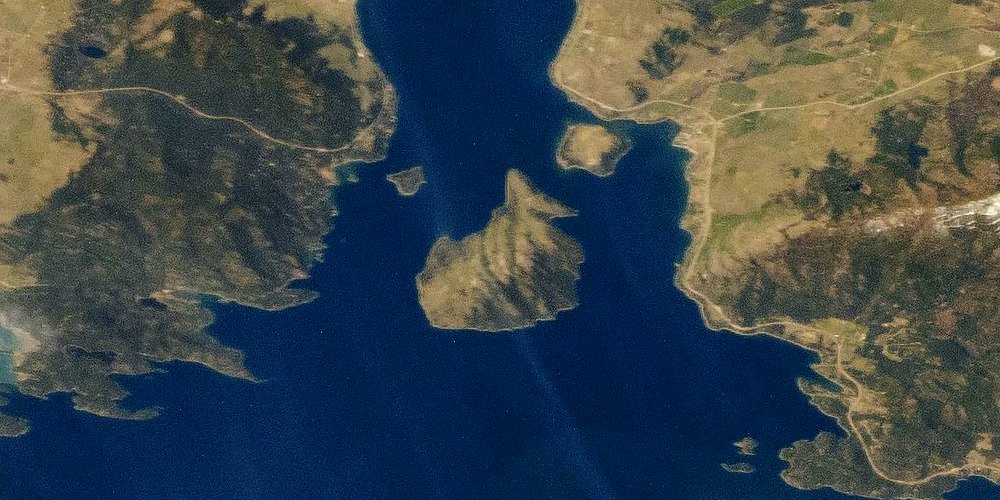
Wild Horse Island is a Montana state park reached only by boat, most often on the roughly two-mile crossing from the Big Arm area. It’s day-use only, with no camping, no restrooms, no potable water, and no trash cans. Pets, bikes, open fires, and smoking are all prohibited. Everything you need for the day goes over in the boat, and everything you bring, including trash, comes back with you.
That shapes a specific bag, separate from the rest of the week’s gear:
- More water than you think, since there’s nowhere to refill and the island’s open hillsides offer little shade.
- A packed lunch and snacks that don’t need cooking or a cooler.
- Sturdy footwear for steep, loosely marked trails that climb from the shoreline into grassland.
- Binoculars or a camera with zoom. Bighorn sheep, mule deer, and the island’s small band of horses are often seen at a distance on open slopes.
- A trash bag, because pack-it-out applies to everything.
- Sun protection and a wind layer, for exposed ridgelines and the ride back.
If you’re paddling the crossing, the boat itself needs the full safety kit: a worn life jacket, a whistle, a phone in a sealed floating case, and a float plan left with someone on shore. Our day-trip paddling packing list covers that kit item by item. For landing spots, private-land boundaries, and the island’s history, see the Wild Horse Island guide.
Layers for a week of changing weather
Over seven days on Flathead Lake you’ll likely see a cool, still morning, a hot afternoon, a windy day, and probably some rain. Pack for the range, not the forecast high.
Skip cotton for anything you’ll wear on the water. Bring two insulating layers instead of one, so a damp fleece can dry while you wear the other. A packable rain shell and a warm hat cover most surprises. For the water itself, dress for the lake’s temperature, not the air’s. Flathead stays cold below the surface even in high summer, and a sheltered bay that feels warm says little about the open water around the island.
Crossing from Alberta: what changes, and why the best Alberta online casinos come up at camp
Plenty of summer visitors to Flathead Lake drive down from Alberta, and for them the packing list grows by a few items before the car even leaves home. Everyone in the vehicle needs a passport or other accepted document for entering the United States. Anyone bringing a kayak, canoe, paddleboard, or trailered boat should expect Montana’s aquatic invasive species inspection before launching, so arrive with the craft clean, drained, and dry. Leave the firewood at home and buy it locally instead.
The return trip has its own rules. Canada sets personal exemption limits on goods brought home, with allowances that depend on how long you’ve been away, and it’s worth checking what you can bring home to Canada before you load up on Montana souvenirs, cherries, or camp supplies.
The Alberta connection shows up in campground conversation too. Around the fire ring on a cool evening, talk among Alberta visitors drifts from wind forecasts and border waits to news from home, and this summer that has included the province’s new regulated online casino market, which launched on July 13, 2026, under oversight from the Alberta Gaming, Liquor and Cannabis Commission. It’s an evening topic rather than an activity, and the people discussing it tend to be the ones who have followed the rollout closely in the news, often pointing to the nationalpost.com Alberta coverage of which sites are licensed under the new system. For a week built around early mornings on the water, that conversation usually ends early too.
Food, water, and resupply
A week means at least one resupply run, and it’s easier to plan it than to improvise. Pack shelf-stable basics for the whole trip (coffee, breakfasts, snacks, and a couple of easy dinners) and buy fresh food mid-week in Polson, Bigfork, or Kalispell. In late July and August, roadside stands along the east shore sell Flathead cherries, which is a better reason than most to leave a little room in the cooler.
Keep a water routine: refill bottles from the car jug each morning and carry more than you expect to drink on the water, especially on wind-exposed days. If you’re staying in Flathead Lake State Park units or other campgrounds, check in advance which have potable water, since that varies by site and by season.
A packing checklist for the week
Always on the water: worn life jacket, whistle, phone in a sealed floating case, dry bag, water, sun protection, a warm layer, float plan.
Island day only: extra water, packed lunch, trail footwear, binoculars, trash bag, wind layer.
Car kit: sealed change of clothes, bulk water, cooler, clothesline and towels, first-aid and repair kit, paper maps.
Clothing for the week: two insulating layers, rain shell, quick-dry base layers, warm hat, water shoes, camp shoes.
For Alberta visitors: passport, clean-drained-dry boat or board, no firewood, a note of Canada’s exemption limits for the return.
None of this calls for specialized or expensive gear. What it calls for is sorting: knowing which bag goes on the water, which stays in the car, and which items never get left behind. Set that up on day one and the rest of the week runs on early mornings and calm water, which is when Flathead Lake is at its best.
Frequently asked questions
How is packing for a week different from packing for a single day on the lake?
A day trip is about what fits in the boat. A week is about what you can keep organized, dry, and resupplied without wasting half of each morning repacking. The safety gear stays the same, but a week adds a second set of layers, a way to dry wet clothes overnight, more food planning, and a clear split between what lives in the car and what goes out on the water each day.
Can I camp on Wild Horse Island during a week-long trip?
No. Wild Horse Island is day-use only, with no overnight camping anywhere on the island and no facilities of any kind. Plan it as a single day within the week, based from a mainland campground or town such as Big Arm or Polson, and pack a self-contained day bag with all the water and food you'll need, since nothing is available once you land.
Can I bring my dog to Wild Horse Island?
No. Pets are not allowed on the island, a rule meant to keep the bighorn sheep, mule deer, and horses that live there from being chased or stressed. If you're travelling with a dog for the rest of the week, plan for someone to stay with it on the mainland on island day.
What do visitors driving from Alberta need to bring?
A valid passport or other accepted travel document for crossing into the United States, and for the return trip, a clear idea of Canada's personal exemption limits on what you bring home. Anyone towing or carrying a boat, kayak, or paddleboard should also expect a Montana aquatic invasive species inspection before launching, so arrive with the craft clean, drained, and dry.
Should I bring firewood from home?
It's better not to. Moving firewood is one of the ways forest pests spread, and untreated firewood crossing the border is restricted. Buying wood close to where you camp avoids both problems, and campgrounds and stores around the lake typically sell it in season.
What's the one item people most often forget for a week around the lake?
A second warm layer that stays dry. One fleece or synthetic jacket works for a day, but over a week it gets damp from spray, rain, or a cold morning dew, and there's often no good way to dry it overnight at a campsite. A spare insulating layer sealed in a dry bag is cheap insurance for the back half of the trip.
When is the best week to plan this kind of trip?
Midsummer offers the most reliable weather and the warmest water, which is why it's also the busiest stretch on the lake. Early fall can be quieter with still-manageable conditions, while late spring brings wildflowers and young animals on Wild Horse Island but colder water. Whatever week you choose, plan the island crossing for a morning, before the afternoon wind typically builds.