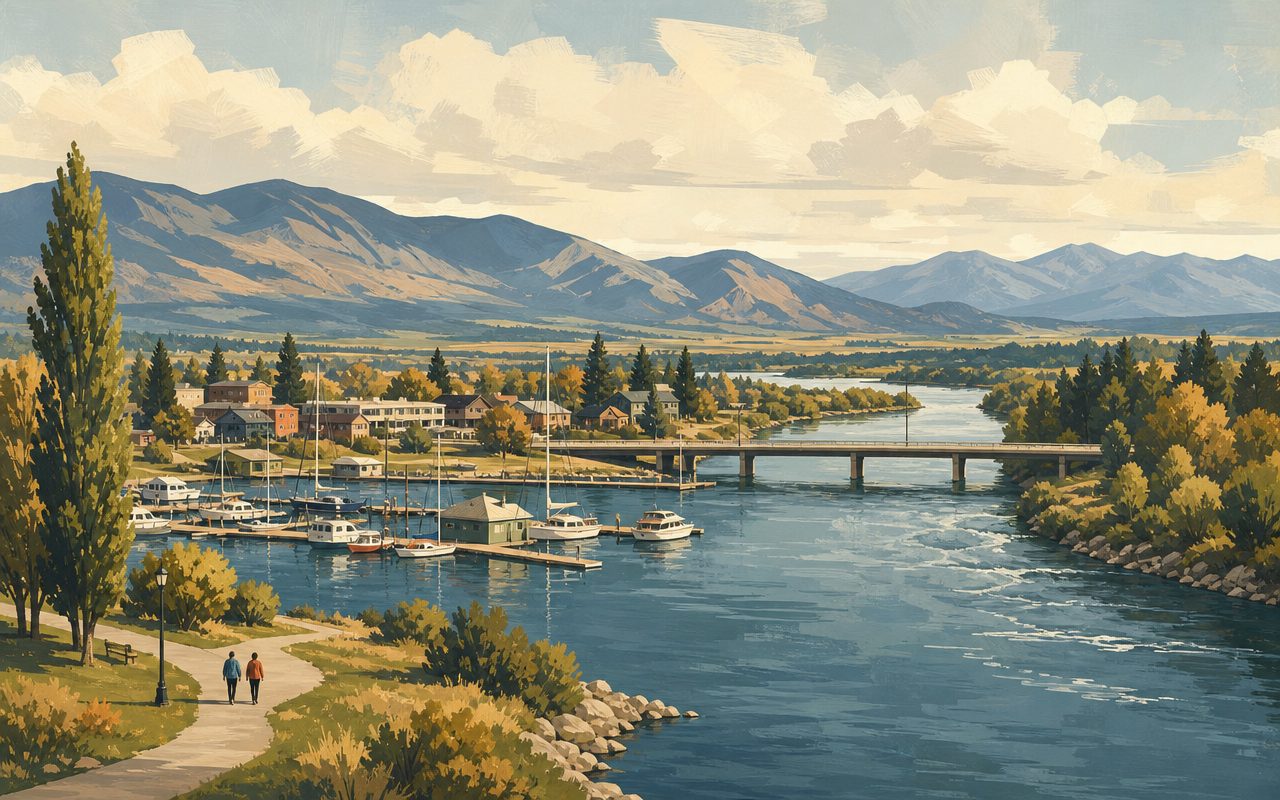
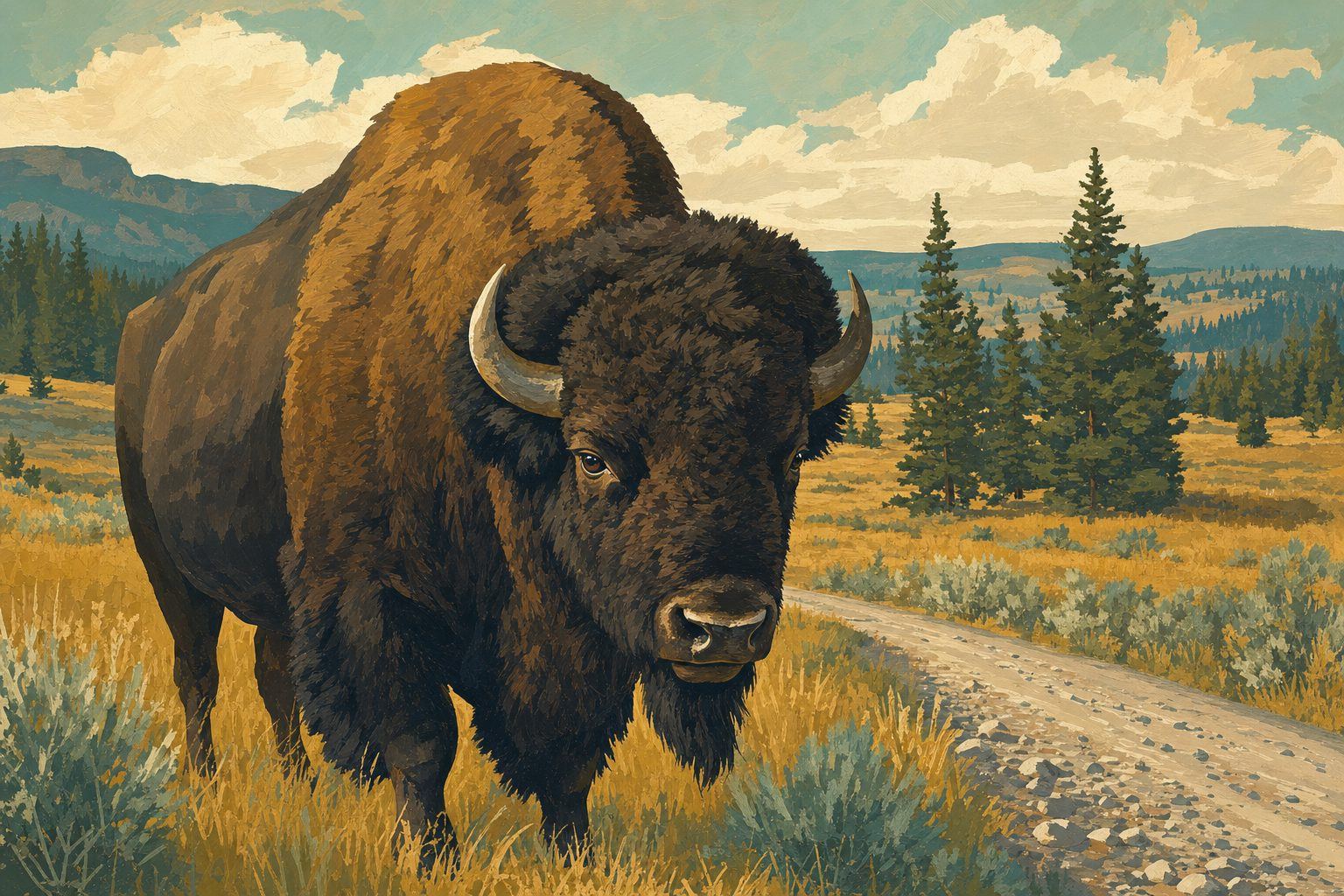
Most of the wildlife covered elsewhere on this site is about what you might see from a boat, a kayak, or a lakeshore trail. The National Bison Range is a different kind of stop entirely — a real, drivable wildlife range close enough to Flathead Lake to fit into the same trip, built around a herd of American bison with roots that go back to the 1800s, long before it was ever a formal preserve.
This guide covers what the range actually is, its recent and significant change in ownership, how to see it, and what else lives there beyond the animal it’s named for.
A herd older than the preserve itself
The bison at the National Bison Range aren’t a reintroduced or imported population — they descend directly from a free-ranging herd that Salish and Kootenai tribal members started in the 1800s, at a time when wild plains bison had been hunted to the brink of extinction across the continent. That tribal-led conservation effort predates the range’s formal establishment by decades. In 1908, the federal government carved out a roughly 19,000-acre preserve in the middle of the Flathead Indian Reservation to protect the herd — but did so without the consent of the tribes on whose land it sat, a fact that shaped more than a century of tension over who should actually control it.
That history came to a resolution in recent years. Following a push for reunification that had been underway for more than two decades, the U.S. Department of the Interior transferred the roughly 18,800-acre range into federal trust for the Confederated Salish and Kootenai Tribes on January 2, 2022, with the tribes assuming full management shortly after. It’s a rare and significant example of federal land being returned to tribal control, and one that happened not through a lawsuit but through a sustained, negotiated process. The range is no longer a National Wildlife Refuge under the U.S. Fish and Wildlife Service — it’s tribally managed land now — but tribal officials have said they intend to continue operating it much as before, public access included.
Getting there from Flathead Lake
The range sits near Moiese, Montana, roughly a 30-to-45-minute drive south and west of Polson at the south end of Flathead Lake, depending on route and road conditions. That distance makes it a realistic half-day or full-day addition to a Flathead Lake trip rather than a destination that demands its own separate overnight stay — a visitor based anywhere around the lake’s south end, or passing through Polson on the way to or from the lake, can reasonably work it into the same day as time on the water.
Red Sleep Mountain Drive
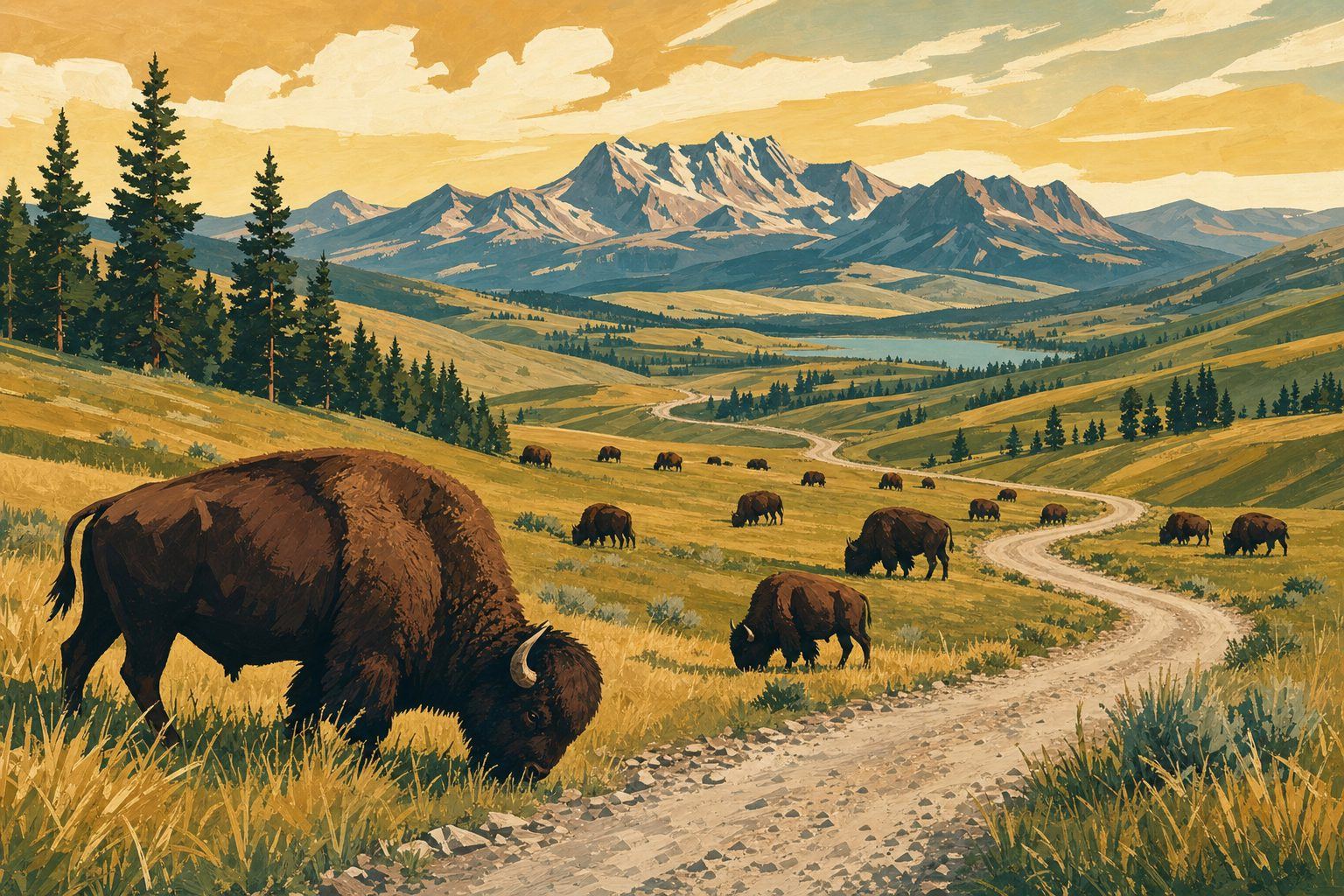
The main way to actually experience the range is Red Sleep Mountain Drive, a roughly 19-to-20-mile, mostly gravel, one-way loop road open seasonally from May through October. It’s a self-guided driving route, not a hiking trail, that climbs and winds through a genuinely varied landscape — native Palouse prairie grassland, stands of ponderosa pine, and open ridgelines with long views across the Mission Valley — with pullouts along the way for slowing down, watching, and photographing whatever wildlife happens to be visible from the road.
Because the drive is unpaved and climbs real elevation in places, it rewards a slower pace than a typical scenic byway — this isn’t a route to rush through in twenty minutes. Visitors who take their time and actually stop at the pullouts generally have better luck spotting animals than those treating it as a quick pass-through.
A rare kind of land return
It’s worth pausing on how unusual the 2022 transfer actually was, beyond the local significance for visitors. Federal land being returned to tribal trust ownership at this scale — nearly 19,000 acres, held by the federal government for well over a century — is genuinely rare in U.S. history, and the Bison Range case stands out specifically because it happened through a negotiated legislative and administrative process rather than litigation. The tribes had pushed for reunification for more than two decades before the transfer was completed, framing it consistently not as a request for new land, but as the correction of an original wrong: the range had been carved out of the middle of the Flathead Indian Reservation in 1908 without the consent of the tribes whose land it already was.
For a visitor, none of that history changes what a day at the range actually looks like — the drive, the wildlife, the landscape are the same experience they always were. But knowing the context adds a dimension to the visit that a typical wildlife-viewing stop doesn’t carry: this specific piece of protected land, and the bison herd on it, represents both a conservation success story and a genuine, relatively recent correction of a decades-old grievance, playing out in real time in the same valley as Flathead Lake itself.
More than bison
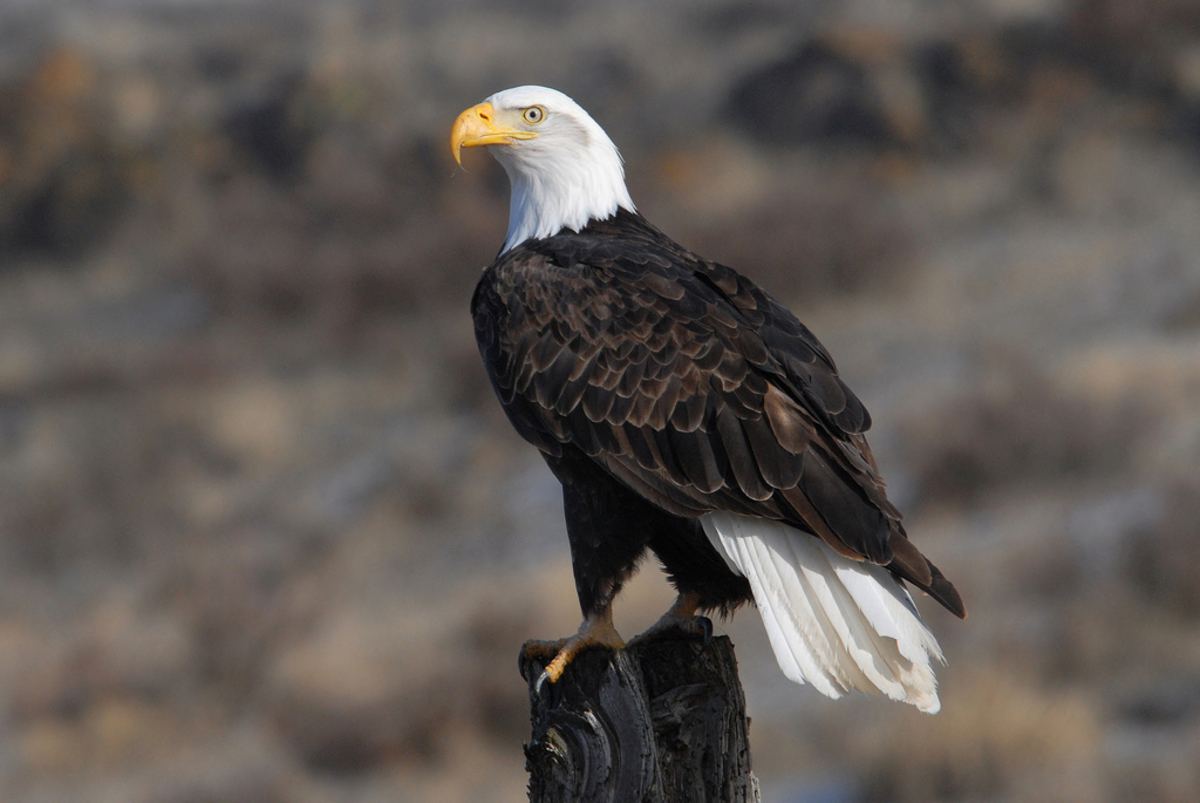
Bison are the signature species, but the range’s roughly 18,800 acres of native prairie and forest support a broader mix of wildlife. Pronghorn, elk, mule deer, and white-tailed deer are all present across the property, along with a range of grassland and raptor bird species that use the open terrain differently than the forested habitat closer to Flathead Lake itself. For a visitor who’s spent a few days focused on lake and river wildlife — osprey, eagles, waterfowl — the range offers a genuinely different habitat type within a short drive, which is part of what makes it a worthwhile change of pace rather than a repeat of what’s already visible from the water.
What to actually expect
It’s worth being upfront about the honest realities of a visit. This is free-ranging habitat, not an enclosed wildlife park with guaranteed animal placement — bison move across the range’s acreage on their own schedule, typically favoring the more open grassland sections at various points in the drive. Most visitors who complete the full loop do see bison somewhere along the way, but a sighting at any one specific pullout is never certain, the same honest caveat that applies to wildlife viewing anywhere around Flathead Lake. Because operating details — entrance fees, visitor-center hours, and any seasonal restrictions — can shift under the range’s relatively recent change in management, it’s worth checking current information directly before a trip rather than relying on a fixed number that could go stale.
What to bring and expect on the drive
Since Red Sleep Mountain Drive is a self-guided route with limited services along the way, treating it like a genuine backcountry drive rather than a quick roadside stop pays off. Bring water, snacks, and sun protection, since much of the loop crosses open, exposed grassland with little shade. Binoculars matter more here than almost anywhere else covered on this site — bison and pronghorn are often visible at a real distance across open terrain rather than close to the roadside, and a good pair of binoculars turns a distant, uncertain shape into a confirmed, satisfying sighting. Because the road is gravel and climbs meaningful elevation in sections, a vehicle in reasonable condition matters more than it would on a paved scenic byway, and allowing extra time for the unpaved surface — rather than assuming highway speeds — makes for a safer, more enjoyable drive overall.
Planning the visit
Given the drive time from Polson, the range pairs naturally with a morning or afternoon already built around the south end of Flathead Lake — a stop in Polson itself, a look at the river’s outlet near Kerr Dam, or simply a shoreline drive before or after. The full Red Sleep Mountain Drive loop takes a couple of hours at a reasonable, stop-and-look pace, which makes the whole outing, door to door from the lake, a realistic half-day commitment rather than something that consumes an entire vacation day. Because the drive is seasonal and gravel, checking current road status and hours before heading out is worth the extra step, particularly outside the core summer months.
Frequently asked questions
Is the National Bison Range still open to visitors after the ownership change?
Yes. The land was transferred into federal trust for the Confederated Salish and Kootenai Tribes (CSKT) on January 2, 2022, ending a process that had been underway for years, and tribal officials have said they intend to continue public access much as it operated before. It's no longer a National Wildlife Refuge under the U.S. Fish and Wildlife Service — it's now tribally managed land — but it remains open for wildlife viewing.
How far is the Bison Range from Flathead Lake?
It's near Moiese, roughly a 30-to-45-minute drive south and west of Polson, at the south end of Flathead Lake, depending on the exact route and conditions. That makes it a genuinely realistic half-day or full-day add-on to a Flathead Lake trip rather than a separate destination requiring its own overnight stay.
What's the history of the bison herd there?
The bison at the range descend from a free-ranging herd Salish and Kootenai tribal members started in the 1800s, when wild plains bison populations had collapsed nearly to extinction across North America. The federal government established the range as a 19,000-acre preserve in 1908, notably without the consent of the tribes on whose reservation land it sat — a fact central to the decades-long push for the land's return that culminated in the 2022 transfer.
How do I actually see the bison — is it a hike or a drive?
The main way to see the range is Red Sleep Mountain Drive, a roughly 19-to-20-mile, one-way, mostly gravel loop road open seasonally from May through October. It's a self-guided driving route through varied terrain — grassland, ponderosa pine forest, and open ridgelines — with pullouts for viewing and photography along the way, rather than a hiking trail.
What other animals live on the range besides bison?
The range supports pronghorn, elk, mule deer, white-tailed deer, and a range of grassland and raptor bird species across its roughly 18,800 acres of native Palouse prairie and forested terrain — bison are the signature species, but not the only wildlife worth watching for along the drive.
Are bison sightings guaranteed?
No. This is genuinely wild, free-ranging habitat, not an enclosed exhibit with guaranteed animal placement, and bison move across the range's acreage on their own schedule. Most visitors who drive the full loop do see bison, often in the range's more open grassland sections, but a specific sighting on a specific pullout is never certain — the same honest caveat that applies to any wildlife viewing around Flathead Lake.
Is there an entrance fee or visitor center?
Check current fee and visitor-center hours directly before a trip, since operations and fee structures can change under tribal management just as they did under federal management — this guide won't state a specific number that could go stale. Plan for a seasonal operation tied to the May-through-October drive season rather than a year-round, full-service facility.
Can I combine this with other Flathead Lake activities in one day?
Yes, reasonably. Given the drive time from Polson, a Bison Range visit pairs well with a morning or afternoon on the south end of the lake — a Polson-area outing, a stop at the Flathead River's outlet near Kerr Dam, or a shoreline drive — rather than needing to consume an entire day on its own, though the full Red Sleep Mountain Drive loop itself takes a couple of hours at a reasonable, wildlife-watching pace.