Most visitors who spot an osprey on the Flathead River assume it’s a lucky, one-off sighting. It usually isn’t. The stretch of river between Kalispell and Flathead Lake has been documented by researchers as holding one of the highest densities of osprey nests found anywhere in Montana — a fact that’s drawn serious scientific attention to this exact corridor since at least the early 1970s, and that continues today through an active, ongoing research and volunteer-monitoring effort.
This guide covers what makes the corridor so good for osprey specifically, where the easiest public viewing happens, when to expect activity, and how to tell an osprey apart from the bald eagles that share the same stretch of river and lake.
Why this stretch of river holds so many nests
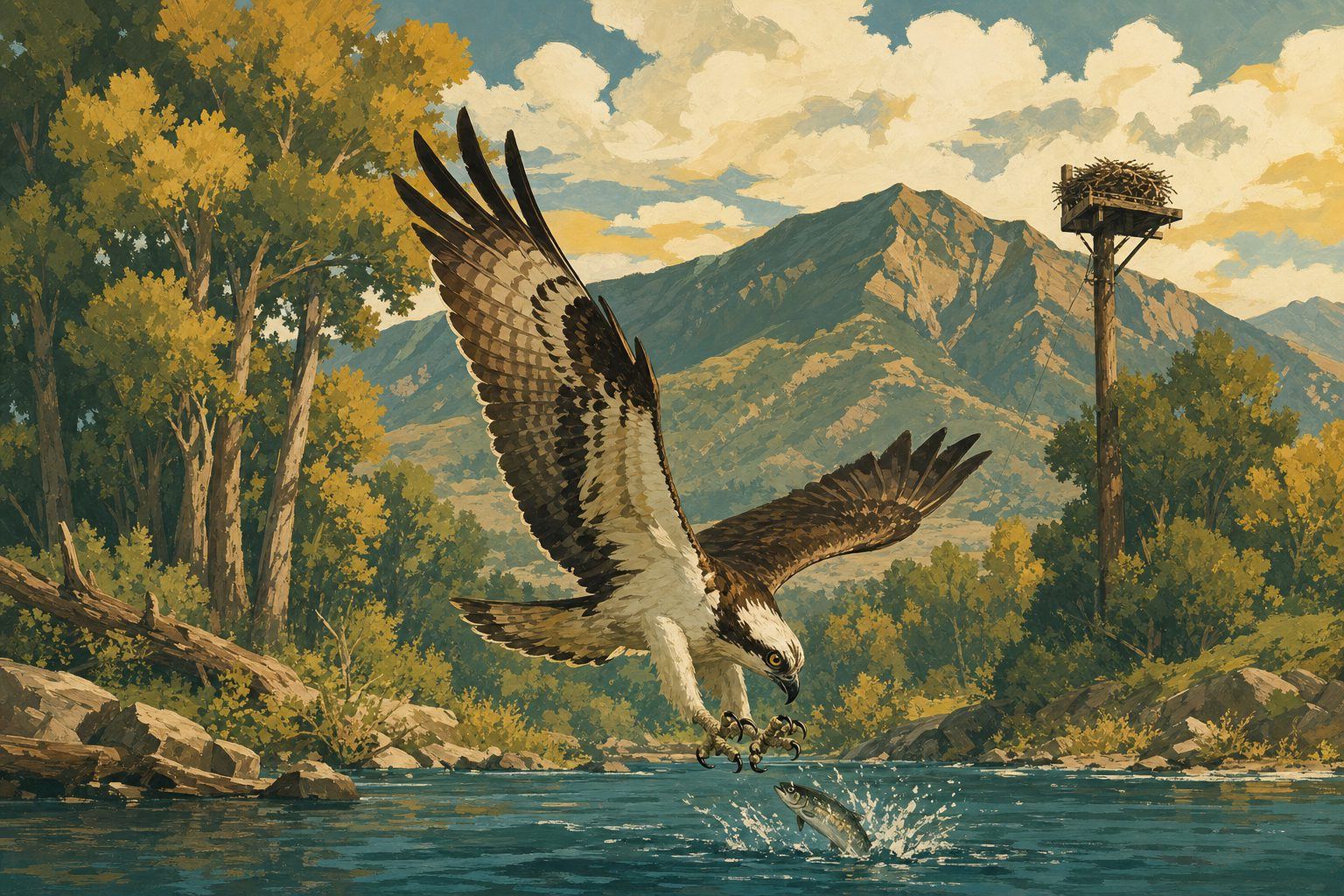
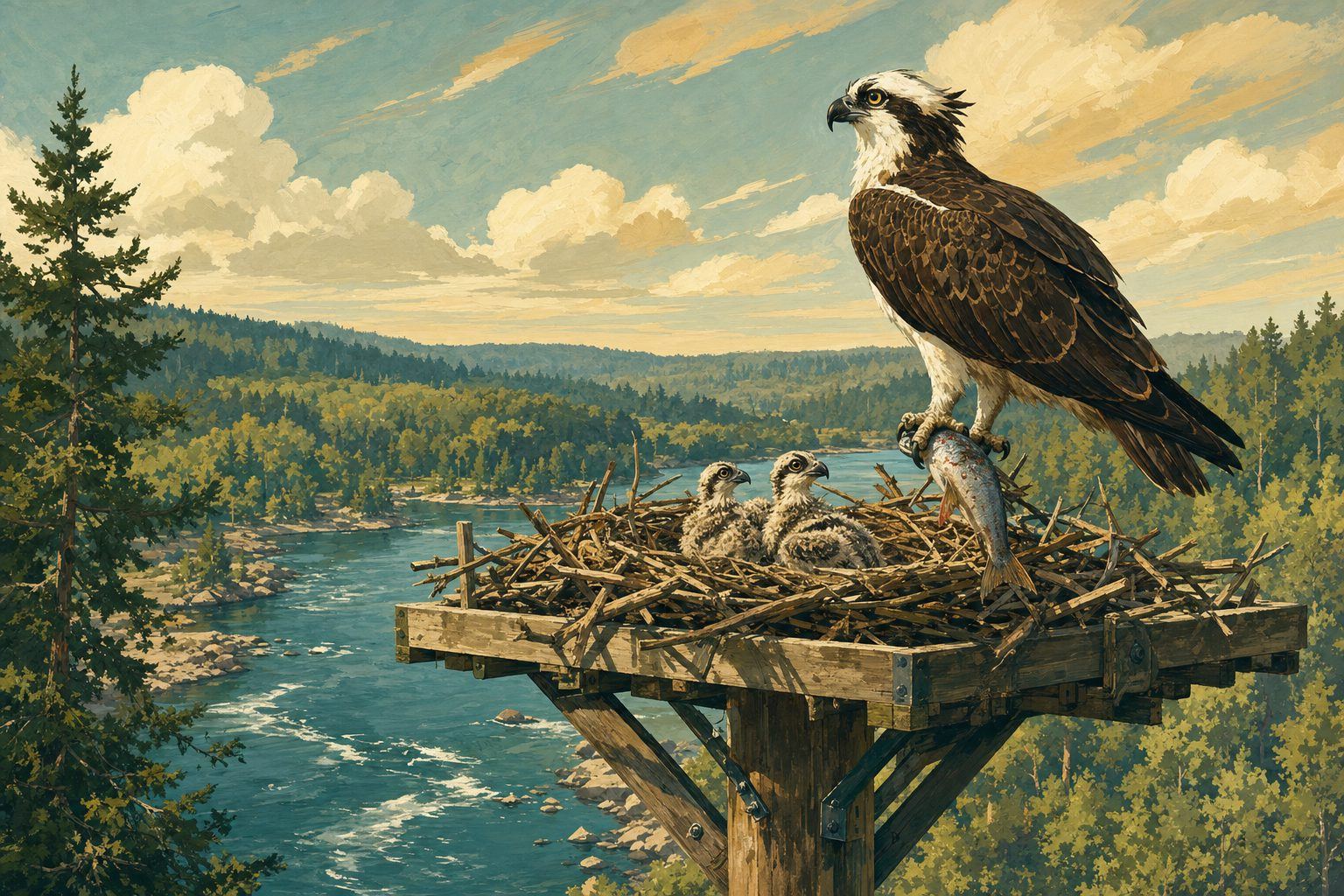
Osprey need three things in close proximity to nest successfully: a reliable supply of fish near the surface, a tall, sturdy platform to build on, and open sightlines to hunt from. The Flathead River between Kalispell and the lake happens to offer an unusually good combination of all three — a slow-moving, fish-rich stretch of river lined with mature cottonwoods and, in many spots, utility poles and other human-built structures that osprey have adopted as nest platforms every bit as readily as trees.
That combination is well documented in the scientific record. A 1972 study specifically examined osprey reproductive performance and population trends at Flathead Lake, an early sign that researchers recognized something notable about this particular stretch of water. That interest never really went away. The Montana Osprey Project, launched in 2007 by researchers Heiko Langner and Erick Greene at the University of Montana, has grown into one of the most comprehensive long-term osprey studies in North America, monitoring roughly 200 nests across western Montana and using the birds as biosentinels — living indicators of environmental contamination and ecosystem health, since osprey sit near the top of an aquatic food chain and accumulate whatever pollutants are present in the fish they eat.
More recently, the Flathead Audubon Society has organized its own dedicated Osprey Nest Monitoring Project, recruiting volunteers to check assigned nests roughly once a week from early April through September. Observers record the number of adults and nestlings present, note nest materials, and log weather conditions — the kind of sustained, boots-on-the-ground data collection that a research team alone couldn’t cover across every nest on the river.
When osprey are here, and what they’re doing
Osprey are migratory, and their presence on the Flathead follows a predictable seasonal arc. They return to the river corridor and lake shoreline starting in April, typically re-occupying the same nest sites year after year if the platform is still intact. Pairs spend the following months on the demanding work of incubating eggs and then raising chicks — a process that keeps both adults busy through the summer, with one parent typically hunting while the other guards the nest. By late summer, fledglings are testing their flight and hunting skills, and by early-to-mid fall, most adults and young birds have headed south for the winter, following fish and open water rather than tolerating a Montana winter on a frozen river.
That means the real viewing window runs roughly April through August, with the most dramatic activity — adults fishing to feed hungry, rapidly growing chicks — concentrated in June and July. An empty nest platform in October isn’t a bad sign; it’s simply the season doing what it does every year.
Where to actually watch
Yellow Bay, on Flathead Lake’s east shore, is one of the best-documented and most accessible places to see osprey activity without a boat or a guided outing. The bay’s long association with the University of Montana’s Flathead Lake Biological Station means the surrounding shoreline has been observed closely for decades, and public lake access at Yellow Bay doesn’t require setting foot on the research campus itself to get a reasonable vantage point on the water and nearby shoreline trees.
Along the river corridor itself, between Kalispell and the point where the Flathead enters the lake near Bigfork, many active nests sit on utility poles, bridge structures, or dead snag trees clearly visible from public roads and bridge crossings — no need to leave a vehicle or approach private land to get a good look. A slow drive along river-adjacent roads during nesting season, paired with a decent pair of binoculars, covers most of what’s realistically visible without any specialized access.
Telling an osprey from a bald eagle
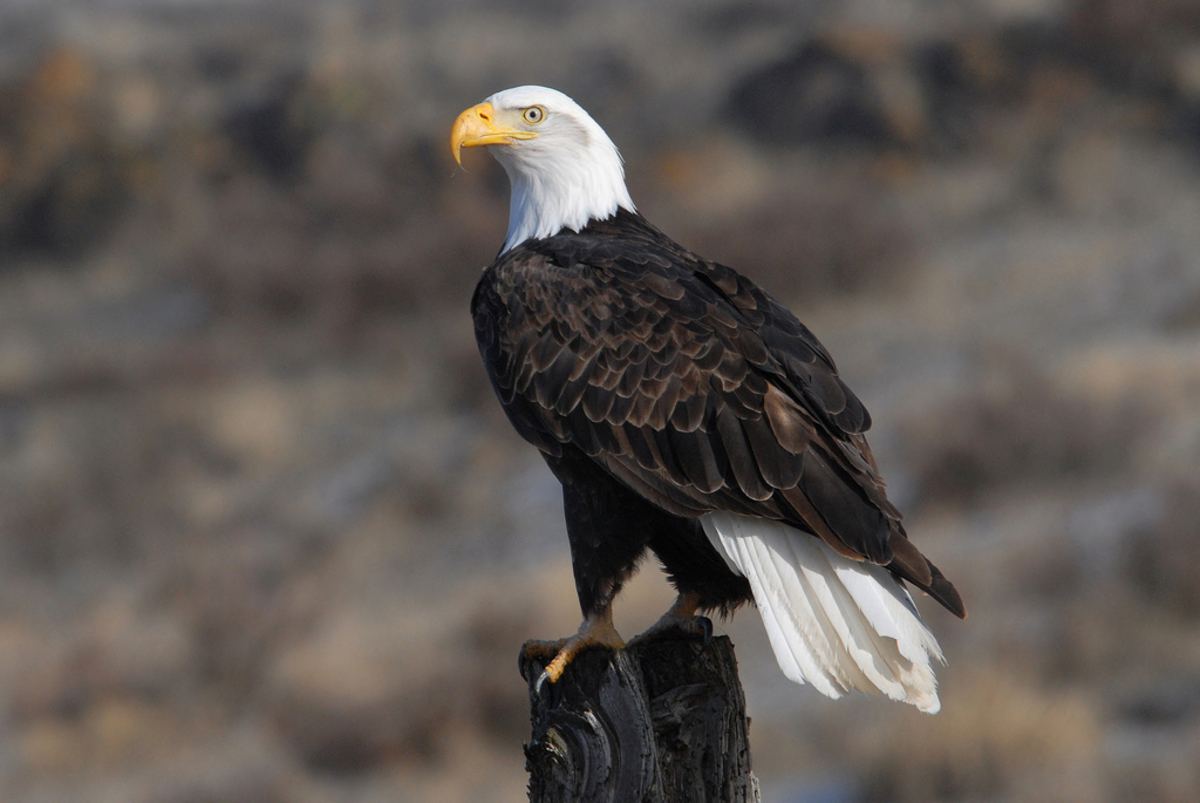
The two species share this stretch of water and are easy to confuse at a distance, but a few reliable cues sort them out quickly. Ospreys are noticeably smaller and slimmer than bald eagles, with a mostly white underside and a distinctive dark stripe across the eye on an otherwise white head — different from a bald eagle’s solid white head and tail against a dark brown body. In flight, osprey wings show a visible bend at the wrist, giving them a more angular silhouette than an eagle’s flatter, broader profile. Behaviorally, osprey hunt almost exclusively by hovering over open water and diving feet-first to snatch fish near the surface, a distinctive move that bald eagles rarely replicate in quite the same way, since eagles more often snatch fish from just below the surface without fully submerging or scavenge food from other sources entirely.
Why researchers use osprey as an early-warning system
The “biosentinel” role the Montana Osprey Project assigns to these birds is worth understanding, because it explains why a fish-eating raptor gets this level of sustained scientific attention in the first place. Osprey sit near the top of an aquatic food chain, eating almost nothing but fish caught directly from the water below their nests. Whatever contaminants are present in that water — heavy metals, industrial byproducts, agricultural runoff — tend to accumulate in the fish the birds eat, and from there in the birds themselves, at concentrations often high enough to detect and track over time even when the water itself tests as only mildly affected. That makes a healthy, well-monitored osprey population on the Flathead River corridor a kind of living instrument, giving researchers an ongoing read on watershed health that water sampling alone wouldn’t fully capture. It’s a genuinely elegant use of an already-charismatic bird, and part of why this specific stretch of river has drawn scientific interest for more than fifty years running.
A quieter conservation story
Osprey along the Flathead aren’t currently the subject of the same kind of urgent concern that surrounds some other regional raptors. That’s worth noting precisely because it isn’t universal — osprey nesting numbers have reportedly declined along parts of the upper Clark Fork River elsewhere in western Montana in recent years, which makes continued monitoring on a healthier corridor like the Flathead valuable as a baseline, not just a formality. The Montana Osprey Project’s use of these birds as biosentinels means the data gathered here does double duty: it tracks the health of the osprey population itself, and it offers an early warning system for broader environmental contamination in the watershed, since anything accumulating in the river’s fish shows up in the birds that eat them.
Viewing etiquette
The same low-impact principles that apply to any wildlife viewing around Flathead Lake apply here, with a bit more specificity given how sensitive nesting birds are to disturbance. Never approach a nest tree or platform directly, even one that looks abandoned — a bird flushed off eggs or small chicks may not return in time, and repeated disturbance during incubation is a documented cause of nest failure in raptors generally. Watch from a public road, bridge, or the opposite shoreline with binoculars or a telephoto lens rather than attempting to get closer on foot or by boat. If you’re interested in contributing real data rather than just watching, the Flathead Audubon Society’s volunteer nest-monitoring project is an actual avenue for visitors with a genuine, ongoing interest in this specific research effort — a way to turn a passing sighting into something that helps the birds being watched.
Frequently asked questions
Why does the Flathead River corridor have so many osprey nests?
A combination of abundant fish, tall riverside trees and human-built structures for nest platforms, and relatively open river habitat that osprey favor over deep forest. The stretch between Kalispell and Flathead Lake has been documented as holding one of the highest densities of osprey nests found anywhere in Montana, and researchers have monitored dozens of pairs along this corridor for decades.
When did research on Flathead osprey start, and is it still going?
Formal study goes back further than most visitors would guess — a 1972 study examined osprey reproductive performance and population trends specifically at Flathead Lake. More recently, the Montana Osprey Project, started in 2007 by researchers Heiko Langner and Erick Greene, has monitored roughly 200 osprey nests across western Montana, using the birds as biosentinels for environmental health. The Flathead Audubon Society also runs an ongoing volunteer nest-monitoring project, with observers checking assigned nests weekly from April through September.
Where can I actually watch osprey nests without disturbing them?
Yellow Bay, on the lake's east shore, is one of the better-documented and most accessible stretches — its long association with the University of Montana's Flathead Lake Biological Station means it's been observed closely for years, and public lake access there doesn't require entering the research campus itself. Along the river corridor between Kalispell and the lake, many nests sit on utility poles or purpose-built platforms visible from public roads and bridges without needing to approach the nest tree directly.
What time of year are osprey present on the Flathead?
Roughly April through September. Osprey are migratory and return to the Flathead in spring to breed, spend the summer incubating eggs and raising chicks, and most adults and fledglings head south by early-to-mid fall — a similar pattern to many of the valley's other fish-eating birds.
Can I get closer to a nest for a better photo?
No — keep your distance and use a longer lens instead. Ospreys are protected under the Migratory Bird Treaty Act, and approaching an active nest risks flushing an incubating adult or stressing chicks, which can cause nest failure. A pair of binoculars or a telephoto lens from a public road, bridge, or the shoreline does the job without the risk.
How is an osprey different from a bald eagle at a distance?
Ospreys are smaller, with a more slender build, a mostly white underside, and a distinctive dark eye-stripe across an otherwise white head — different from a bald eagle's solid white head and tail. Ospreys also fly with a noticeable bend at the wrist in their wings, and they hunt almost exclusively by diving feet-first into open water for fish, rather than the more varied hunting and scavenging behavior of eagles.
Do osprey nest anywhere on Wild Horse Island or the open lake?
Osprey are seen around the broader lake and its shoreline, including near Wild Horse Island, but the highest-documented concentration of actual nests is specifically along the river corridor rather than the open lake itself, where tall shoreline trees and human structures near moving water give them the platforms and fish access they favor.
Is the osprey population here considered healthy?
Osprey are generally considered a conservation success story in the region, unlike some other raptors that have seen local declines — for comparison, osprey nesting numbers have reportedly dropped along parts of the upper Clark Fork River elsewhere in western Montana, which is part of why long-term monitoring projects like the Montana Osprey Project treat continued Flathead-area monitoring as valuable rather than a formality.