A century ago, seeing a trumpeter swan in Montana at all would have been remarkable. A 1914 report on the species noted plainly that trumpeter swans had been common statewide just twenty years earlier and once wintered here regularly — but by the time that report was written, the species was on the verge of extinction across its Rocky Mountain range. Today, thanks to a sustained reintroduction effort led by the Confederated Salish and Kootenai Tribes, a real population winters on the lower Flathead River, close enough to Flathead Lake to be a genuine addition to a winter visit.
This guide covers how the swans got here, when and where to actually see them, and how to tell North America’s largest native waterfowl apart from everything else on the water.
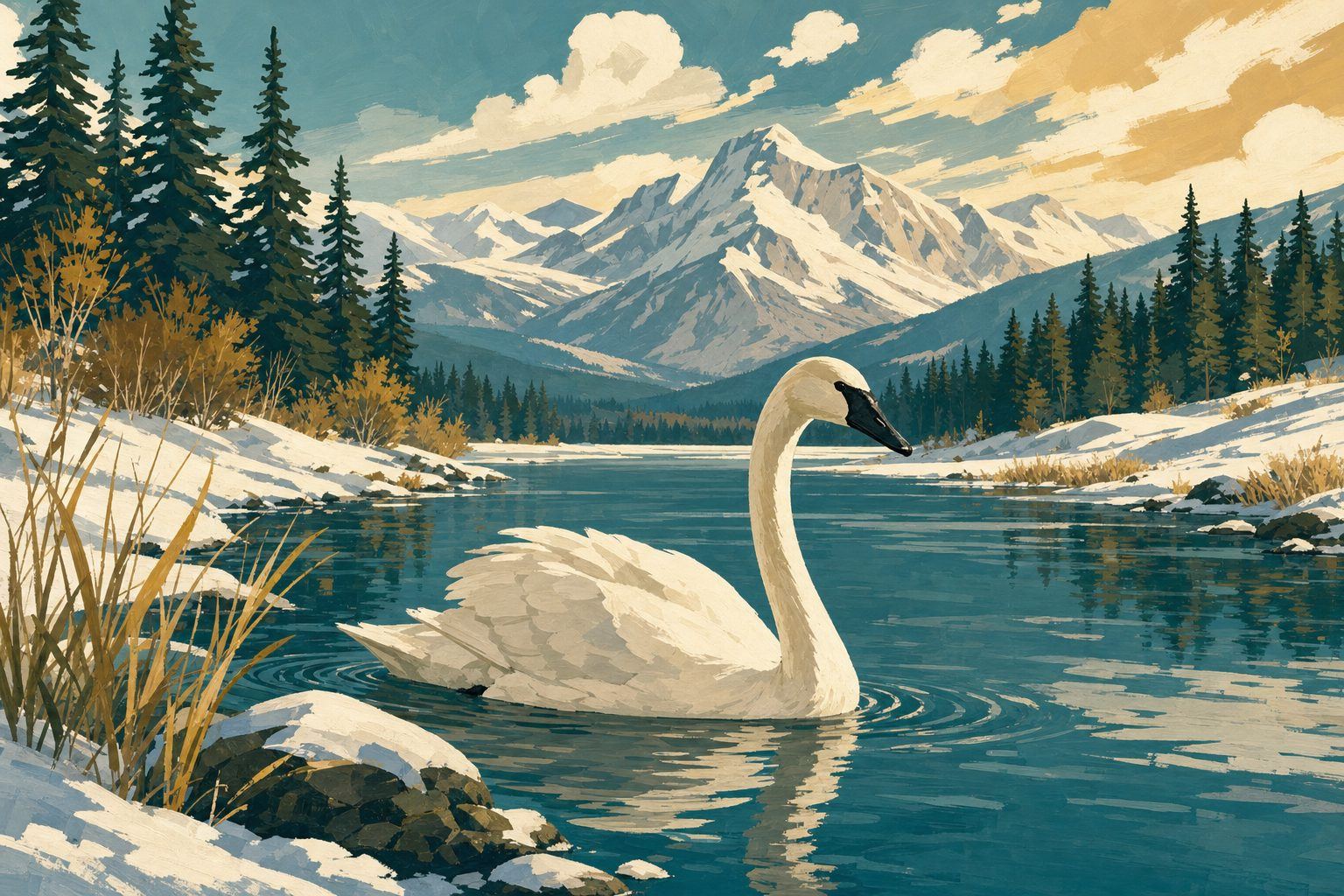
From near-extinction to a real Montana population
Trumpeter swans are North America’s largest native waterfowl species, and their decline through the late nineteenth and early twentieth centuries was severe. Hunting for meat, feathers, and skins, combined with habitat loss, pushed the Rocky Mountain population of trumpeter swans to the edge of disappearing entirely from the region. A 1914 account of the species in Montana described a swan population that had gone from common to nearly gone in the span of two decades — a collapse fast enough to alarm observers even at a time when wildlife conservation as a formal practice was still in its infancy.
Recovery took decades and deliberate, sustained effort. In the Flathead Valley specifically, the Confederated Salish and Kootenai Tribes have run a trumpeter swan reintroduction program on the Flathead Indian Reservation, with releases going back to 1989 in the Paradise Valley area. That program is part of a broader, multi-decade regional push to rebuild the Rocky Mountain trumpeter swan population, and it has produced a measurable, visible result: a small but established population that now uses the lower Flathead River, with birds from those early releases and their descendants frequently seen along the river today.
A near-extinction with a documented cause
The trumpeter swan’s collapse wasn’t a mysterious decline — it had a specific, well-documented commercial cause. For more than 125 years, commercial hunters and trappers harvested swan skins for the Hudson’s Bay Company, shipping many thousands of pelts to Europe between 1772 and the late 1800s, on top of ordinary subsistence hunting. That sustained commercial pressure, combined with habitat loss, is what pushed the species to the edge of extinction across its range by the early twentieth century.
Recovery efforts started earlier than many people assume. The Migratory Bird Treaty Act of 1918 banned swan hunting across North America, and in 1935 the United States established Red Rock Lakes National Wildlife Refuge in southwestern Montana specifically to protect one of the last remaining trumpeter swan strongholds. Decades of sustained work followed — habitat protection, supplemental feeding programs, and eventually active reintroduction efforts like the one that brought swans to the Flathead Indian Reservation. The results, at the scale of the whole Rocky Mountain population, have been genuinely dramatic: from roughly 100 birds in the Rocky Mountain population twenty years ago to more than 1,500 today, a recovery that puts the Flathead Valley’s own local population in the context of a much larger regional turnaround, not an isolated success story.
Why winter is the season to see them
Trumpeter swans are present in the valley across multiple seasons, but winter is when they’re most reliably concentrated and easiest to find. The ponds, sloughs, and wetland complexes scattered across the Mission Valley and the wider Flathead Indian Reservation — habitat swans use through the warmer months — freeze over completely in winter, leaving swans with far fewer places to land, rest, and feed. The lower Flathead River, which tends to stay open even in cold weather thanks to its current and volume, becomes the default gathering point for birds pushed off smaller frozen water.
That pattern has been specifically documented in the local wintering population: swans have been reported settling into the lower Flathead River drainage and its tributaries through the cold months, a pattern attributed to the area’s relatively mild local winter conditions, dependable open water, and sufficient food compared to the alternative of a fully frozen wetland complex nearby. For a visitor, that means winter — not summer — is genuinely the better season to plan a trip around seeing swans here, a reversal of the usual “summer is best for wildlife” assumption that applies to more of this site’s other wildlife guides.
Where to look along the river
The lower Flathead River, generally the stretch running south from the lake through the Mission Valley, is the most consistently documented area for winter swan concentrations. A slow drive along river-adjacent roads in this stretch, particularly near open, ice-free sections, gives a realistic chance at a sighting without needing a boat — swans on open winter water are typically visible from a reasonable distance, given their size and stark white plumage against darker water and snow-dusted banks.
Because this is a genuinely cold-season activity, dressing for actual winter conditions and watching from a vehicle, a bridge, or a stable stretch of shoreline is both more comfortable and safer than attempting any kind of close approach on foot near icy riverbanks.
Telling a trumpeter swan from everything else on the water
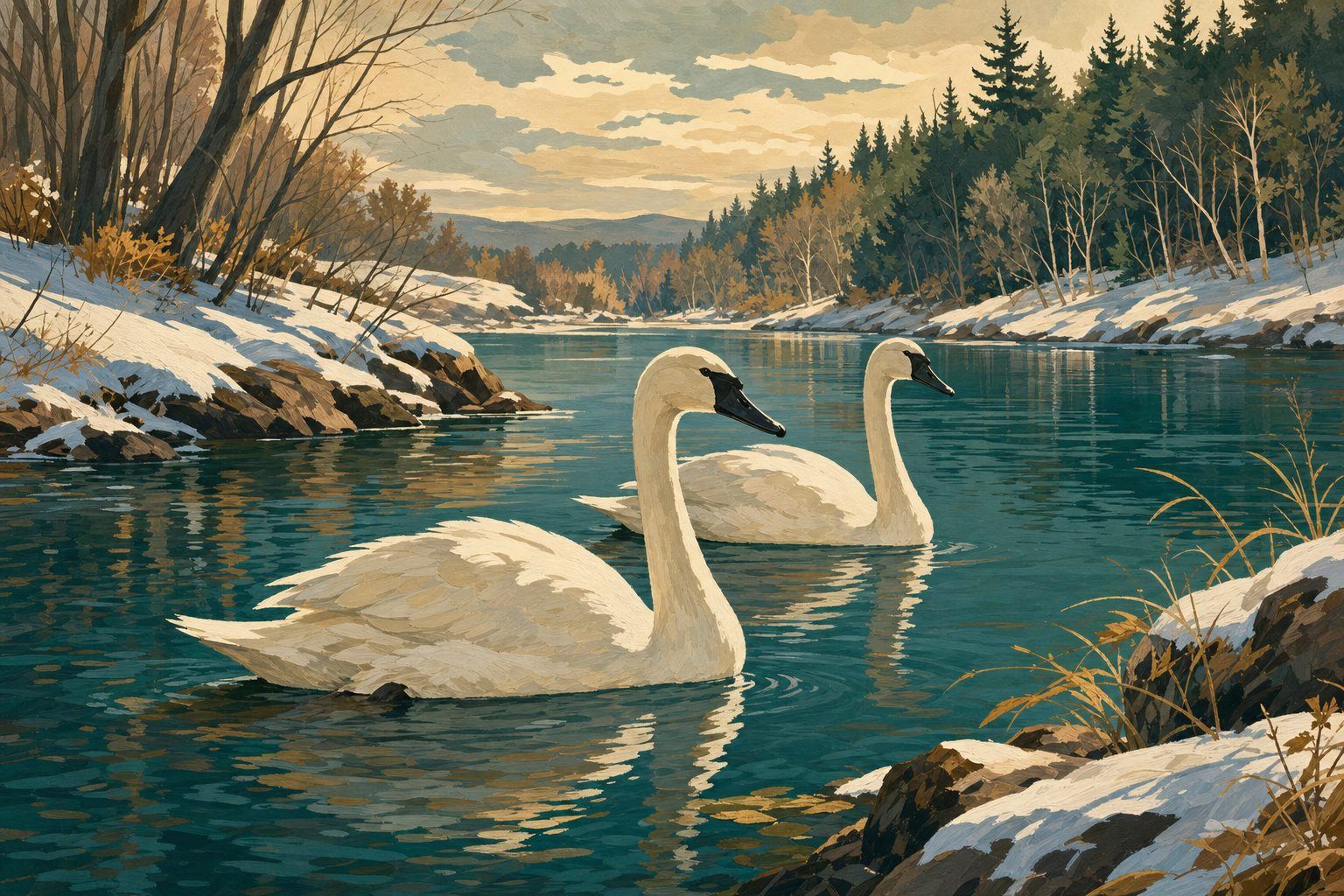
Size alone does most of the work here. Trumpeter swans are considerably larger than snow geese, Canada geese, or any of the valley’s common ducks, with an entirely white adult plumage, a long, straight neck typically held upright, and a solid black bill and facial skin that contrasts sharply with the white feathers around it. Their voice is the other giveaway — the deep, resonant, trumpet-like call that gives the species its name carries well across open water and sounds nothing like the higher-pitched honking of geese or the relative quiet of most ducks. Once you’ve heard one, it’s hard to mistake for anything else on the river.
The scale of the broader recovery
It’s worth putting the Rocky Mountain trumpeter swan’s turnaround in the context of the species’ recovery continent-wide, because the Flathead Valley’s small wintering population is a genuine piece of a much larger success story. Trumpeter swan restoration efforts across North America — combining federal habitat protection, supplemental feeding programs at key refuges, captive breeding and release programs, and active reintroduction into former range — have taken the species from an estimated 3,700 birds across the entire continent in 1968 to more than 63,000 today. That’s a recovery on a scale most endangered-species stories never reach, and the Flathead’s own reintroduced and wintering swans are a direct, visible piece of it, not a separate or unrelated local phenomenon. Seeing a trumpeter swan on the lower Flathead River in winter is, in a real sense, watching one small outcome of one of American conservation’s more genuinely successful, decades-long recovery efforts play out in person.
Watching responsibly during winter
Winter wildlife viewing carries a specific responsibility that summer viewing doesn’t: energy conservation. Swans wintering on the Flathead are managing a tight energy budget through the cold months, relying on limited open water and available food to make it through to spring. Flushing a group of swans into flight — even unintentionally, by approaching too closely for a photo — forces them to burn calories they can’t easily replace in winter, a real cost for a population that’s still recovering from a historic near-collapse and hasn’t fully rebounded to its once-common status. Watching from a comfortable distance with binoculars or a longer lens, rather than pushing closer, lets the birds do what they’re actually here to do: rest and conserve energy until spring conditions return.
Dogs off-leash near wintering waterfowl are a common, avoidable cause of unnecessary flushing along the river, so keeping pets leashed and at a distance from any group of swans on the water is a small but genuinely useful habit. The same applies to vehicles and foot traffic near riverside pullouts — approaching slowly and staying back rather than walking directly toward a visible group gives the birds room to simply continue resting rather than treating every approach as a reason to take flight.
A pair of swans holding their ground on the water as a vehicle slows nearby, rather than immediately taking flight, is usually a good sign that the approach was handled well — a genuinely satisfying outcome for anyone who came specifically hoping for a good, unhurried look at a species that very nearly disappeared from this part of the country entirely, and that Montana played a direct, documented role in bringing back. Pair a slow winter drive along the river with a stop at one of the area’s public pullouts, give it more time than feels necessary, and the odds of a good, calm sighting go up considerably compared to a quick drive-by glance from the road.
Frequently asked questions
Were trumpeter swans really almost gone from Montana?
Yes — this isn't an exaggeration. A 1914 report on the species specifically noted that trumpeter swans had been common in Montana twenty years earlier and used to winter here regularly, but by that point were on the verge of extinction. The Rocky Mountain population of trumpeter swans, which includes the birds seen in the Flathead Valley today, went through a genuine near-collapse before conservation efforts began turning it around.
Are the swans on the Flathead a reintroduced population?
Largely, yes. The Confederated Salish and Kootenai Tribes have run a trumpeter swan reintroduction program on the Flathead Indian Reservation, with early releases dating back to 1989 in the Paradise Valley area. A small number of those reintroduced swans have established themselves and are frequently seen along the river today, part of a broader, decades-long regional effort to rebuild the Rocky Mountain population.
When is the best time to see trumpeter swans in the Flathead Valley?
Winter. Trumpeter swans are seen in higher numbers during winter along the lower Flathead River specifically because the ponds and wetland complexes they use throughout the Mission Valley and the wider reservation freeze over during the cold months, concentrating birds onto whatever stretches of open, ice-free water remain — mainly the lower river itself.
Where exactly should I look for them?
The lower Flathead River, generally the stretch below the lake toward and through the Mission Valley, is the most consistently documented area. Reintroduced and locally wintering swans have been reported staying in the lower Flathead River drainage and its tributaries through winter, likely due to milder local conditions, dependable open water, and adequate food compared to the smaller lakes and ponds nearby that ice over completely.
How do I tell a trumpeter swan from other white waterfowl?
Size is the first clue — trumpeter swans are the largest native waterfowl in North America, considerably bigger than snow geese or most ducks, with an all-white adult plumage, a long straight neck, and a black bill. Their name comes from their deep, resonant, trumpet-like call, distinct from the higher-pitched calls of geese or the near-silence of most ducks on the water.
Is it safe to approach swans on the water for a photo?
No — keep a respectful distance, same as with any wintering waterfowl. Swans conserve energy carefully through winter, and repeatedly flushing them off open water to fly forces them to burn calories they need to survive the cold season, which can have a real cost for a population that's still recovering from historic near-extinction. A longer lens from the shore or a bridge does the job without that risk.
Do trumpeter swans nest in the Flathead Valley too, or only winter here?
The reintroduction program has established some local nesting in addition to wintering birds, though nesting trumpeter swans remain far less common in Montana than the historically abundant populations once were. The winter concentration on the lower Flathead River is the more reliable, better-documented viewing opportunity for most visitors.
Can I see swans from a kayak or do I need to stay on shore?
Shore, a bridge, or a slow-moving vehicle with a clear view of the water are the better options in winter — river conditions, cold-water safety, and the goal of minimizing disturbance to wintering birds all argue against a close paddling approach during the season when swans are most reliably present here.